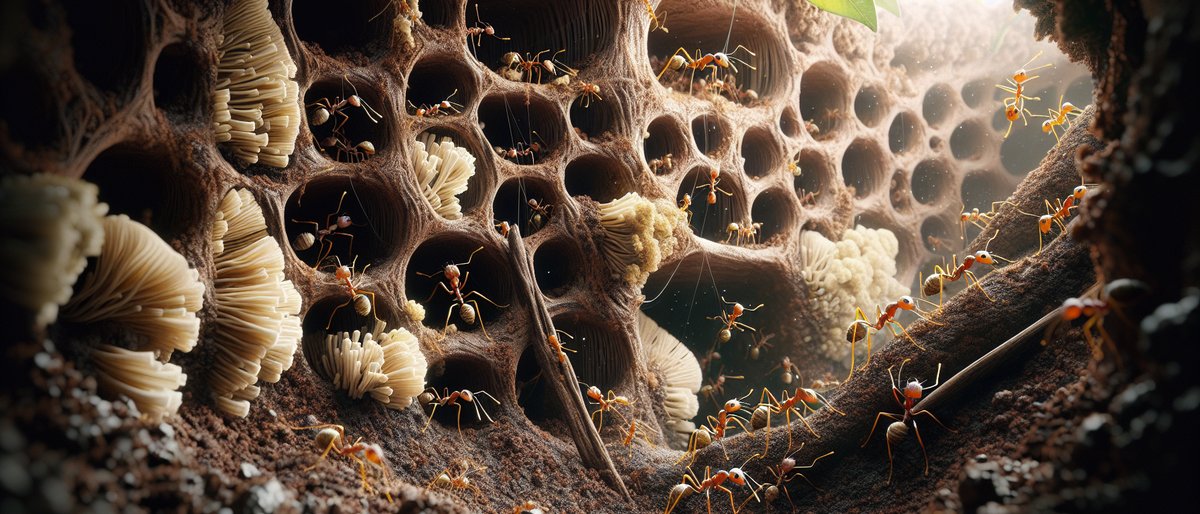
Ants began farming about 50 million years before humans thought to raise their own crops.
Ants Were Farmers 50 Million Years Before Us
Long before the first human scattered seeds into soil, ants had already mastered agriculture. We're talking about a 50-million-year head start. When our ancestors were still figuring out which berries wouldn't kill them, ant colonies were running sophisticated underground farms.
The Original Farmers
Leafcutter ants are the most famous insect agriculturalists, but they're part of a larger group called attine ants that have been farming for roughly 55-60 million years. These ants don't eat the leaves they harvest—they use them as fertilizer to grow a specific type of fungus that exists nowhere else on Earth.
Human agriculture? That started a mere 10,000 to 12,000 years ago in the Fertile Crescent. Do the math, and ants beat us by approximately 50 million years.
How Ant Farms Actually Work
A leafcutter colony operates like a well-oiled corporation:
- Foragers cut and carry leaf fragments back to the nest
- Gardeners chew the leaves into mulch and tend the fungus gardens
- Waste managers remove contaminated material to prevent disease
- The queen produces all the workers—up to 8 million in a single colony
The fungus they cultivate has become so dependent on the ants that it can no longer survive in the wild. It's a co-evolved partnership millions of years in the making.
Pest Control and Antibiotics
Here's where it gets truly impressive. Ant farmers face the same problems human farmers do—pests and disease. Their solution? They've developed their own pesticides.
Leafcutter ants carry bacteria on their bodies that produce natural antibiotics, protecting their fungus gardens from parasitic molds. Scientists are now studying these compounds for potential use in human medicine. These ants essentially invented antibiotics tens of millions of years before Alexander Fleming noticed mold killing bacteria in a petri dish.
Scale That Rivals Human Agriculture
A mature leafcutter colony can strip a tree bare overnight. In tropical ecosystems, they're responsible for moving more earth than earthworms and consuming more vegetation than any other animal group. Their underground nests can extend 30 feet deep and contain thousands of chambers.
In terms of biomass and ecological impact, ant agriculture rivals what humans have achieved—they just did it first, and they did it without destroying their environment in the process.
The next time you see a line of ants carrying leaf fragments, you're watching the oldest agricultural tradition on Earth. These tiny insects perfected sustainable farming while dinosaurs still roamed the planet. Humans are just the newcomers, still learning the ropes.
Frequently Asked Questions
How long have ants been farming?
What do leafcutter ants actually farm?
When did humans start farming compared to ants?
How do ant farms work?
Are leafcutter ants important to the ecosystem?
Verified Fact
This fact has been reviewed and verified against original sources.
Source: View sourceShow verification details
Core claim accurate. Leafcutter ants and their relatives began cultivating fungi approximately 50-60 million years ago, while human agriculture started around 10,000-12,000 years ago.