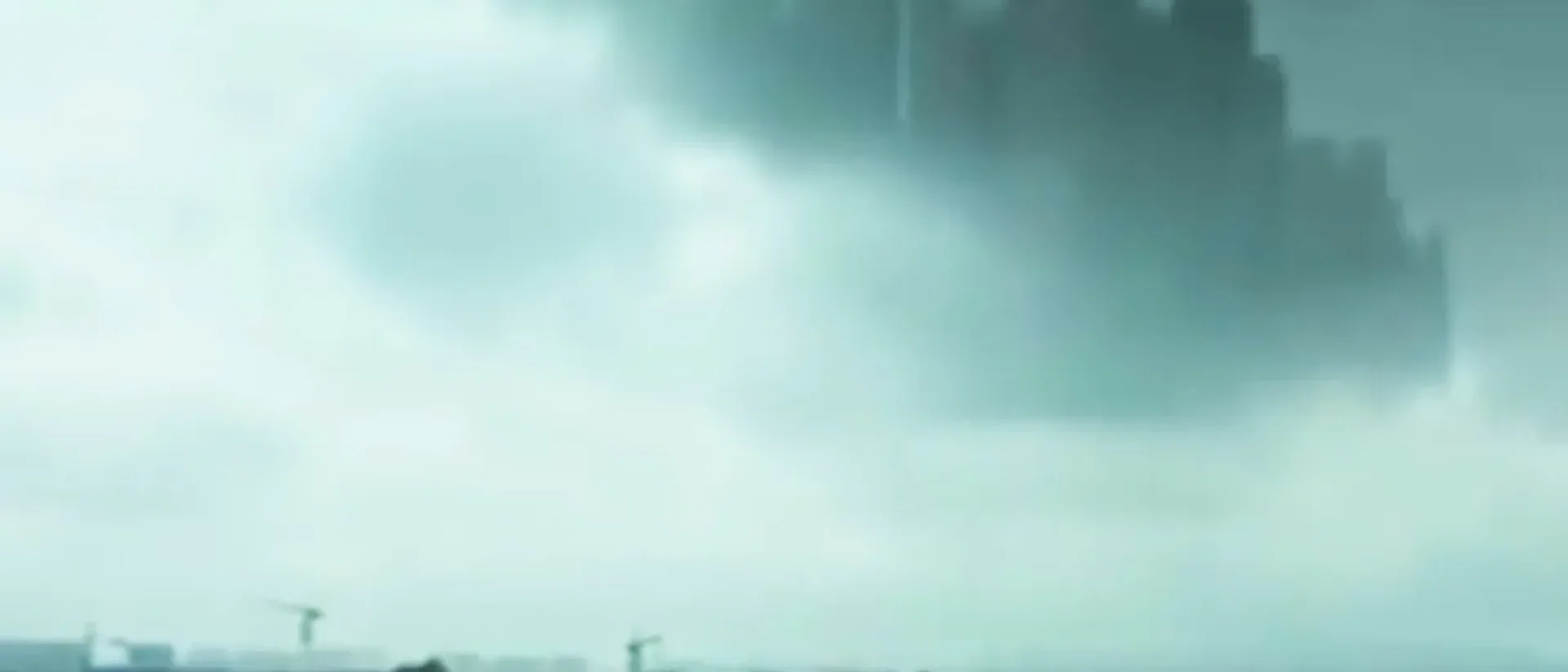
In October 2015, a 'floating city' of what appeared to be tall buildings rose from the clouds above Foshan, China. After lasting only a few minutes, conspiracy theories ran rampant, but experts say that it's a rare optical illusion called Fata Morgana.
The Floating City That Appeared Above China in 2015
One October morning in 2015, residents of Foshan, China looked up to see something impossible: a massive city floating in the clouds. Gleaming skyscrapers towered above the mist, hovering like a scene from a science fiction film. Then, just as mysteriously as it appeared, the phantom city vanished.
The footage went viral instantly. Within hours, the internet exploded with theories—parallel dimensions bleeding into our reality, secret government holograms, even alien technology. But the truth behind the floating city is somehow even more fascinating than the conspiracies.
When the Atmosphere Plays Tricks
What thousands of people witnessed that day was a rare optical illusion called Fata Morgana, named after Morgan le Fay, the sorceress from Arthurian legend who conjured phantom castles. It's one of nature's most spectacular magic tricks, and it requires very specific conditions to pull off.
The phenomenon occurs when layers of air at different temperatures bend light rays in unusual ways. Hot air near the ground and cold air above create an atmospheric lens that distorts and magnifies distant objects. Buildings dozens of miles away can appear stretched, inverted, and stacked on top of each other—floating impossibly in the sky.
Not Just Chinese Skyscrapers
Foshan's phantom city might have gone viral, but Fata Morgana has been fooling humans for centuries:
- Arctic explorers have spotted entire mountain ranges that don't exist
- Sailors throughout history mistook these mirages for distant lands, sometimes pursuing them for days
- The Flying Dutchman legend—the ghost ship doomed to sail forever—likely originated from Fata Morgana sightings
- In 2011, residents of Huanshan, China witnessed a similar floating city event
The illusion works best over water or flat terrain where temperature differences are most extreme. That's why coastal cities and desert regions report these sightings more frequently than mountainous areas.
Why It Looked So Real
What made the Foshan event particularly convincing was temporal variation—the mirage shifted and changed just like a real city would appear through moving mist. The human brain is wired to recognize patterns and structures, especially familiar ones like buildings. When we see something that looks like architecture, even if it's distorted, our minds fill in the gaps.
Modern smartphones and social media amplified the effect. Within minutes, dozens of angles and perspectives flooded online, making it seem more substantial than a simple mirage. Multiple witnesses recording the same phenomenon created a form of collective verification that felt undeniable.
The Science Holds Up
Meteorologists who analyzed the Foshan event confirmed that atmospheric conditions were perfect for Fata Morgana that day. Temperature inversions were recorded, and the city of Foshan sits in the Pearl River Delta—an ideal flat, moisture-rich environment for these optical effects.
What people likely saw was a distorted reflection of Foshan itself or nearby Guangzhou, magnified and warped beyond recognition. The "floating city" wasn't from another dimension—it was their own city, reflected back at them through nature's funhouse mirror.
So while the conspiracy theories make for entertaining reading, the real explanation reminds us that Earth's atmosphere is still capable of inspiring genuine wonder. No holograms or parallel universes required—just physics, light, and the perfect conditions for nature to show off.
Frequently Asked Questions
What is the Foshan floating city optical illusion?
What causes a Fata Morgana optical illusion?
Is the Foshan floating city real?
How long did the Foshan floating city last?
Why did people think the Foshan floating city was real?
Verified Fact
This fact has been reviewed and verified against original sources.
Show verification details
The October 2015 Foshan, China sighting is well-documented, though the phenomenon was likely enhanced by viral video sharing.