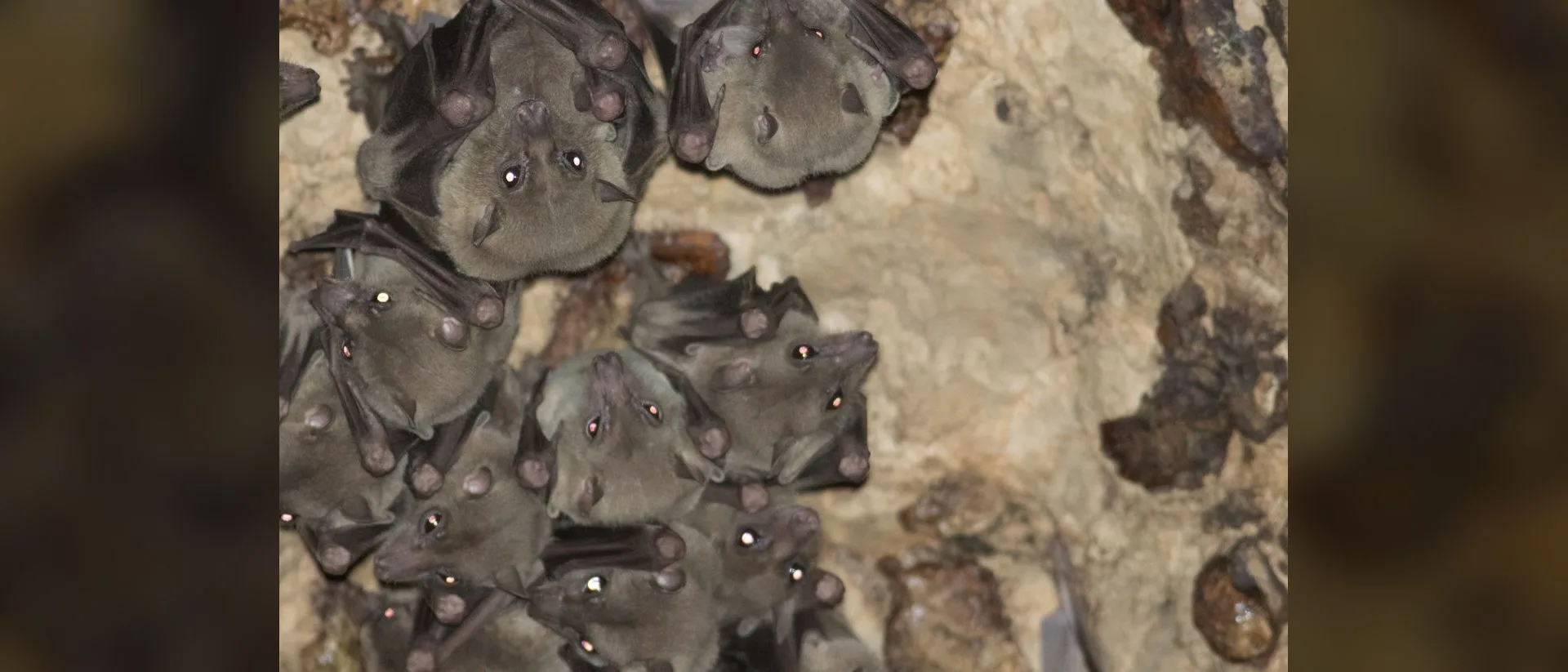
Researchers used machine learning to decode 15,000 Egyptian fruit bat calls. Over 60% were arguments — about food, sleeping positions, personal space, and unwanted mating advances. They even change their calls depending on who they're talking to. Basically, bats have names.
Scientists Used AI to Decode Bat Chatter — Turns Out They Spend Most of Their Time Arguing
If you've ever assumed bat colonies are just a wall of identical screeching, you'd be wrong. Very wrong.
Decoding 15,000 Arguments
In 2016, a team led by Prof. Yossi Yovel at Tel Aviv University recorded 15,000 vocalizations from 22 Egyptian fruit bats over 75 days. They then fed the audio through a machine learning algorithm originally designed for human voice recognition.
What they found was that bat calls weren't just generic noise. Each call contained specific information about who was calling, who they were calling to, and what they were arguing about.
Four Flavours of Bat Drama
The algorithm identified four main topics of conversation — and "conversation" is generous, because over 60% of all calls were arguments:
- Food squabbles — "That's MY fruit"
- Sleeping position disputes — "Move over, you're in my spot"
- Personal space violations — "You're too close"
- Unwanted mating advances — "Absolutely not"
As lead researcher Yovel put it: "We have shown that a big bulk of bat vocalizations that were previously thought to all mean the same thing — 'get out of here!' — actually contain a lot of information."
Bats Know Who They're Talking To
Perhaps the most remarkable finding: bats modify their calls depending on who they're addressing. The algorithm could identify the specific recipient about 50% of the time and their sex 64% of the time. This kind of addressee-specific calling is extremely rare in the animal kingdom — previously documented only in dolphins and a handful of other species.
It's not quite a "name" in the human sense, but it's functionally the same thing: a unique vocal signature directed at a specific individual.
Basically, Bats Are Us
Arguing about food. Fighting over sleeping arrangements. Complaining about personal space. Rejecting advances. If you replaced "bat colony" with "shared flat," you wouldn't notice the difference.
Frequently Asked Questions
What do fruit bats argue about?
How did scientists decode bat calls?
Do bats really have names for each other?
What species of bat was studied?
Verified Fact
This fact has been reviewed and verified against original sources.
Source: Smithsonian MagazineShow verification details
Yossi Yovel, Tel Aviv University. Species: Rousettus aegyptiacus (Egyptian fruit bat). 15,000 vocalizations from 22 bats over 75 days analysed using GMM-UBM machine learning algorithm.