
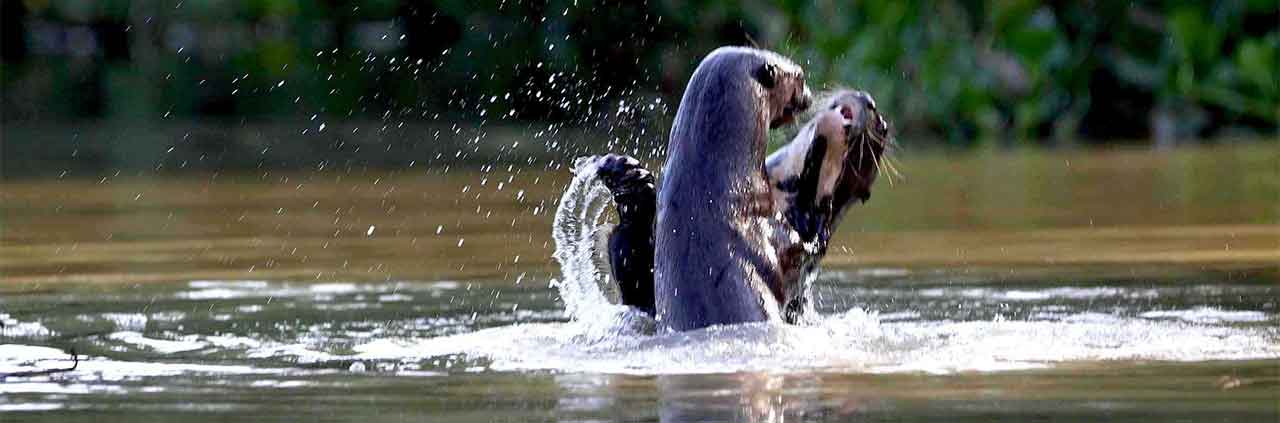
Giant river otters still exist in three remote river systems in South America. They can grow to almost 6 feet in length, hunt in packs, and even take on caimans.
Giant River Otters: Six-Foot Apex Predators of the Amazon
When you think of apex predators in the Amazon, jaguars and anacondas probably come to mind. But lurking beneath the surface is a six-foot-long mammal with the audacity to hunt in packs and take on armored reptiles: the giant river otter.
These remarkable animals are the world's largest otters and the biggest members of the entire weasel family. While their smaller cousins are content catching fish solo, giant river otters operate like aquatic wolf packs—coordinating attacks, sharing kills, and dominating their river territories with an iron paw.
Three Rivers, One Apex Predator
Giant river otters live exclusively in three South American river systems: the Amazon, Orinoco, and La Plata. These aren't timid creek-dwellers—they're the undisputed rulers of their freshwater domains. Local communities have nicknamed them "river wolves" for their pack-hunting tactics and territorial aggression.
Unlike any other otter species on Earth, these animals hunt cooperatively in family groups called romps, typically consisting of six to eight individuals. When a target is too large for one otter to handle—say, a juvenile black caiman or a small anaconda—the family works together with frightening efficiency.
Built for Battle
Reaching nearly 6 feet (1.8 meters) from nose to tail and weighing up to 70 pounds, giant river otters are formidable opponents. They sport:
- Powerful jaws capable of crushing bone
- Webbed feet for lightning-fast underwater maneuvers
- Dense, waterproof fur for hours-long hunting sessions
- Exceptional vision both above and below water
Their primary diet consists of fish and crustaceans, but they don't shy away from bigger game. When a romp encounters a five-foot caiman, they can devour the entire reptile—skull, bones, and all—in just 45 minutes.
Coordinated Chaos
What makes giant river otters truly terrifying (if you're a caiman) is their hunting strategy. While they can hunt alone or in pairs, they unleash coordinated pack tactics for larger prey. Multiple otters attack from different angles, overwhelming their target before it can mount an effective defense.
This cooperative behavior is virtually unique among otters and places giant river otters among the most sophisticated hunters in South America's aquatic ecosystems. They communicate constantly through a repertoire of vocalizations—screams, whistles, and barks—to coordinate their movements.
A Precarious Future
Despite their apex predator status, giant river otters face serious threats. Habitat destruction, pollution, and historical hunting for their luxurious pelts decimated populations throughout the 20th century. They're now classified as endangered, with only isolated populations remaining in those three remote river systems.
Conservation efforts are underway, but these otters need pristine river ecosystems to thrive—clean water, abundant fish, and minimal human disturbance. Each surviving romp represents not just a family of remarkable predators, but a critical piece of South America's ecological heritage.
So next time someone mentions cute otters holding hands, remember: some of their cousins are six-foot-long pack hunters that eat crocodilians for lunch. Nature has a sense of humor.
Frequently Asked Questions
How big do giant river otters get?
Where do giant river otters live?
Do giant otters really hunt caimans?
Why are giant river otters called river wolves?
Are giant river otters endangered?
Verified Fact
This fact has been reviewed and verified against original sources.
Show verification details
All claims are accurate: giant river otters exist in three South American river systems (Amazon, Orinoco, La Plata), grow up to 6 feet (1.