
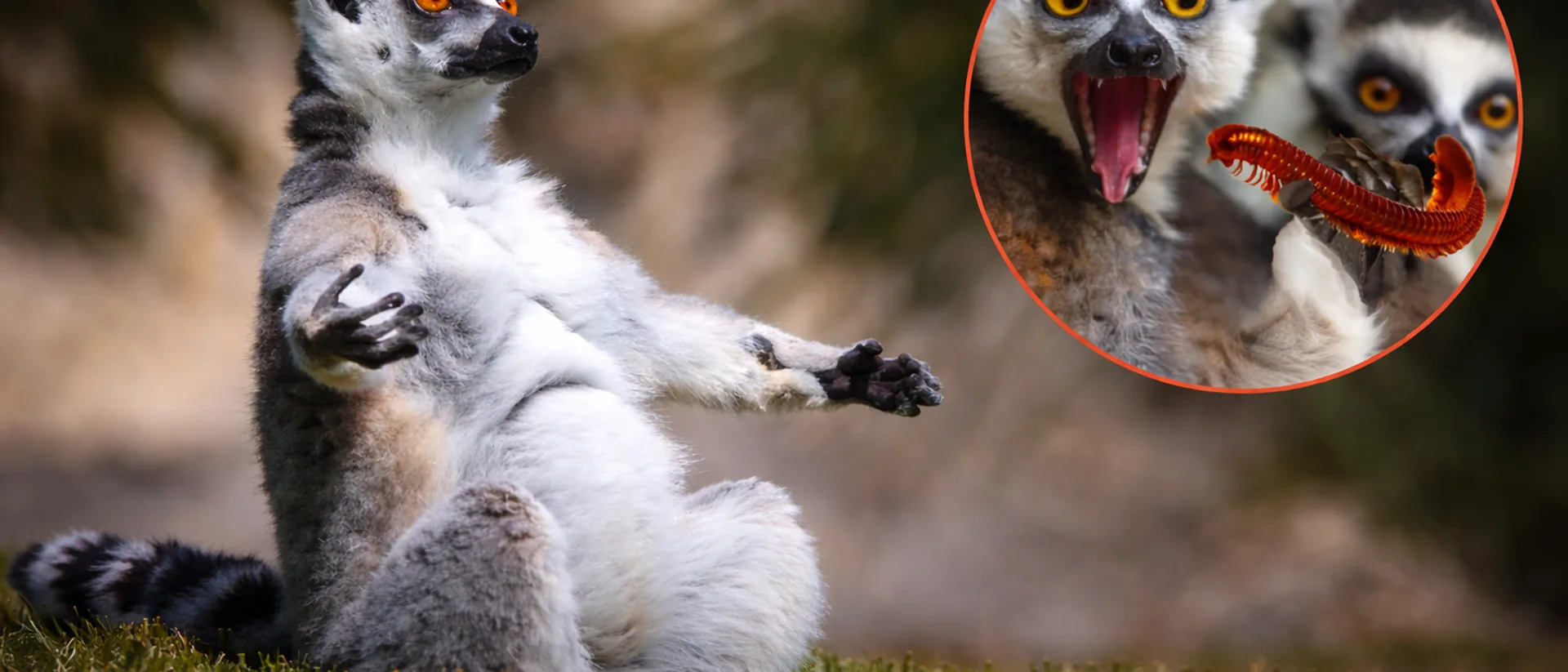
Lemurs chew toxic millipedes and rub the secretions on their fur to repel mosquitoes, but the side effects accidentally send them to another dimension.
Lemurs Chew Toxic Millipedes to Repel Mosquitoes — Then Trip Out
In the forests of Madagascar, lemurs have developed one of the most resourceful — and unintentionally hilarious — pest control strategies in the animal kingdom. When mosquitoes become a nuisance, certain species of lemurs seek out toxic millipedes, chew on them, and smear the resulting secretions across their fur.
The millipedes belong to the genus Sechelleptus, and they secrete a potent chemical cocktail when disturbed. The key ingredient is benzoquinone, a compound chemically related to quinine — the same substance used for centuries to treat malaria. Benzoquinone is a proven natural insect repellent, and the lemurs seem to know exactly what they're doing when they seek it out.
Self-Anointing: Nature's DIY Bug Spray
The behavior is known as self-anointing. Lemurs — particularly black lemurs and red-fronted lemurs — bite or chew the millipedes to stimulate the release of their toxic secretions. They then rub the chewed millipede across their fur, focusing particularly on their tails and the area around their rear end.
Researchers believe this serves a dual purpose:
- Mosquito repellent: The benzoquinone coating deters biting insects.
- Anti-parasitic treatment: The chemicals may also help combat gastrointestinal parasites like Oxyuridae nematodes, which cause irritation around the anal area.
A 2018 study published in the journal Primates by Louise R. Peckre and colleagues was the first to document lemurs actually ingesting the millipedes after chewing them — suggesting the self-medication goes beyond skin-deep. The ingested benzoquinone compounds may help treat internal parasites as well.
The Side Effects: Accidental Intoxication
Here's where it gets entertaining. The benzoquinone secretions don't just repel bugs — they also appear to have a noticeable psychoactive effect on the lemurs. After their millipede rubbing sessions, lemurs have been observed entering a drooling, glassy-eyed, trance-like state.
They salivate profusely, their eyes go wide, and they appear visibly altered — almost as if they've been sent to, well, another dimension. Whether this intoxication is an unintended side effect or part of the appeal is still debated among primatologists, but the footage of spaced-out lemurs suggests they're not entirely opposed to the experience.
A Sophisticated Survival Strategy
What might look like animals getting high for fun is actually a sophisticated example of zoopharmacognosy — the practice of animals self-medicating using plants, insects, or other natural substances. Many animals engage in similar behaviors: chimpanzees swallow rough leaves to purge intestinal parasites, and some birds line their nests with aromatic herbs to repel mites.
But lemurs take it to another level — literally combining topical application and ingestion for a comprehensive anti-parasite strategy. The fact that the method doubles as insect repellent makes it one of the most efficient examples of animal self-medication ever documented.
So the next time you reach for bug spray, remember: somewhere in Madagascar, a lemur is doing the same thing — just with more drooling and considerably more style.
Frequently Asked Questions
Why do lemurs chew on toxic millipedes?
What chemical do the millipedes produce?
Do lemurs actually get high from chewing millipedes?
Which species of lemur does this?
What is zoopharmacognosy?
Verified Fact
This fact has been reviewed and verified against original sources.
Source: View sourceShow verification details
Documented in peer-reviewed research by Louise R. Peckre et al., published in journal Primates (2018). Benzoquinone secretions from Sechelleptus millipedes confirmed as insect repellent.