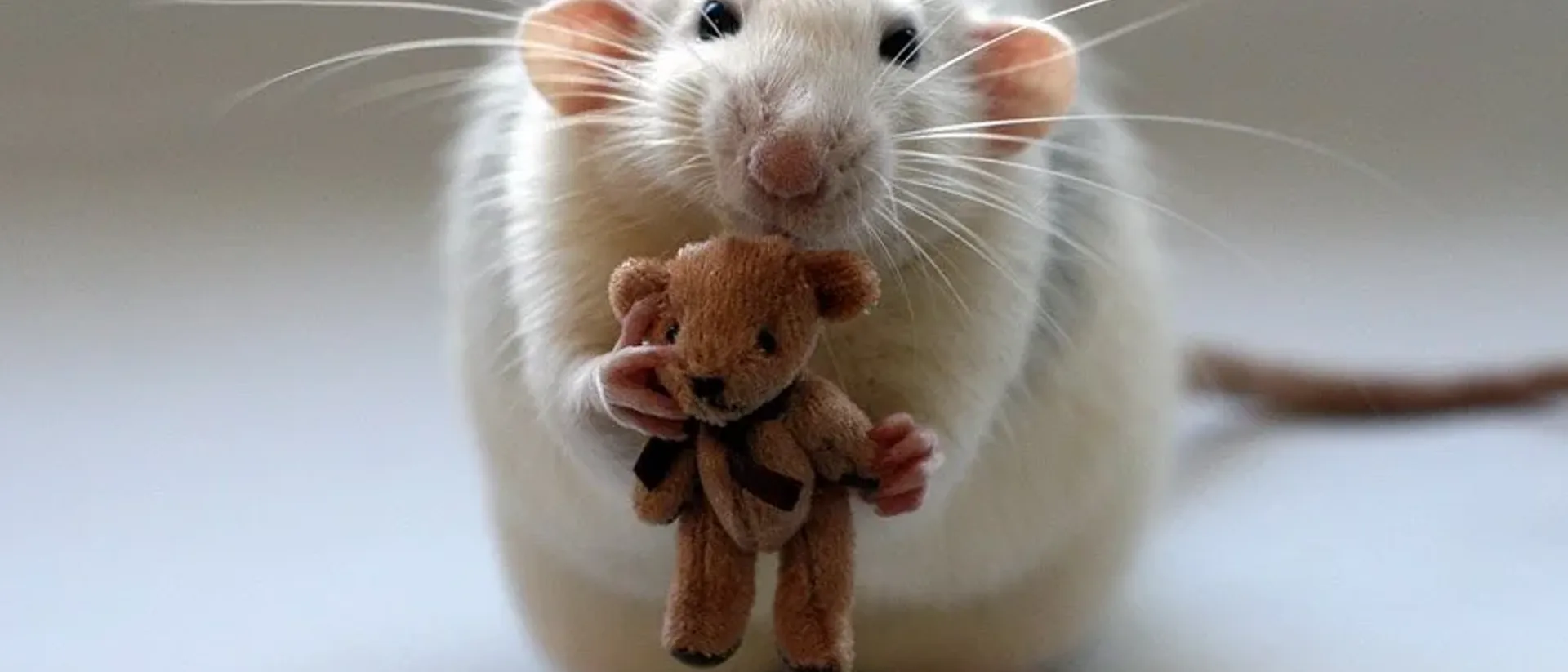
In scientific experiments, rats consistently chose to free their trapped companions from cages, even when chocolate was offered as an alternative. They would then share the chocolate with their freed friend.
Rats Choose Empathy Over Chocolate: The Heartwarming Lab Experiment
When scientists at the University of Chicago set up what looked like a straightforward behavioral study in 2011, they expected to measure stress responses in rats. What they discovered instead would challenge long-held assumptions about animal empathy and force researchers to reconsider what drives altruistic behavior.
The Experiment That Surprised Everyone
The setup was simple: one rat roamed freely in a cage while another was trapped in a clear restrainer tube in the center. The free rat could open the restrainer door with a little effort, but there was no reward for doing so—no treats, no praise, nothing except the freedom of its cagemate.
Within days, the free rats learned to open the restrainer doors. They didn't stumble upon it by accident—they deliberately figured out the mechanism and returned to it repeatedly. Even more striking, rats who had never been trapped themselves still freed their companions, suggesting this wasn't just about remembering their own discomfort.
Chocolate vs. Compassion
Then came the real test. Researchers introduced a second restrainer filled with chocolate chips—a rat's favorite treat. Now the free rats faced an actual choice: open the chocolate restrainer and eat alone, or free their companion first.
The rats opened both restrainers, but here's what shocked the research team: they typically freed their trapped companion before going for the chocolate. When they did eat first, they would then immediately release their friend. But the clincher came next—the rats voluntarily shared the chocolate with their newly freed companion, even though they could have easily consumed it all beforehand.
Why This Matters Beyond the Lab
Lead researcher Peggy Mason noted that the rats showed genuine distress when their companions were trapped, with elevated stress hormones and anxious behavior. The relief they displayed after freeing another rat mirrored the response humans show after helping someone in need.
This wasn't about dominance, mating, or any obvious evolutionary advantage. The freed rat offered nothing in return. The chocolate experiment ruled out simple reward-seeking. These rats were acting on what researchers hesitantly started calling empathy—a trait previously considered uniquely primate, if not uniquely human.
So the next time someone uses "rat" as an insult, remember: in a head-to-head between chocolate and compassion, rats consistently chose their friends. That's a better track record than most of us can claim.
Frequently Asked Questions
Did rats always choose to free their companions over getting chocolate?
Could the rats have been freeing their companions for selfish reasons?
Do rats that have been trapped before help their companions faster?
What parts of the rat brain are involved in this empathetic behavior?
Does this mean rats are as empathetic as humans?
Verified Fact
This fact has been reviewed and verified against original sources.
Source: View sourceShow verification details
Published in Science journal (2011) by University of Chicago researchers. Study led by Dr. Peggy Mason and Dr. Inbal Ben-Ami Bartal. Findings replicated in subsequent studies examining pro-social behavior in rodents.