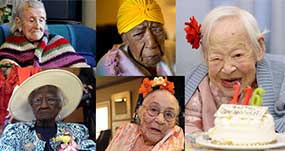
If you're over 100 years old, there's an 80% chance you're a woman.
Why 78% of People Over 100 Are Women
If you make it to your 100th birthday, chances are you'll be celebrating in a room full of women. Current data shows that 78% of centenarians are female, meaning women outnumber men by more than three to one in this exclusive club. This isn't just a statistical quirk—it's one of the most consistent patterns in human aging across nearly every population studied.
The gender gap actually widens as people age. Women outnumber men 2-to-1 in their 90s, then 3-to-1 or even 4-to-1 by age 100. In some countries like Canada, female centenarians outnumber males more than five to one.
Why Women Live Longer
Biology gives women several advantages. Hormonal differences, particularly estrogen's protective effects on cardiovascular health, help women avoid heart disease—the leading cause of death—at higher rates than men. Women are also less likely to engage in risky behaviors like smoking, excessive drinking, or dangerous occupations that historically shortened men's lives.
But here's something surprising: the few men who do reach 100 tend to be healthier than their female counterparts. Research shows male centenarians are less likely to have age-related diseases and disabilities. This suggests men face a higher bar—only the most genetically robust make it, while women can survive longer even with chronic conditions.
The Gap Is Closing
Between 2010 and 2020, the U.S. male centenarian population grew by 85%, compared to just 43% for women. As men adopt healthier lifestyles—exercising more, smoking less, managing blood pressure—the gender gap is narrowing. Projections suggest that by 2050, women will make up 68% of centenarians instead of 78%, with men gaining ground.
The genetic component is fascinating too. Male centenarians are more likely to have other family members who lived to 100, suggesting they needed stronger genetic advantages to overcome biological disadvantages. Women, meanwhile, seem to have multiple pathways to extreme longevity.
What It Means
This gender imbalance has real-world implications:
- Centenarian communities and care facilities are predominantly female spaces
- Research on extreme aging has historically focused more on women due to sample availability
- Social programs for the elderly must account for this gender disparity
- Men who reach 100 represent a more genetically select group, making them valuable for longevity research
The takeaway? Women aren't just living longer—they're redefining what it means to age. But as lifestyle factors equalize between genders, we may see more men joining the centenarian club in coming decades. For now, though, if you're planning your 100th birthday party, expect mostly female guests.
Frequently Asked Questions
What percentage of people over 100 are women?
Why do more women live to 100 than men?
Are male centenarians healthier than female centenarians?
Is the gender gap in centenarians changing?
How many people live to 100 years old?
Related Topics
More from Body & Health
View all Body & Health →