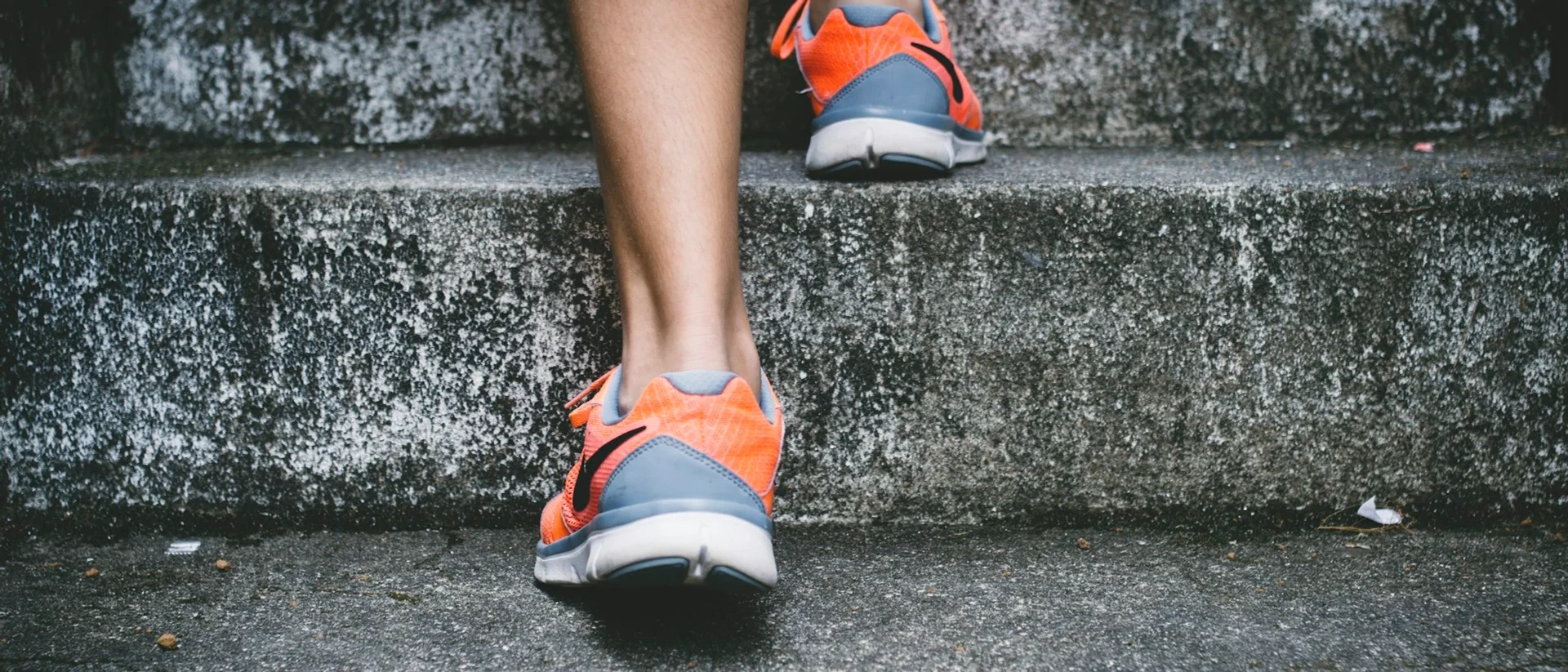
Taking a single step involves coordinating around 200 muscle activations across approximately 20-30 major muscle groups in your legs, core, and hips.
Walking Uses 200 Muscle Activations Per Step
Walking feels effortless, automatic even—something you've done millions of times without a second thought. But beneath this simple act lies a biomechanical orchestra of staggering complexity. Every single step you take triggers approximately 200 muscle activations across 20-30 major muscle groups working in perfect synchronization.
Your brain doesn't micromanage each muscle. Instead, it sends high-level commands to your spinal cord, which coordinates the intricate dance of contractions and relaxations needed to propel you forward without face-planting.
The Major Players
The heavy lifting falls to muscle groups in three key zones:
- Hip muscles (gluteus maximus, iliopsoas, hip flexors) – Power your leg swing and stabilize your pelvis
- Thigh muscles (quadriceps, hamstrings) – Extend and flex your knee, absorbing impact
- Calf muscles (gastrocnemius, soleus) – Push off the ground and control your ankle
- Core muscles (abdominals, back muscles) – Keep you upright and balanced
- Foot muscles (tibialis anterior, small intrinsic foot muscles) – Fine-tune balance and adapt to terrain
Why So Many Activations?
Here's where it gets interesting. A single muscle doesn't just turn "on" or "off"—it contains thousands of motor units that fire in precisely timed sequences. Walking requires constant adjustments: compensating for uneven ground, maintaining balance, controlling momentum.
Your nervous system coordinates these 200+ activations in overlapping waves. As your right quadriceps contracts to straighten your knee, your left hamstring is already preparing for the next step, while core muscles on both sides make micro-adjustments to keep you from toppling over.
Most remarkable? This entire coordination happens subconsciously. Your cerebellum and basal ganglia handle the complex calculus of timing, force, and balance, freeing your conscious mind to focus on where you're going rather than how you're getting there.
When Walking Goes Wrong
We only appreciate this complexity when something breaks. Stroke patients relearning to walk must consciously rebuild these automatic coordination patterns. Even a minor ankle sprain forces compensatory changes across dozens of muscles, often leading to knee or hip problems if the altered gait persists.
Physical therapists can identify subtle gait abnormalities by watching how these muscle groups interact—a slight hip drop might indicate weak gluteus medius, while an exaggerated arm swing could signal core instability.
So the next time you stroll to the kitchen for a snack, spare a thought for the 200 muscle activations per step that make it possible. Walking may be pedestrian, but the biomechanics behind it are anything but ordinary.
Frequently Asked Questions
How many muscles are used when walking?
What muscles do you use when you take a step?
Why does walking use so many muscles?
Is walking controlled consciously or unconsciously?
What happens to walking muscles after an injury?
Verified Fact
This fact has been reviewed and verified against original sources.
Show verification details
Corrected exaggeration - walking uses approximately 200 muscle activations across ~20-30 major muscle groups, not 200 distinct muscles
Related Topics
More from Body & Health
View all Body & Health →