
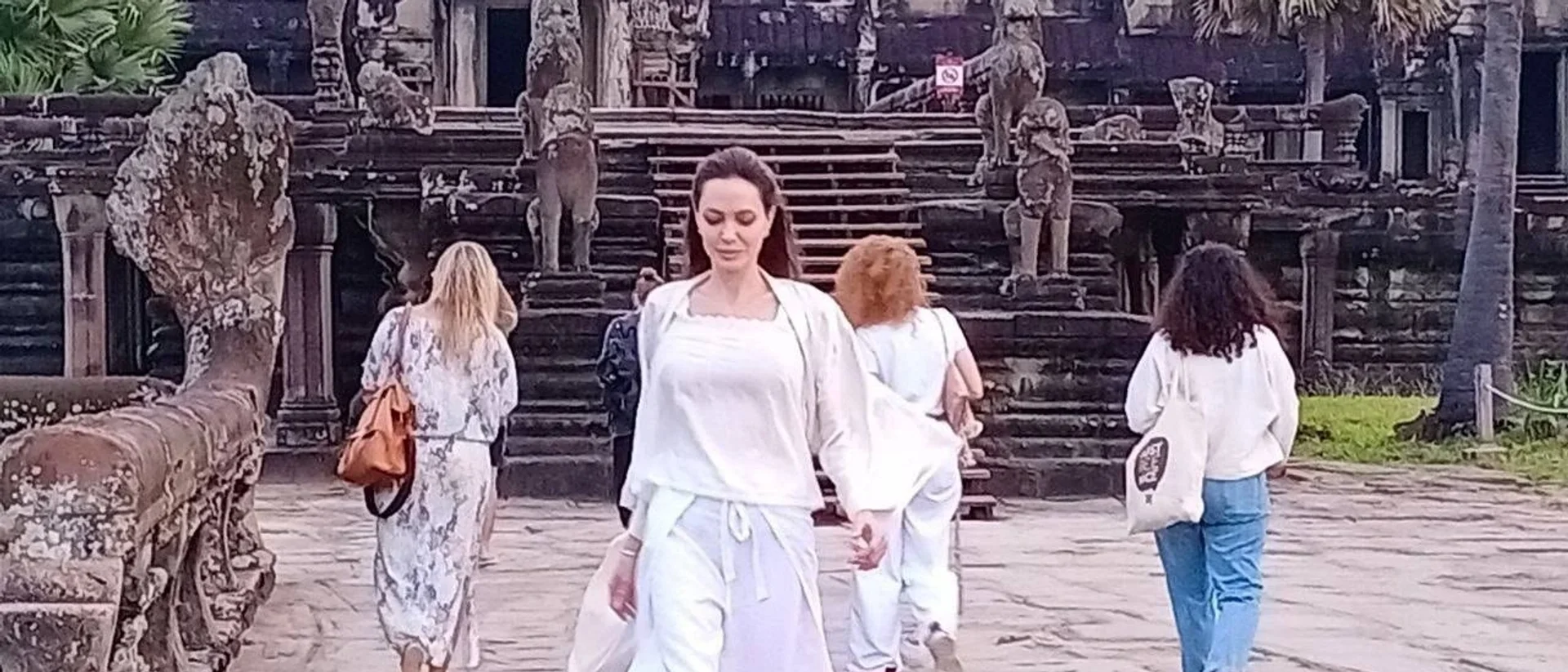
Angelina Jolie never bought Cambodia's 60,000-hectare Samlaut reserve. Cambodia's king declared it a protected forest in 1993, years before Jolie ever set foot there. Her foundation, named for her son Maddox, has funded rangers to patrol it since 2003. By her own account, some of those rangers are former poachers. The people who once hunted the forest now protect it.
Angelina Jolie's Foundation Pays Former Poachers as Rangers
For years, a viral claim has followed Angelina Jolie: that she personally bought 60,000 hectares of Cambodian rainforest and turned it into a wildlife reserve named after her son. The real story is different, and in some ways more interesting.
A Reserve Older Than Her Involvement
The Samlaut Multiple Use Area, a roughly 60,000-hectare stretch of forest in northwestern Cambodia, was declared a protected area in 1993 by King Norodom Sihanouk. That was nine years before Jolie adopted her son Maddox from a Cambodian orphanage in 2002.
Jolie never bought the reserve. She could not have created it. It already belonged to the Cambodian state.
The Foundation, Not the Purchase
What Jolie did do was start the Maddox Jolie-Pitt Foundation in 2003, named after her son. The foundation partnered with Cambodia's government to help fund patrols, staffing and equipment for the already-protected Samlaut forest.
The foundation's own website says it "took up the responsibility to protect the 60,994 hectare Samlaut forest," working alongside local communities on conservation and, in its earliest years, land-mine clearance.
Poachers Became Rangers
The one detail in the viral story that holds up is the most striking one: some of the rangers hired to patrol Samlaut used to hunt there illegally.
"We've had a lot of poachers become rangers who work with us, and they've done a lot to stop logging and protect the animals where they can," Jolie told National Geographic in 2021.
People who once knew every trail in the forest as poachers now use that knowledge to catch other poachers instead.
A Much Smaller Purchase
Jolie did buy land in Cambodia, just not the reserve. In 2002, she and an associate purchased about 7.5 hectares near Samlot village for a family home, paying a former Khmer Rouge commander named Yim Tith just over $25,000 for the plot.
Yim Tith was later charged with genocide over his role in the Khmer Rouge's mass killings of the 1970s.
That modest plot, not the 60,000-hectare forest, is the land Jolie actually owns.
Frequently Asked Questions
How much land did Angelina Jolie buy in Cambodia?
Did Angelina Jolie create the Samlaut wildlife reserve?
What does the Maddox Jolie-Pitt Foundation do in Cambodia?
Did Angelina Jolie really hire former poachers as rangers?
Where is the Samlaut reserve located?
Verified Fact
Verified Sep 11, 2026 · 5 sources checked
Source: National GeographicShow verification details
Claims checked
- Cambodia's king declared the 60,000-hectare Samlaut forest a protected area in 1993, before Jolie's involvement
- Jolie's foundation, named for her son Maddox, has funded rangers there since 2003
- Some of those rangers are former poachers, in Jolie's own words
- Jolie personally bought a much smaller plot nearby for a family home
Sources: National Geographic, Wikipedia, Maddox Jolie-Pitt Foundation, South China Morning Post