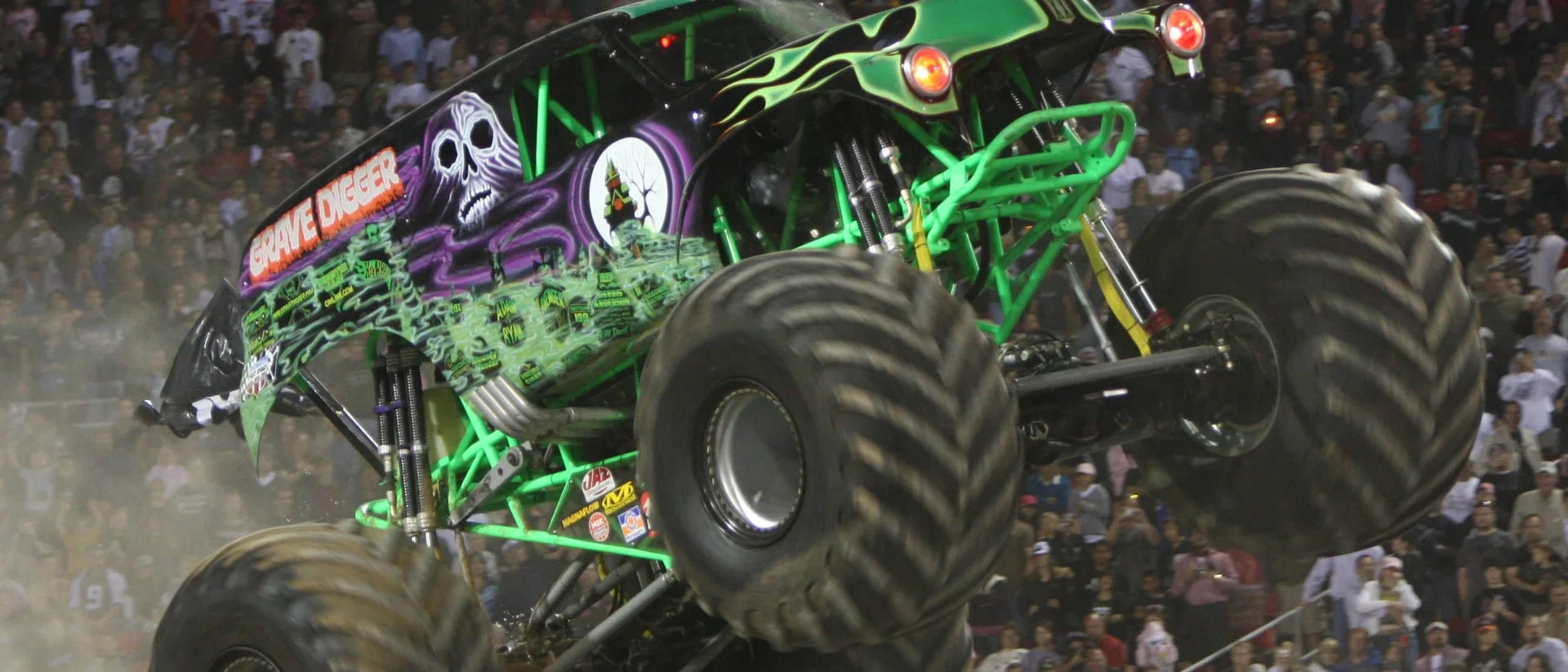
Dennis Anderson bagged grain for $3.65 an hour. He welded a monster truck from a wrecked 1950s Ford. Rivals mocked the junk heap, so he snapped back he'd dig them a grave with it. The name stuck. A booked truck no-showed a car-crush show, and his junker stunned the crowd instead. That truck became Grave Digger, the world's most famous monster truck. The weathered early Digger still sits in his family's truck museum.

He Built Grave Digger From a Junked Ford on $3.65 an Hour

3 viewsPosted 1 day agoUpdated 6 seconds ago

A Farm Wage and a Welding Torch

Before Grave Digger existed, Anderson worked farm jobs around Currituck County, North Carolina.

One of them paid $3.65 an hour for bagging grain, according to a Currituck County tourism profile of Anderson's career.

He put his spare time and spare change into a hobby: mud bogging, a backyard sport where oversized trucks race through pits of mud.

The truck he welded together in 1982 combined the body of a battered 1950s Ford pickup with a mismatched pile of salvaged parts.

The Insult That Named a Legend

Mud bogging is a trash-talking sport, and Anderson's ragged truck was an easy target for other racers.

When they mocked him for running junk, Anderson shot back that he'd take "this old junk" and dig them a grave with it.

The line stuck. Anderson grabbed a can of spray paint and wrote the name across the side of the truck himself: Grave Digger.

The Show That Never Showed Up

Grave Digger might have stayed a mud truck if not for a no-show. At a local event, the monster truck booked to crush cars for the crowd never arrived.

Anderson's truck already carried oversized tractor tires from mud bogging. The promoter, short a headline act, asked if he'd fill in.

He said yes. Grave Digger crushed cars in front of a crowd for the first time and stunned everyone watching.

Anderson abandoned mud bogging for good.

From Backyard Wreck to Monster Jam Icon

In 1984, Anderson rebuilt the truck around a 1951 Ford panel body, first painted silver and blue.

Two years later, in 1986, Grave Digger got the black graveyard paint scheme, green flames, tombstones and dripping letters, that made it instantly recognizable.

It became the flagship truck of Monster Jam, appearing in arenas across the country and inspiring generations of die-cast toys, video games and kids who grew up watching it launch off dirt ramps.
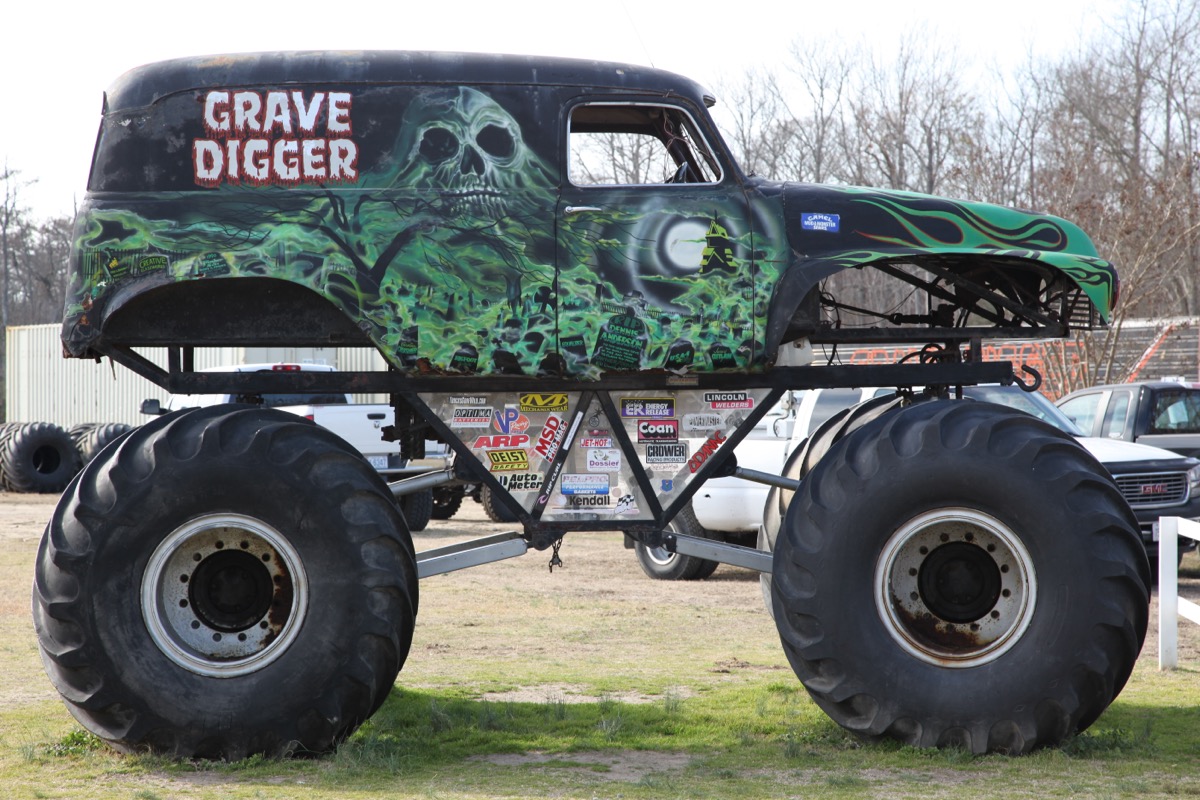
The first Grave Digger monster truck, rebuilt in 1984 and nicknamed Grandma, on static display inside Digger's Dungeon museum in Poplar Branch, North Carolina
Grave Digger 1, rebuilt in 1984 but still nicknamed "Grandma," on permanent display at Digger's Dungeon.

The First Truck Never Left

Anderson never sold or scrapped the first Grave Digger.

Rebuilt in 1984 onto that 1951 Ford panel body but still nicknamed "Grandma," it now sits on permanent display at Digger's Dungeon, the Anderson family's headquarters and museum in Poplar Branch, North Carolina.

Fans can still walk up and see the truck that started it all, proof a broke farmhand's junkyard build became the most famous name in monster trucks.

Enjoyed this? Get a new fact every day.

Follow FunFactz for the best ones in your feed.

or get one in your inbox

Frequently Asked Questions

Who built the original Grave Digger monster truck?
Dennis Anderson built the first Grave Digger in 1982 in North Carolina while working farm jobs, including one that paid $3.65 an hour. He welded it from a wrecked 1950s Ford pickup and salvaged junkyard parts.
How did Grave Digger get its name?
Other mud-bogging racers mocked Anderson's truck as junk. He shot back that he'd take "this old junk" and dig them a grave with it, then spray-painted the line onto the truck as its name.
How did Grave Digger become a monster truck instead of a mud truck?
At a local show, the monster truck booked to crush cars failed to appear. Anderson's mud truck already had oversized tires, so the promoter let him fill in. He stunned the crowd and never went back to mud bogging.
When did Grave Digger get its famous black paint scheme?
The graveyard paint job, with green flames, tombstones and dripping letters, debuted in 1986, four years after the truck was first built.
Where is the original Grave Digger truck today?
That first truck, rebuilt in 1984 onto a 1951 Ford panel body but still nicknamed "Grandma," is on permanent display at Digger's Dungeon, the Anderson family's headquarters and museum in Poplar Branch, North Carolina.

Verified Fact

This fact has been reviewed and verified against original sources.

Source: Wikipedia / Currituck County Tourism
Show verification details

Audited 2026-08-16. Primary source read in full: Wikipedia "Grave Digger (monster truck)" (source_url) - confirmed verbatim: donor body "red 1952 Ford pickup truck" (hedged in copy as "1950s Ford" per instructions, sources split 1951/1952/1957 across secondary outlets - correct to hedge), naming quote "I'll take this old junk and dig you a grave with it" (exact match to FAQ), car-crush no-show event ("a scheduled monster truck failed to show up... offered to crush cars"), 1984 rebuild ("1951 Ford panel van body originally sporting a silver and blue paint scheme" - matches text exactly), 1986 graveyard paint scheme (matches). Cross-checked Wikipedia "Dennis Anderson" bio page: confirms 1982 build year, 1952 Ford pickup, same naming quote, and farm work - though that page attributes the trash talk more specifically to "the boss's son" while the Grave Digger page says "fellow racers"; copy correctly hedges with generic "rivals," consistent with the cited source_url. $3.65/hr farmhand wage (Currituck Grain) and self-spray-painting the name are NOT on Wikipedia - corroborated via WebSearch snippets of thinkcurrituck.com "Dennis Anderson: 40 Years of Grave Digger" (direct WebFetch blocked by the site, medium confidence on this one secondary detail only - kept source_url as Wikipedia since it substantiates the technical backbone of the story; thinkcurrituck.com is the wage source, noted here per citation-fidelity check rather than swapped in as source_url since it does not cover the naming/rebuild/paint claims). CORRECTION MADE: text/social_text/social_caption/social_engagement_comment/article/FAQ all previously called the truck on display at Digger's Dungeon "the original" as if physically unchanged since the 1982 build - but Wikipedia specifically and consistently (both the Grave Digger monster-truck page and the independent monstertruck.fandom Grave_Digger_1 page) describes it as "the REBUILT version" (the 1984 rebuild, on a 1951 Ford panel body) that carries the "Grandma" nickname and sits on display, not the untouched 1982 truck (which had a 1952 Ford pickup body). This was an internal contradiction in our own article (rebuild paragraph vs. closing section both present) and a precision overclaim likely to draw a pedant correction from the Monster Jam/gearhead audience this MEGA-tier fact targets. Fixed by dropping "the original" language throughout and adding the 1984-rebuild qualifier to the article H2/photo caption/closing paragraph and FAQ Q5, while keeping the human-beat closer intact. Also trimmed social_text from 450 chars (at the hard stop, zero margin) to 423 chars and text from 426 to 399 chars while making this fix - net simplification, no other claims changed. Numeric coherence: all dates (1982 build, 1984 rebuild, 1986 paint) and the single dollar figure ($3.65/hr) are internally consistent and match Wikipedia exactly; no arithmetic claims present. TIER: MEGA affirmed - Grave Digger is a genuine US mass household-name brand (Monster Jam arena tours, Hot Wheels/die-cast toys, video games across generations, not a regional/niche subculture), engine=2 correctly reflects the famous subject BEING the story (a fresh angle on its own junkyard origin) rather than trivia name-dropped onto it, and share_detonator names two concrete, plausible >=2k-share tribes (dads sharing nostalgia to kids; Monster Jam/gearhead fans to each other) with a real mechanic (tag the friend who had the toy) - not vague. Fun-brand: clean pass, uplifting underdog-to-icon arc throughout, no downer elements, no demonetization-risk subjects. Naive-reader legibility: passes all 8 checks post-edit (referents established, no unwritten-fact dependency, linear anchored timeline, single payoff, no pedant traps remaining, closer is a human/family beat not logistics, human subject throughout - no institutional-voice creep, clear turn/reveal/emotional-return arc). Note for image-curator/scheduler: proof_photo_strength and beat_freshness are still NULL on this fact - real dramatic Grave Digger action photos and archival "Grandma" museum photos are plentiful, so proof-photo viability should be strong, but the field itself needs setting once a candidate image is sourced. FOLLOW-UP PASS (same session, after advisor review): social_caption never named "Dennis Anderson" or "Grave Digger" - for a MEGA/engine=2 fact whose reach mechanism depends on FB keying off the recognizable subject, withholding the brand name from the post's primary text disarms the lever the tier grade rests on. Rewrote to name both, cut the unintroduced "he never touched mud bogging again" (mud bogging is never established earlier in the caption - naive-reader check #2), and fixed "mocked him as junk" to "mocked his truck as junk" (they mocked the truck, not the man). social_engagement_comment said "the family that keeps it running" - unsupported invented detail; the article's own alt text says "static display." Cut to "nicknamed Grandma by the Anderson family." Article closer said the truck sits "a few feet from where a broke farmhand first bolted it together" - no source places Digger's Dungeon at the original build site; removed. H2 "Grandma Still Sits in the Barn" softened to "The First Truck Never Left" - no source calls it a barn (Wikipedia: "shop"; one 2023 source: moved into the "Rust in Peace Museum") and the fact/article already correctly say "Digger's Dungeon...museum" elsewhere, so the barn word was an invented-precision outlier.

Related Topics

More from Entertainment

View all Entertainment