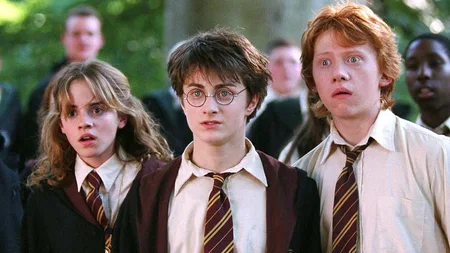
Author J K Rowling wrote the final chapter of the last Harry Potter book in "something like 1990", seven years before the release of the first book.
J.K. Rowling Wrote Harry Potter's Ending First
In 1990, a struggling writer on a delayed train from Manchester to London had an idea for a boy wizard. What makes this moment extraordinary isn't just that J.K. Rowling conceived Harry Potter—it's that she immediately knew how it would all end, seventeen years before the final book hit shelves.
Rowling wrote the epilogue of Harry Potter and the Deathly Hallows around 1990, the same year she first imagined the series. That final chapter, titled "Nineteen Years Later," sat in a drawer while she spent five years completing Philosopher's Stone, another decade writing six more books, and countless hours building the wizarding world that would captivate billions.
The Train Journey That Started Everything
The story began on that four-hour train delay. While other passengers fumed about the inconvenience, Rowling's mind was racing through platform 9¾, Hogwarts corridors, and all the way to the final scene. She didn't have a pen, so she just sat there thinking, plotting out seven years of magical education and the characters who would live through them.
What she knew from day one:
- There would be exactly seven books, one for each year at Hogwarts
- How Harry's parents died and why it mattered
- The true nature of Snape's loyalties
- Who would survive the final battle—and who wouldn't
- What Harry, Ron, and Hermione would be doing nineteen years later
Why Write the Ending First?
Most authors discover their endings as they write. Rowling did the opposite, working backward from a destination she'd already mapped. She's described the epilogue as her "anchor"—a fixed point that kept the sprawling story on course through seven books, thousands of pages, and over a decade of writing.
The epilogue proved essential during difficult writing moments. When plot threads tangled or character arcs wavered, Rowling could look at that 1990 chapter and remember where everyone needed to end up. It was like having the last page of a roadmap before drawing the route.
Seventeen Years in a Locked Hotel Room
On January 11, 2007, Rowling finished writing Deathly Hallows in room 552 of Edinburgh's Balmoral Hotel. She scrawled on a marble bust in the room: "J.K. Rowling finished writing Harry Potter and the Deathly Hallows in this room." That final chapter she'd written as a young, unpublished single mother? She revised it, polished it, but the core remained—a vision from 1990 finally reaching readers in 2007.
The seventeen-year gap between writing that epilogue and publishing it represents one of the longest creative commitments in literary history. Rowling protected that ending, kept it secret, and built everything else to serve it.
Philosopher's Stone was rejected by twelve publishers before Bloomsbury took a chance in 1997. If any of those rejections had stuck, that 1990 epilogue would still be sitting in a drawer, and the world would never know how it all ended—or that the ending existed first.
Frequently Asked Questions
When did J.K. Rowling write the last chapter of Harry Potter?
Why did J.K. Rowling write the ending of Harry Potter first?
Did J.K. Rowling change the Harry Potter epilogue she wrote in 1990?
Where did J.K. Rowling finish writing the Harry Potter series?
How long did it take J.K. Rowling to write all seven Harry Potter books?
Verified Fact
This fact has been reviewed and verified against original sources.
Show verification details
This fact is accurate. J.K. Rowling has confirmed in multiple interviews that she wrote the epilogue of Harry Potter and the Deathly Hallows (the final chapter titled 'Nineteen Years Later') around 1990, when she first conceived the series...