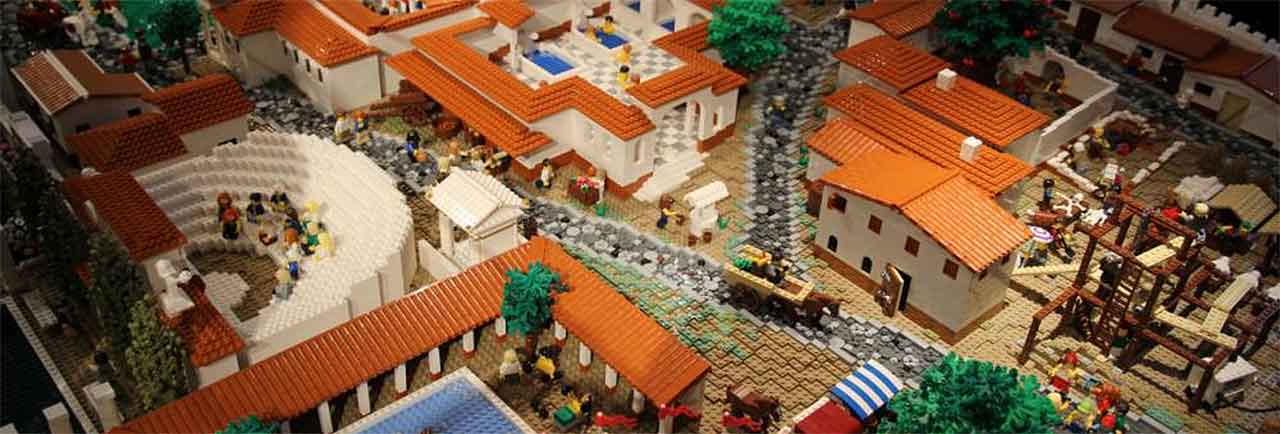
A man named Ryan McNaught spent 470 hours building a giant LEGO replica of the historic Roman town of Pompeii, using over 190,000 bricks.
This LEGO Pompeii Took 470 Hours to Build
When most people think of LEGO, they picture kids snapping together colorful bricks on a living room floor. Ryan McNaught thinks bigger. Much bigger.
The Australian artist spent 470 hours meticulously recreating the ancient Roman city of Pompeii—the one famously buried by Mount Vesuvius in 79 AD—entirely out of LEGO bricks. We're talking over 190,000 pieces assembled into temples, bathhouses, amphitheaters, and streets frozen in time.
Not Your Average Hobby
McNaught isn't just some enthusiastic hobbyist. He's one of only a handful of LEGO Certified Professionals in the world—people officially recognized by the LEGO Group for their exceptional building skills. Think of it as being a black belt in plastic bricks.
His Pompeii replica showcases the city as it appeared before disaster struck:
- The grand Forum where citizens gathered
- The Temple of Apollo with its towering columns
- Ancient bathhouses complete with tiny LEGO Romans
- Streets lined with shops and homes
- The infamous amphitheater where gladiators fought
Why Pompeii?
The choice wasn't random. Pompeii is one of archaeology's greatest gifts—a snapshot of Roman daily life preserved under volcanic ash for nearly 2,000 years. That level of historical detail gave McNaught something concrete to work from.
Every building, every street layout, every architectural flourish had to match what archaeologists have uncovered at the actual site. This wasn't about imagination; it was about accuracy.
The Numbers Are Staggering
Let's break down what 470 hours actually means. That's nearly 20 full days of continuous building. If you worked on it for 8 hours every single day, you'd be at it for almost two months straight—no weekends, no breaks.
And sorting through 190,000 bricks? Finding that one specific 2x4 tan piece among thousands of nearly identical parts? That's a patience test most people would fail within the first hour.
The finished model has toured museums and exhibitions, giving visitors a unique way to connect with ancient history. There's something about seeing Pompeii rendered in a familiar medium that makes the past feel suddenly accessible.
A Growing Trend
McNaught isn't alone in pushing LEGO into serious artistic territory. Adult fans of LEGO—yes, they call themselves AFOLs—have built everything from life-sized cars to functional prosthetic arms. The medium has evolved far beyond children's toys.
But recreating an entire ancient city, brick by tiny brick, with archaeological precision? That's next level. It's part history lesson, part engineering marvel, and part meditation on just how much humans can accomplish when they're slightly obsessed with something.
Pompeii was destroyed in a single day. Rebuilding it in LEGO took 470 hours. Sometimes the reconstruction takes longer than the destruction—and that's kind of beautiful.
Enjoyed this? Get a new fact every morning.
A fascinating fact in your inbox every morning. Free. Unsubscribe anytime.
Frequently Asked Questions
Who built the LEGO Pompeii replica?
How long did it take to build LEGO Pompeii?
How many LEGO bricks are in the Pompeii model?
What is a LEGO Certified Professional?
Where can you see the LEGO Pompeii?
Verified Fact
Verified against multiple sources
Show verification details
Ryan McNaught (not McKnight) is the correct name - he's a LEGO Certified Professional from Australia. The Pompeii replica took approximately 470 hours and used over 190,000 LEGO bricks. Corrected the surname.
Related Topics
More from Entertainment
View all Entertainment →