
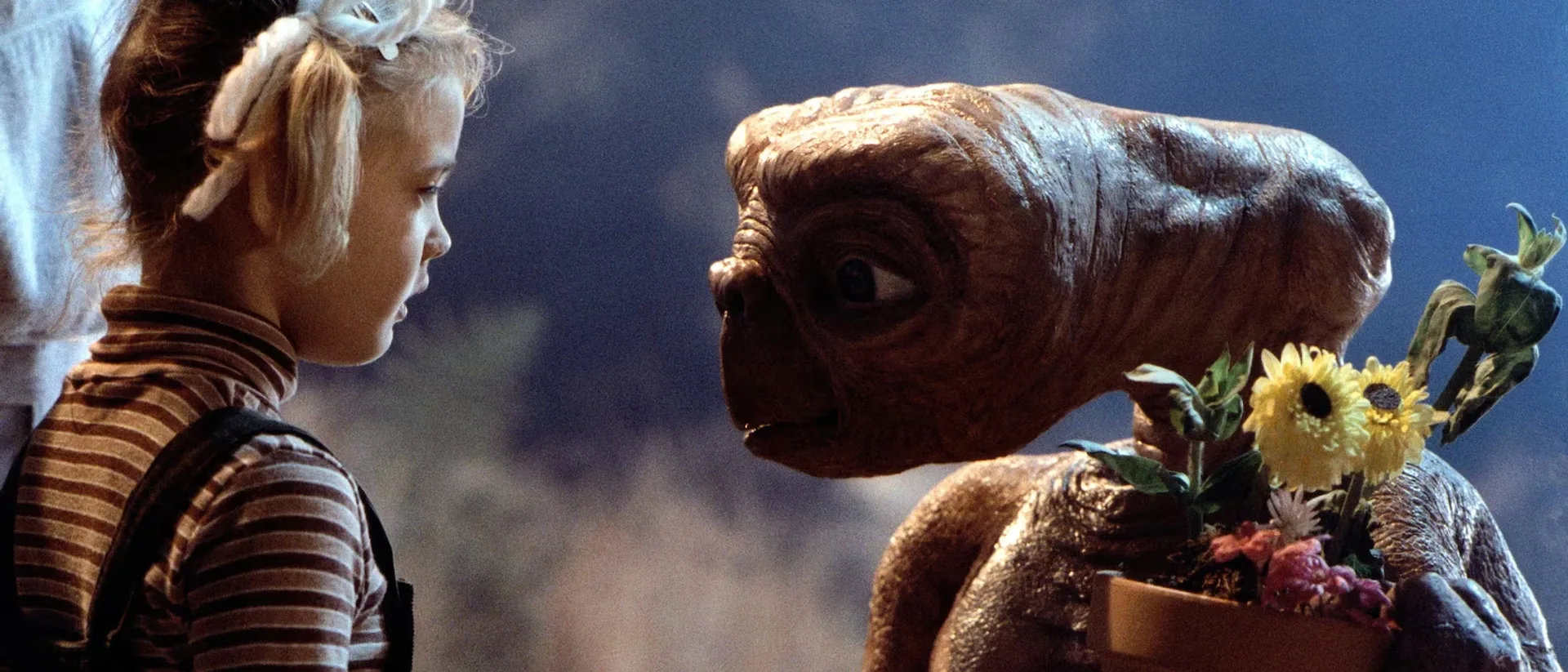
Mars had the chance to put M&M's in E.T. but refused to sign off without seeing the script. The script was secret, so Mars passed. Hershey stepped in and put Reese's Pieces in the film instead. E.T. became the biggest movie of 1982. Reese's Pieces sales jumped 65% in two weeks. Mars let a billion-dollar alien eat somebody else's candy.
The Candy That Said No to the Biggest Movie of 1982
In 1981, Steven Spielberg was in post-production on what would become one of the most beloved films ever made. E.T. the Extra-Terrestrial needed a candy that the alien character would follow — a trail of sweets that would become one of cinema's most iconic images.
Spielberg's team approached Mars, Inc., the company behind M&M's, about featuring the candy in the film. The request was straightforward: let us use M&M's, and millions of moviegoers will watch an adorable alien fall in love with your product.
Mars said no.
The exact reasoning has been debated over the years. Some accounts suggest Mars executives were concerned about their candy being associated with an alien creature. Others point to licensing disagreements. Whatever the reason, Mars passed.
Hershey saw the opportunity Mars had missed. They offered Reese's Pieces for the film, reportedly agreeing to spend about $1 million on promotional tie-ins with the movie.
E.T. opened on June 11, 1982, and became a phenomenon. It grossed $435 million worldwide, making it the highest-grossing film of the year and, at the time, the highest-grossing film ever made.
The effect on Reese's Pieces was immediate and dramatic. Sales jumped 65% within two weeks of the film's release. Some reports suggest sales eventually tripled. The candy went from a relatively obscure Hershey product to a household name overnight.
The E.T./Reese's Pieces partnership is now taught in business schools as the textbook example of successful product placement. Mars's decision to decline remains one of the most frequently cited marketing blunders in corporate history.
Frequently Asked Questions
Why did M&M's turn down E.T.?
How much did Reese's Pieces sales increase after E.T.?
Verified Fact
M&M's/Mars rejecting E.T. is well-documented in multiple Spielberg retrospectives and business case studies. Hershey confirmed the deal. 65% sales increase in two weeks is the most commonly cited figure, reported by Hershey and multiple business publications. E.T. was the highest-grossing film of 1982 ($435M worldwide).
Business Insider