
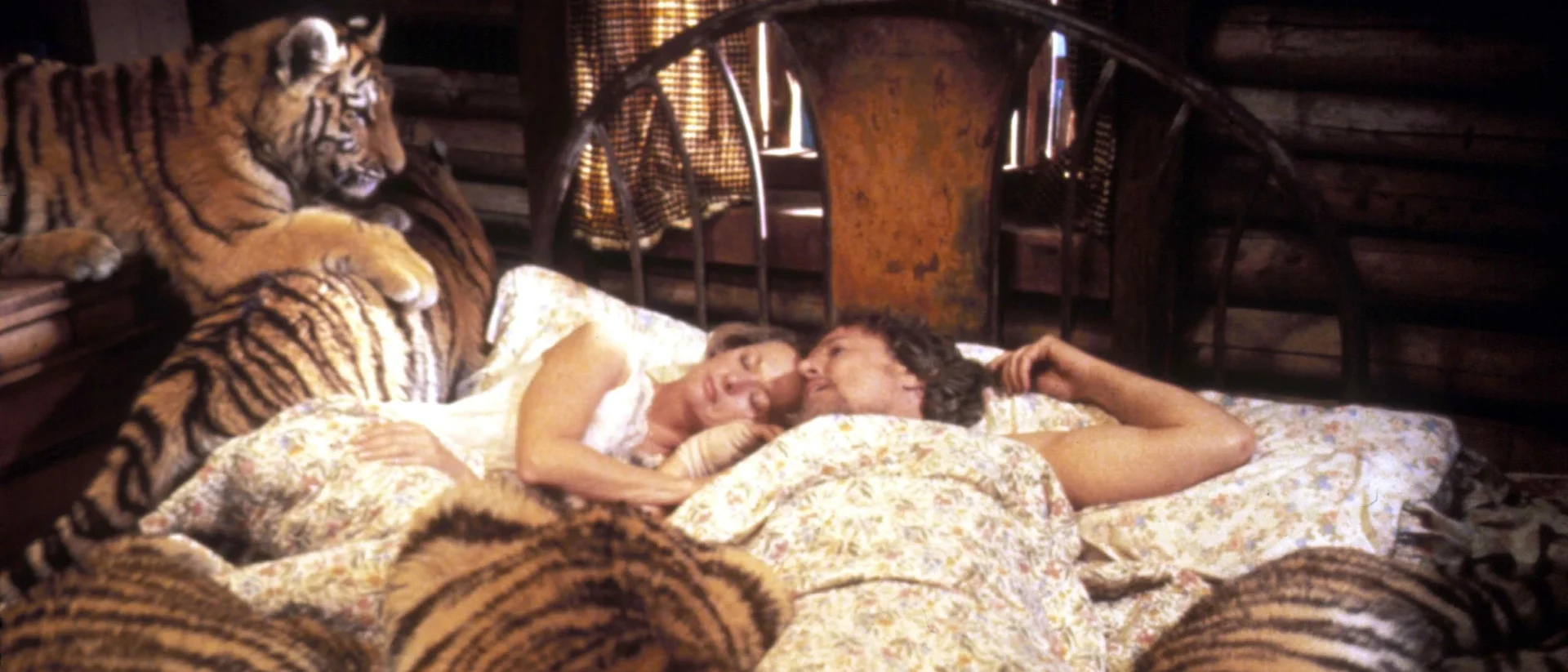
"Roar" (1981) is the most dangerous movie ever made. The cast spent 11 years living with 150 untrained big cats - no cages, no tranquilizers. Melanie Griffith needed facial reconstructive surgery. The cinematographer was scalped by a lion (220 stitches). At least 70 crew were injured. No animals were harmed.
The Most Dangerous Movie Ever Made
In 1969, filmmaker Noel Marshall visited an abandoned house in Africa surrounded by wild lions. He didn't run. He moved in. Within a decade, that encounter became the most dangerous film production in Hollywood history.
The Idea That Should Have Stayed an Idea
Marshall conceived "Roar" as a statement about wildlife conservation. He and his then-wife, actress Tippi Hedren - star of Hitchcock's "The Birds" - decided to film an entire feature on their Soledad Canyon ranch in California, populated with real, untrained big cats. By the time production wrapped, they had acquired around 150 animals: 71 lions, 26 tigers, 9 black panthers, 10 cougars, 2 jaguars, 4 leopards, and 2 elephants. The animals roamed the property freely. The family - including Marshall's sons and Hedren's daughter Melanie Griffith - lived among them.
Production Hell With Teeth and Claws
Principal photography began in October 1976 and stretched across five filming seasons. In 1978, a flash flood destroyed much of the set and killed 14 of the big cats, causing over $3 million in damages. Meanwhile the cast and crew kept getting attacked. Cinematographer Jan de Bont - who later directed Speed and Twister - was scalped by a lioness while filming and required 220 stitches before returning to the production. Melanie Griffith was mauled by a lioness, needed roughly 50 stitches, and was warned she might lose an eye; she ultimately required facial reconstructive surgery. Tippi Hedren's ankle was fractured by an elephant, and a lion's teeth scraped directly across her skull during a separate attack. Director-star Noel Marshall was bitten so many times that he eventually developed gangrene and blood poisoning, requiring years to fully recover.
The Toll
By the time "Roar" was completed and released in 1981, at least 70 members of the cast and crew had been injured - some estimates put the number above 100. The film cost $17 million to make and earned less than $2 million worldwide. It never received a wide US theatrical release.
The Tagline That Says It All
The film drifted into obscurity for decades until Drafthouse Films gave it a limited US re-release in 2015 under the tagline: "No animals were harmed during the making of this film. 70 members of the cast and crew were." It has since been embraced as an utterly singular cult object - a film so recklessly made it is effectively impossible to imagine anyone attempting today. The American Humane Association was not present on set. No safety protocols governed animal-human contact on the production. It remains, without serious competition, the most dangerous movie ever made.
Frequently Asked Questions
How many people were injured making Roar (1981)?
What happened to Jan de Bont on the set of Roar?
How long did it take to make Roar (1981)?
How much did Roar (1981) make at the box office?
Did Melanie Griffith get hurt filming Roar?
Verified Fact
Verified Aug 26, 2026 · 5 sources checked
Source: WikipediaShow verification details
Claims checked
- 11-year production with ~150 untrained big cats
- 70+ crew injured
- Cinematographer Jan de Bont scalped, 220 stitches
- Melanie Griffith needed facial reconstructive surgery
- Tippi Hedren's ankle fractured (not leg) by elephant
Sources: Wikipedia, Collider, MovieWeb, Stage32, Chicago Sun-Times