
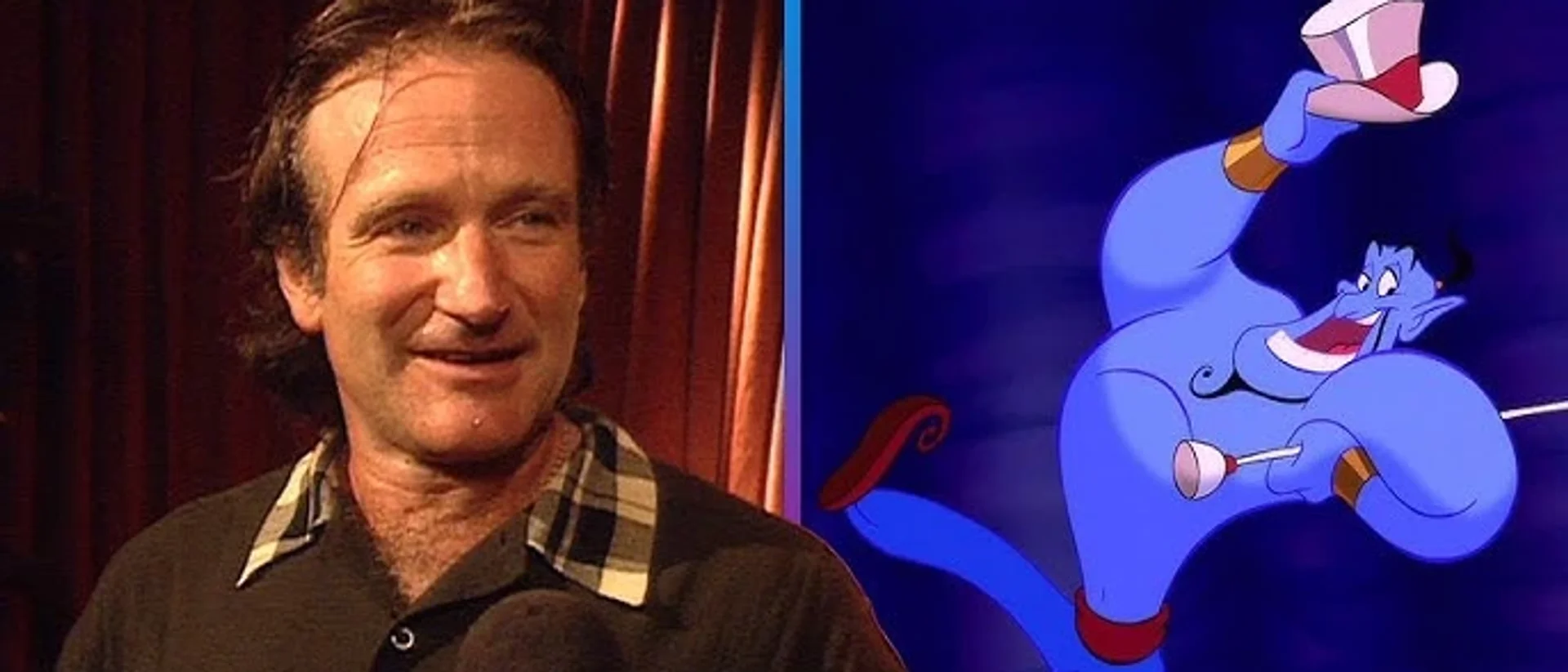
Robin Williams voiced the Genie in Aladdin for just $75,000 - on one condition: no ads. Disney broke the deal at once, using his voice to sell Burger King meals. To smooth it over, an exec sent a Picasso worth $1 million. Williams refused the gift. He only returned after a new Disney chief simply apologized - for a $1 million sequel deal.
Robin Williams, Disney, and the $1M Picasso That Failed
Robin Williams agreed to work for almost nothing. Disney agreed to keep their side of a very simple deal. One party kept their word.
The $75,000 Agreement
In 1992, Robin Williams signed on to voice the Genie in Aladdin for $75,000 - the SAG union minimum - when his standard live-action rate was around $8 million. He did it because he wanted to be part of Disney animation history. But he had one non-negotiable clause written into the contract: Disney could not use his voice or likeness to sell merchandise or advertising. The Genie character could not appear in more than 25% of any promotional artwork. Williams later explained his thinking on The Today Show: "I just don't want to sell anything - as in Burger King, as in toys, as in stuff."
Disney Broke the Deal Immediately
Before the film was even out of theaters, Disney had the Genie dominating every poster - towering over Aladdin and every other character - and licensed Williams' voice for Burger King promotions and a wave of toys and merchandise. On The Today Show in November 1993, Williams told interviewer Gene Shalit what he thought of it: "We had a deal." He added: "Not only did they use my voice, they took a character I did and overdubbed it to sell stuff." Williams refused to return for the 1994 straight-to-video sequel, and Dan Castellaneta - the voice of Homer Simpson - was quietly hired to replace him.
The $1M Picasso That Fixed Nothing
Disney studio chief Jeffrey Katzenberg attempted to smooth things over by sending Williams a Picasso painting valued at $1 million. Williams was unmoved - he found it garish and out of place in his home. His friend Eric Idle suggested Williams go on live television and burn the painting. Williams joked he would just make a copy and burn that instead. Williams wasn't ready to forgive. In August 1994, Katzenberg left Disney.
The Apology That Actually Worked
Joe Roth stepped in as Disney chairman and did what the million-dollar painting could not: he publicly apologized. Roth's statement was direct - "Robin complained that we took advantage of his performance as the Genie in the film, exploiting him to promote some other businesses inside the company. We had a specific understanding with Robin that we wouldn't do that. We apologize for it." No gift. No bonus. Just words. Williams accepted immediately. He described the resolution as: "It's like a country re-establishing diplomatic relations." He returned to voice the Genie in Aladdin and the King of Thieves (1996) for a reported $1 million - 13 times what he was originally paid.
Frequently Asked Questions
Why did Robin Williams voice the Genie for only $75,000?
What did Disney do that violated their deal with Robin Williams?
Why didn't the Picasso painting fix the feud with Robin Williams?
How did Robin Williams reconcile with Disney after the Aladdin feud?
How much was Robin Williams paid to return for the third Aladdin film?
Verified Fact
Verified Aug 26, 2026 · 4 sources checked
Source: CheatsheetShow verification details
Claims checked
- Robin Williams was paid $75,000 for the Genie
- Disney broke a no-ads deal by using his voice in Burger King ads
- An exec sent a Picasso gift Williams refused
- Williams returned after a new Disney chief apologized, for a $1 million sequel deal
Sources: Cheatsheet, LadBible, MousePlanet, The Daily Beast