
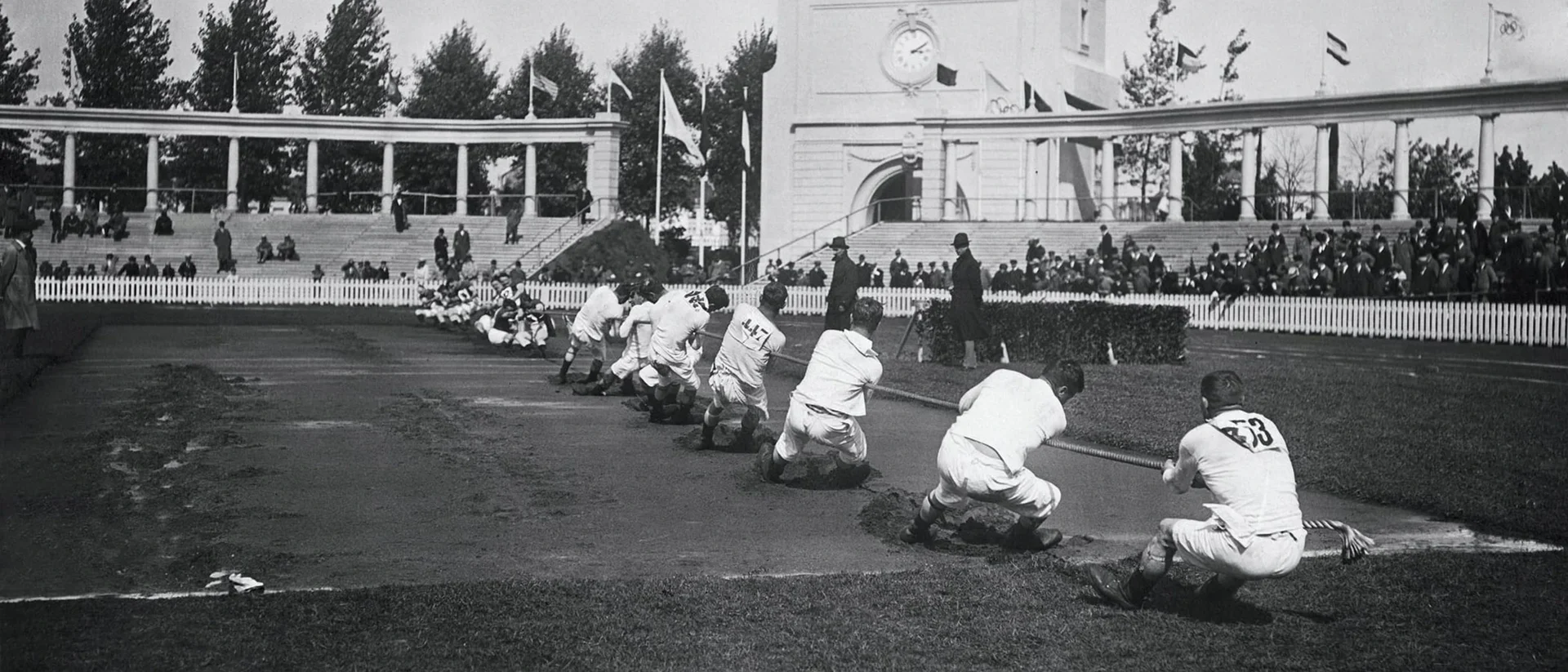
Tug of War was an Olympic event between 1900 and 1920.
Tug of War Was a Legit Olympic Sport for Two Decades
If you think the Olympics are all about gymnastics, swimming, and track events, you'd be surprised to learn that tug of war was once a legitimate medal sport. Between 1900 and 1920, teams of burly competitors battled it out in what's now considered a children's game, pulling rope for Olympic glory at five different Games.
The sport made its debut at the 1900 Paris Olympics, where a combined Swedish-Danish team took the first gold medal by defeating France. Back then, teams were small—just five or six pullers per side. By the 1908 London Olympics, the format had evolved to eight-person teams, the standard that remained through the sport's final appearance.
Police Officers Dominated the Competition
The 1908 Games sparked controversy when three British police teams swept all three medals. The City of London Police won gold, Liverpool Police took silver, and the Metropolitan Police K Division claimed bronze. The American team protested that the British competitors had an unfair advantage—they were wearing their heavy, spiked police boots. The U.S. withdrew in protest, but the results stood.
Those same City of London Police officers returned in 1912 but lost to Sweden. They got their revenge at the 1920 Antwerp Olympics, reclaiming gold in what would be tug of war's final Olympic appearance. Three team members—Frederick Humphreys, Edwin Mills, and James Shepherd—won their third Olympic medals across these competitions.
Why Did It Disappear?
After 1920, the International Olympic Committee decided the Games had become too bloated. Tug of war was axed along with 33 other sports in a massive downsizing effort. The IOC felt there were too many events and too many competitors, so they made the brutal decision to trim the program.
The sport had its quirks. In 1904 at the St. Louis Olympics, the United States won all three medals because countries could enter multiple club teams. It was the only time one nation swept the podium in an Olympic tug of war competition.
The Tug of War Legacy
While tug of war disappeared from the Olympics, it didn't vanish entirely. The Tug of War International Federation was founded in 1960, and the sport continues with world championships held every two years. Modern competitions have strict rules about footwear, technique, and team weights to ensure fair play—lessons learned from those controversial 1908 boots.
Today, tug of war lives on at company picnics, school field days, and international competitions far from the Olympic spotlight. But for two decades at the turn of the 20th century, it stood alongside athletics and swimming as a genuine test of Olympic strength and teamwork.
Frequently Asked Questions
When was tug of war an Olympic sport?
Why was tug of war removed from the Olympics?
Which country won the most Olympic tug of war medals?
What was the tug of war controversy at the 1908 Olympics?
Is tug of war still a competitive sport?
Verified Fact
This fact has been reviewed and verified against original sources.
Show verification details
Confirmed through multiple sources including Olympics.com, Wikipedia, and the Tug of War Association. The sport appeared at five Olympic Games between 1900-1920 before being discontinued.