
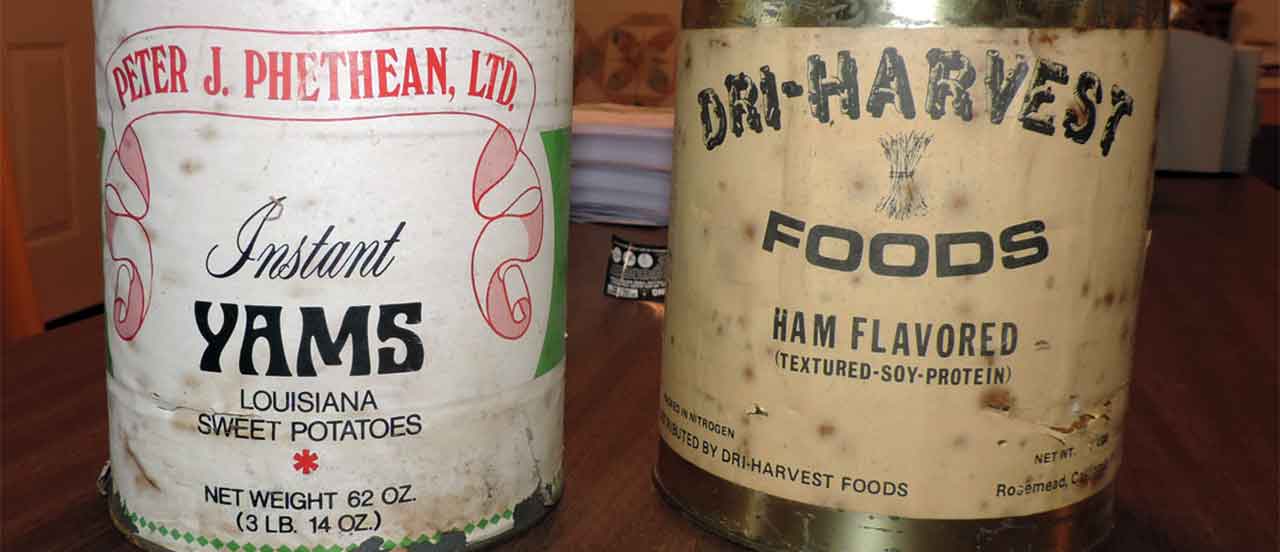
In 1974, canned food from a boat that sank in 1865 was tested by chemists and was found to be still safe to eat.
Century-Old Canned Food Still Safe: The Bertrand's Cargo
Picture this: You're cracking open a can of food that spent over a century underwater in a sunken steamboat. Would you eat it? In 1974, chemists did exactly that—and gave it a passing grade.
The year was 1865. The steamboat Bertrand was chugging up the Missouri River, loaded with supplies headed for Montana Territory gold camps, when disaster struck. The vessel hit a snag and sank, taking its entire cargo to the muddy riverbed.
A Time Capsule in the River
Fast forward to 1968. Treasure hunters finally located the Bertrand and began hauling up its remarkably preserved cargo. Among the relics? Hundreds of canned goods that had been sealed in the 1860s—back when canning was still a relatively new technology.
The discovery caught the attention of the National Food Processors Association. Here was a once-in-a-lifetime opportunity: testing food preservation techniques with real-world samples that had endured extreme conditions for 103 years.
What the Tests Revealed
In 1974, food scientists cracked open cans of oysters, fruits, vegetables, and meats from the Bertrand. They ran comprehensive tests for bacterial contamination, toxins, and safety markers.
The verdict? Microbiologically safe to eat. No botulism. No dangerous bacteria. The vacuum seals had held.
But there was a catch. While the food wouldn't make you sick, it had lost most of its nutritional value. Vitamins had degraded significantly, and the color, texture, and taste had deteriorated. You could survive on it, but you wouldn't enjoy the meal.
Why It Lasted So Long
Several factors conspired to preserve these ancient cans:
- The cold river environment acted like a natural refrigerator, slowing chemical breakdown
- Oxygen-free mud prevented rust and seal deterioration
- No light exposure meant no vitamin degradation from UV rays
- Stable temperatures avoided the expansion and contraction that weakens seals
The Bertrand had essentially created ideal storage conditions by accident.
Don't Try This at Home
Before you start hoarding cans in your bunker, understand this: the Bertrand cans were extreme outliers. Modern safety guidelines recommend using canned goods within 2-5 years for optimal nutrition and quality.
Food scientists emphasize that while properly canned food can technically remain safe for decades if seals stay intact, you're gambling with decreasing nutritional value and increasing risk of seal failure. A century-old can might not kill you, but last year's dented can of beans very well could.
The Bertrand experiment proved that canning technology—even in its primitive 1860s form—was remarkably effective. It's a testament to the ingenuity of food preservation science. But it's also a controlled laboratory finding, not a green light for eating ancient pantry finds.
Those 109-year-old cans remain one of food science's most fascinating case studies: edible, but not exactly appetizing.
Frequently Asked Questions
How long can canned food last without spoiling?
What ship sank in 1865 with canned food still found edible?
Why does canned food stay fresh for so long?
Can you eat canned food from the 1800s?
What happens to food in cans over time underwater?
Verified Fact
This fact has been reviewed and verified against original sources.
Show verification details
This refers to the steamboat Bertrand, which sank in the Missouri River in 1865. The cargo was recovered in 1968, and canned goods were tested by the National Food Processors Association in 1974.