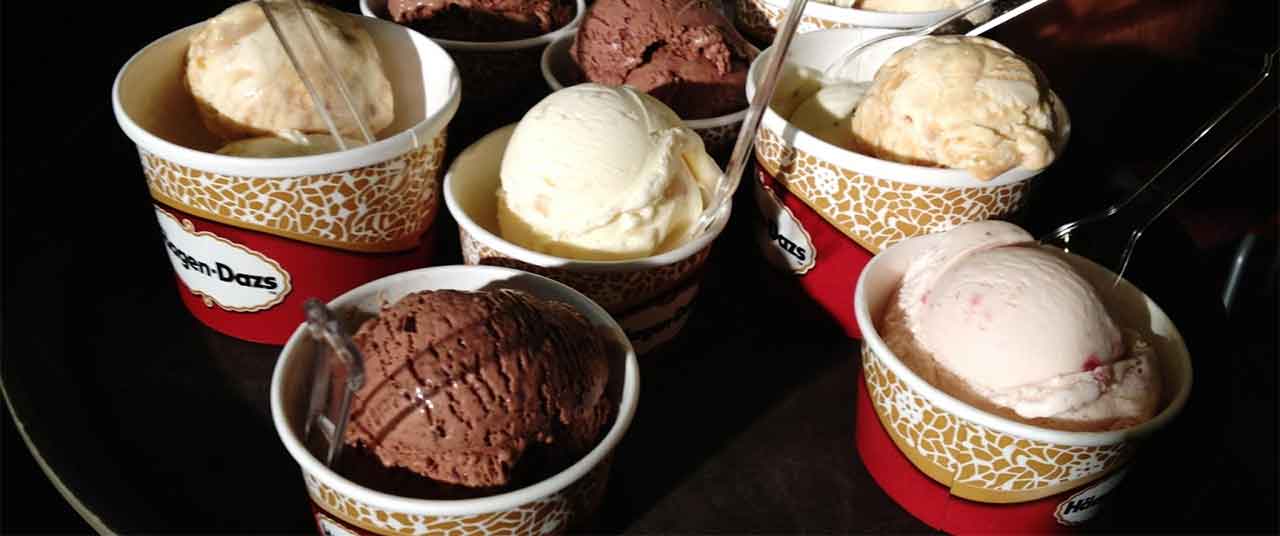
The Häagen-Dazs ice cream creator was American and made up the brand name to sound Danish, unique, and sophisticated. It doesn't mean anything.
Häagen-Dazs Is Completely Made Up (And Totally American)
Next time you're reaching for that pint of Häagen-Dazs, you're holding one of marketing's greatest acts of pure invention. The sophisticated European name plastered across the carton? Completely meaningless. It's not Danish, it's not any language—it's gibberish with an umlaut.
The man behind this fictitious phrase was Reuben Mattus, a Polish-Jewish immigrant who built an ice cream empire in the Bronx, New York. In 1961, Mattus wanted a brand name that would make his premium ice cream stand out on American shelves. So he did what any creative entrepreneur would do: he sat at his kitchen table for hours, mumbling nonsensical syllables until something clicked.
A Tribute Hidden in Nonsense
But here's where the story gets meaningful. Mattus didn't just pick random sounds—he was deliberately crafting something Danish-sounding. His reason was deeply personal: Denmark was the only country during World War II that actively protected its Jewish population from Nazi persecution. When Germany invaded Denmark in 1940, the Danish resistance helped ferry nearly all of Denmark's Jews to safety in neutral Sweden.
As his daughter Doris later explained, her father created "a totally fictitious Danish name" as a tribute to that heroism. He even put a map of Denmark on the original cartons, despite having zero connection to the country.
The Umlaut That Doesn't Exist
Here's the kicker: Mattus added an umlaut (ä) to make it look extra European and sophisticated. The problem? Danish doesn't use umlauts. That's a German and Swedish thing. But Mattus knew his American audience wouldn't know the difference—and he was right. The exotic-looking name, complete with its fake diacritic, screamed "premium European quality" to postwar American consumers.
The strategy worked brilliantly. People assumed they were buying something imported and exotic when they were actually supporting a scrappy operation in the Bronx. Mattus's "premium" positioning—richer, denser ice cream with no air whipped in—combined with the foreign mystique helped Häagen-Dazs become synonymous with luxury ice cream.
What Makes It Genius
- It's memorable: Try forgetting a name like Häagen-Dazs once you've seen it
- It implies quality: European = sophisticated in American consumer psychology
- It stands out: Nothing else in the freezer aisle looked or sounded like it in 1961
- It scales globally: The nonsense name doesn't translate poorly because it doesn't translate at all
The Mattuses sold Häagen-Dazs to Pillsbury in 1983, and it eventually became part of General Mills. Today it's sold in over 50 countries, and most people still have no idea it was invented by an American guy saying silly words at his kitchen table.
So the next time someone tries to impress you with their "authentic" Häagen-Dazs pronunciation, you can let them in on the secret: there is no authentic pronunciation. It's all made up. And that's exactly why it worked.
Frequently Asked Questions
What does Häagen-Dazs mean in Danish?
Why did Reuben Mattus choose a Danish-sounding name?
Is Häagen-Dazs actually from Denmark?
Does the umlaut in Häagen-Dazs mean anything?
How did Reuben Mattus come up with the name Häagen-Dazs?
Verified Fact
This fact has been reviewed and verified against original sources.
Show verification details
The fact is entirely accurate. Reuben Mattus, a Polish-Jewish American immigrant, invented the name Häagen-Dazs in 1961 in the Bronx, New York.