Arthur Ehrat, a farmer who barely followed basketball, built the rim that bends on every dunk. In 1976, his nephew, a college coach, said players kept bending rims. Ehrat tried magnets in his shed. They failed. A coil spring off a John Deere field cultivator held instead. A player shattered two backboards in 1979, but the NBA didn't adopt the rim until 1981. Every dunk since traces back to a farmer's tractor spring.
A Farmer Built the Spring Behind Every Slam Dunk
Every time an NBA player dunks and the rim bends toward the floor instead of snapping the backboard in half, it is bowing to a design that traces back to a spring built for tilling farmland. The man behind it wasn't a sports engineer. He lived in Virden, Illinois, and managed a grain elevator in nearby Lowder, and by his own account barely followed the game.
A Nephew's Complaint
In 1976, Arthur Ehrat's nephew Randy Albrecht was an assistant basketball coach at Saint Louis University.
Albrecht told his uncle that his players kept bending the rims when they dunked, and some were getting hurt doing it.
Backboards were cracking under the strain too. The slam dunk had become the sport's signature move, popularized by stars like Julius Erving and David Thompson, and the equipment couldn't keep up.
Ehrat had no background in basketball or sports engineering. What he had was a farm workshop full of spare parts.
Magnets First, Then a Tractor Part
He started with strong magnets, hoping they would hold the rim level and let it fold under pressure before snapping back into place.
The magnets weren't strong enough.
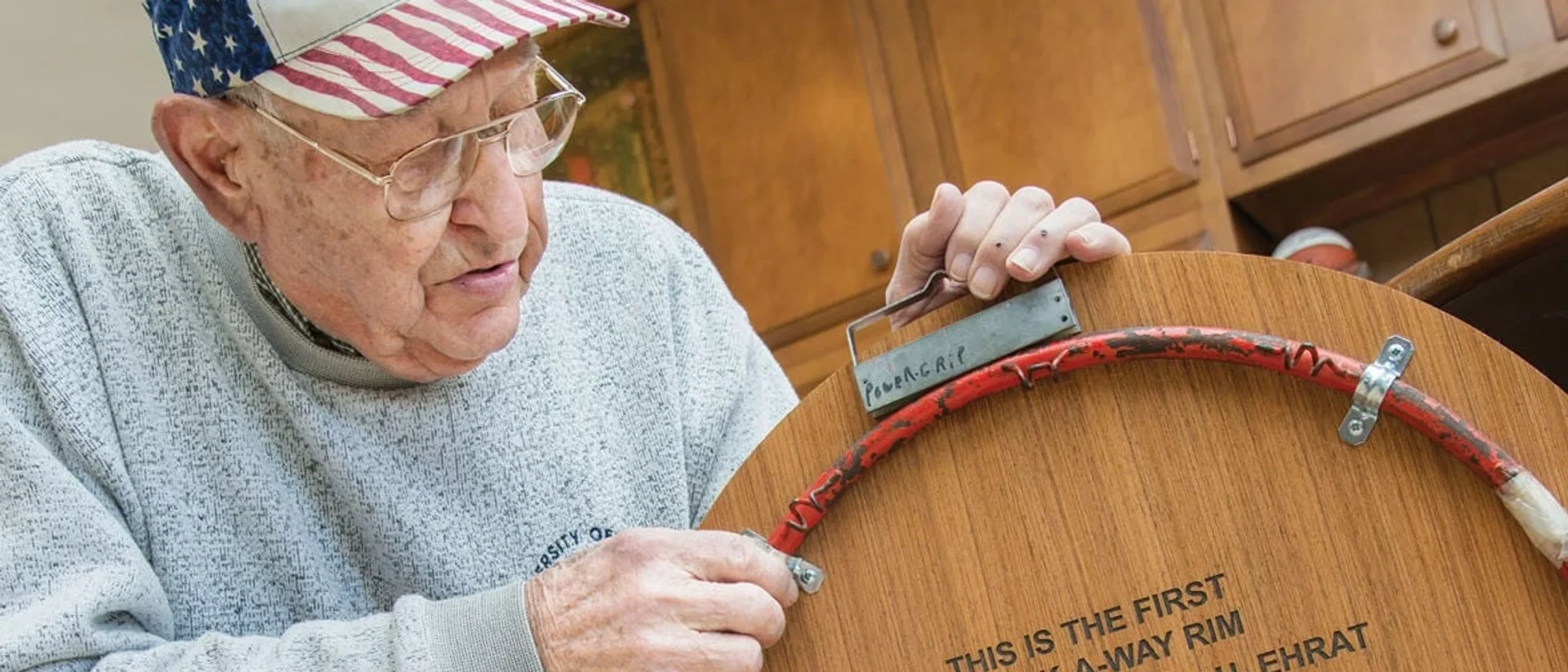
Ehrat tried a coil spring instead, the kind pulled from a John Deere field cultivator, and bolted it into a hinge under a basketball rim.
The spring held under 125 pounds of force and pulled the rim back into position every time it was tested.
He named his invention "The Rebounder."
A Patent That Took Six Years
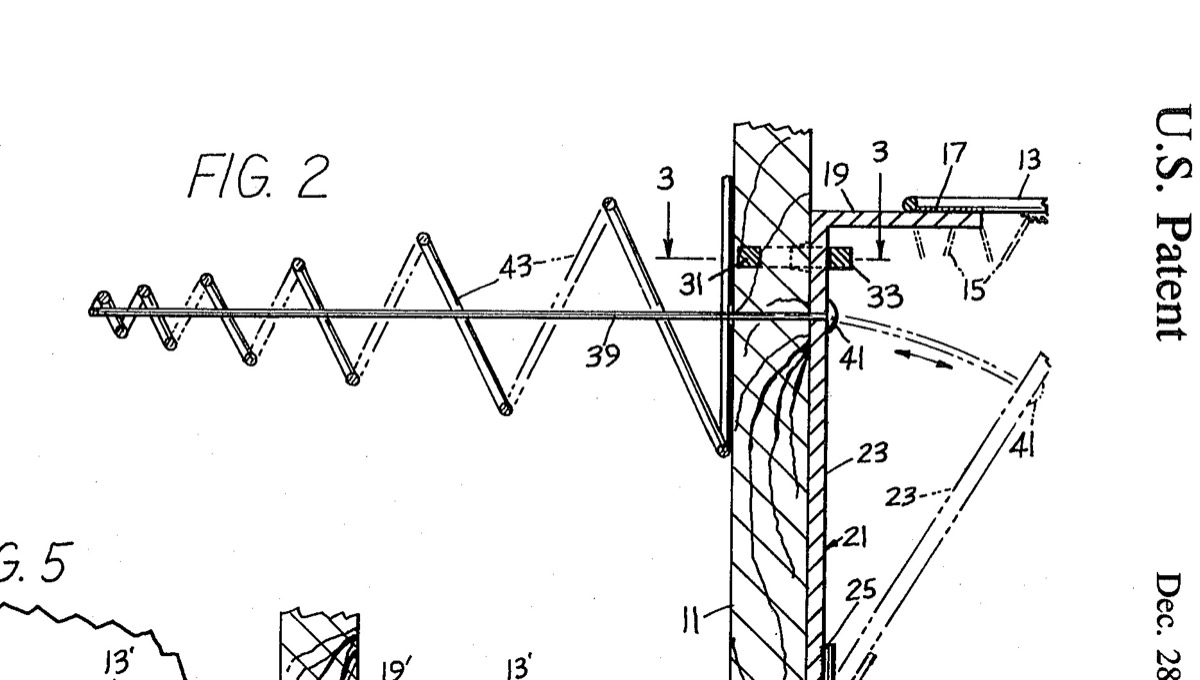
Ehrat filed a patent application in 1976 for what the paperwork called a "deformation-preventing swingable mount for basketball goals."
It took the U.S. Patent Office six years to grant it. Patent number 4,365,802 was issued on December 28, 1982.
The invention was already on the court long before the paperwork cleared. The NCAA used breakaway rims at the 1978 Final Four in St. Louis.
The NBA Waited for a Disaster
The NBA was slower to adopt it.
On November 13, 1979, Philadelphia 76ers center Darryl Dawkins dunked hard enough to shatter the backboard entirely, sending glass across the court.
He did it again three weeks later.
The NBA didn't make breakaway rims standard equipment until the 1981-82 season, two years after Dawkins, already nicknamed "Chocolate Thunder," shattered two backboards in three weeks.
Still Standing in the Smithsonian
Ehrat's original prototype now belongs to the National Museum of American History, along with his patent papers and correspondence.
A donated rim hangs in the gym at Virden High School, a few miles from the shed where he built the first one.
The Smithsonian's Lemelson Center for the Study of Invention and Innovation credits Ehrat as the inventor, though it also notes other people have claimed credit for the design over the years.
Every slam dunk since, from a Friday night gym class to Game 7 of the NBA Finals, still bends on the same idea: a spring built to keep soil loose in a farm field.
Enjoyed this? Get a new fact every morning.
A fascinating fact in your inbox every morning. Free. Unsubscribe anytime.
Frequently Asked Questions
Who invented the breakaway basketball rim?
What part did Arthur Ehrat use to build the breakaway rim?
When did the NBA start using breakaway rims?
Where is the original breakaway rim today?
When was the breakaway rim patented?
Verified Fact
Verified Aug 16, 2026 · 5 sources checked
Source: Smithsonian National Museum of American HistoryShow verification details
Claims checked
- Arthur Ehrat, a farmer who barely followed basketball, built the breakaway rim
- He first tried magnets, then used a coil spring from a John Deere field cultivator
- The NBA adopted the rim in 1981-82, after two backboards were shattered in 1979
- Ehrat lived in Virden, Illinois, but managed the elevator in nearby Lowder (earlier version said Virden)
- His nickname 'Chocolate Thunder' came from Stevie Wonder, not from shattering backboards
Sources: Smithsonian National Museum of American History, Wikipedia, FarmWeek, History.com, Chicago Sun-Times
Related Topics
More from History & Culture
View all History & Culture →