In 1963, a man found a mysterious room behind a wall in his home that lead to a huge underground city that once housed up to 20,000 people, complete with schools, livestock pens, and food stores, dating back over a millennium.
The Underground City Hidden Behind a Basement Wall
Imagine renovating your basement and accidentally knocking through to a hidden chamber. Then realizing that chamber connects to another. And another. Until you've stumbled into an entire underground city that once sheltered 20,000 people.
That's exactly what happened to a homeowner in Derinkuyu, Turkey in 1963. What started as a simple home improvement project became one of archaeology's most stunning discoveries.
A City Carved from Stone
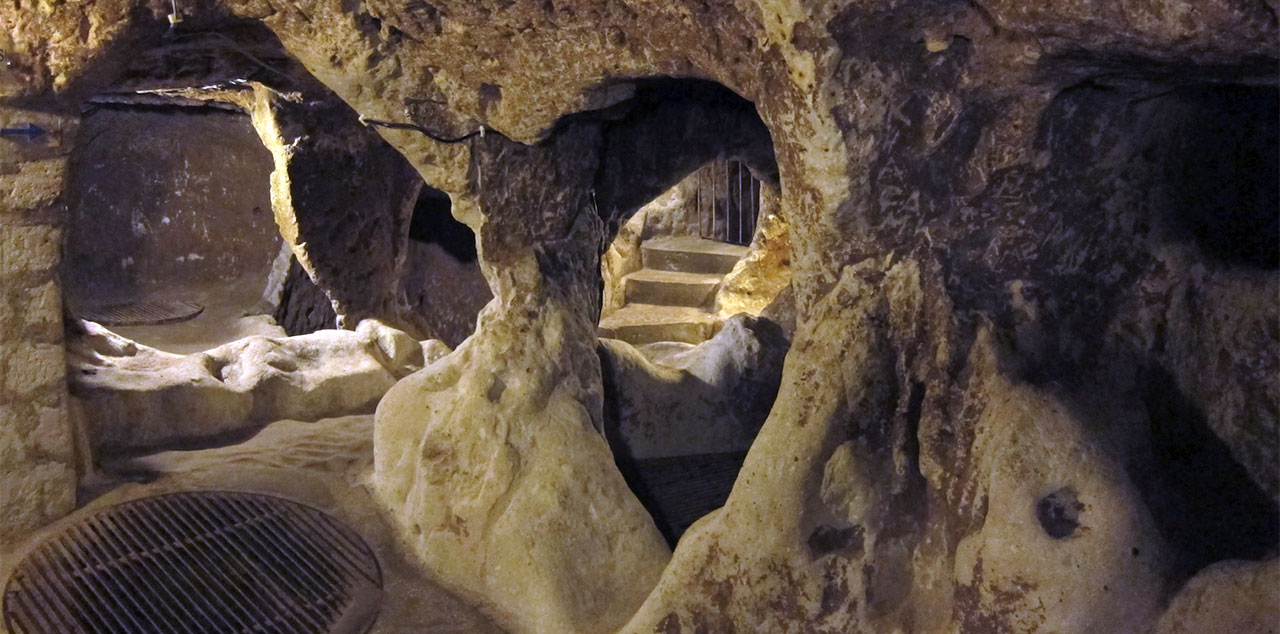
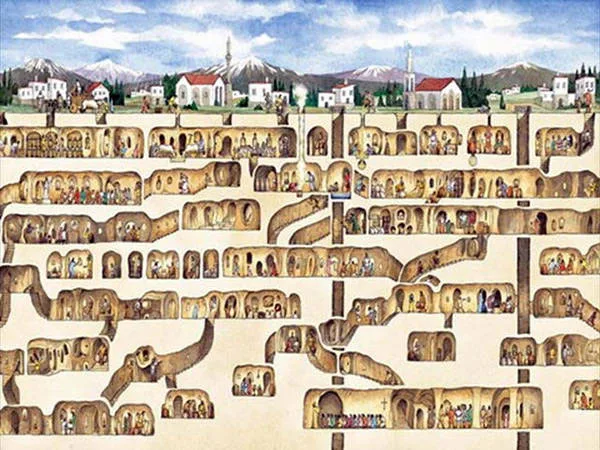
The underground city of Derinkuyu isn't just a few interconnected caves. It plunges 280 feet deep into the earth—roughly the height of a 28-story building, except carved downward into volcanic rock. The complex spreads across multiple levels, each serving different functions for the thousands who once lived there.
This wasn't a temporary hiding spot. It was a fully functioning subterranean civilization with:
- Schools and communal spaces where children learned and families gathered
- Livestock pens carved into the rock for goats, sheep, and other animals
- Food storage chambers that kept provisions cool and dry
- Chapels and religious spaces for worship
- Ventilation shafts that brought fresh air to the deepest levels
- Wells providing access to underground water sources
When Safety Meant Going Down, Not Up
The city dates back to at least the 8th-7th centuries BCE, possibly even earlier. Built into the soft volcanic rock of Cappadocia, it served as a refuge during invasions and raids that plagued the region for centuries.
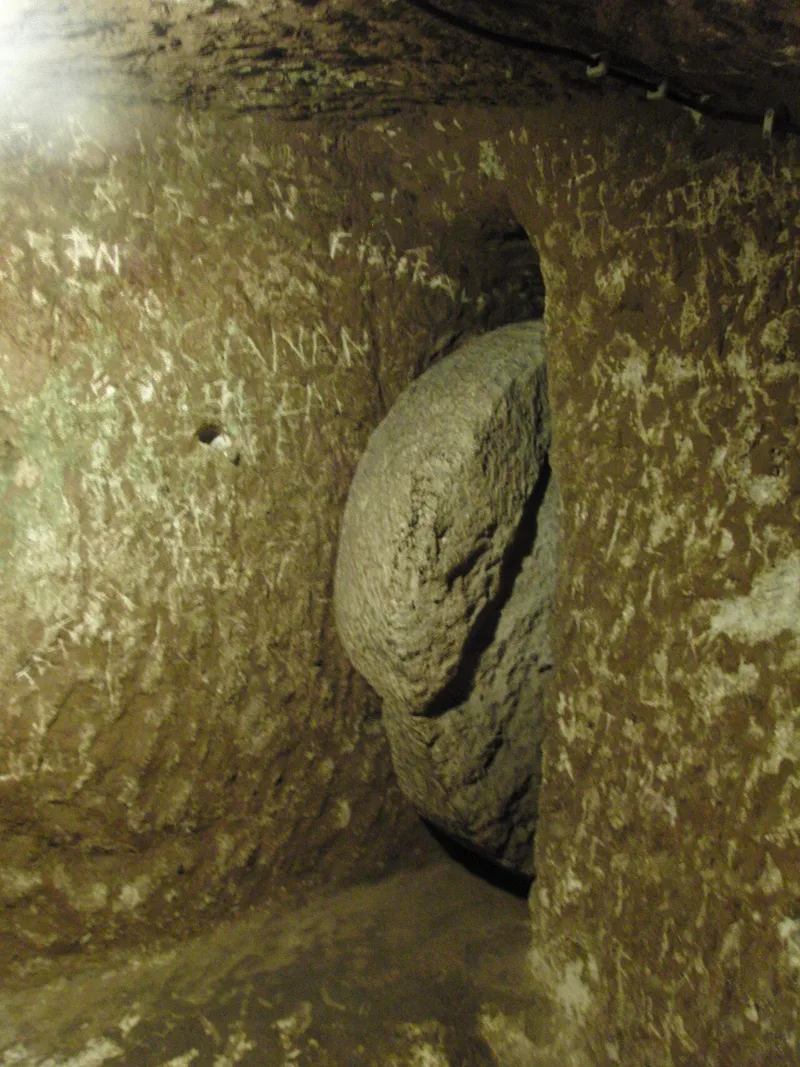
When danger approached, entire communities could descend into the earth and seal themselves in. Massive circular stone doors—some weighing up to 1,000 pounds—could be rolled into place from the inside, blocking tunnels and making the city nearly impenetrable.
Not Alone in the Dark
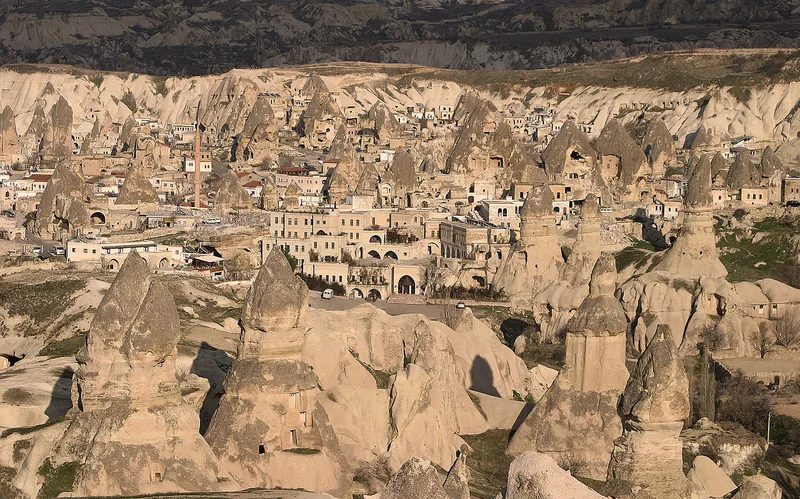
Here's the really mind-blowing part: Derinkuyu isn't unique. The Cappadocia region contains at least 200 underground cities, with nearly 40 having multiple levels. Some are connected by miles of tunnels, creating a vast subterranean network beneath modern Turkey.
Derinkuyu is simply the largest and deepest discovered so far. Archaeologists believe significant portions remain unexplored, and who knows what other hidden cities might still be waiting beneath ordinary homes and farmland.
Life Without Sunlight
The engineering is remarkable. Ancient builders created a ventilation system so effective that fresh air reached even the lowest levels, 18 stories down. They carved stables with sloped floors for drainage. They designed the layout so different sections could be sealed off independently—a city within a city within a city.
People didn't just survive here during emergencies. Evidence suggests communities could live underground for months at a time, maintaining livestock, storing food, educating children, and practicing their faith—all without seeing the sun.
The 1963 discovery transformed our understanding of ancient defensive architecture. That homeowner's renovation project revealed that sometimes the most extraordinary historical treasures are hiding in plain sight, just waiting for someone to knock down the right wall.
Frequently Asked Questions
What is the underground city found in Turkey in 1963?
How many people lived in the Derinkuyu underground city?
What did people use the underground city for?
Where is the underground city that was discovered in 1963?
Can you visit the underground city from 1963?
Verified Fact
This fact has been reviewed and verified against original sources.
Show verification details
The discovery occurred in 1963 in Derinkuyu, Turkey. All details are accurate: the underground city extends 280 feet deep, could house up to 20,000 people, and includes schools, livestock areas, food storage, chapels, and other amenities.
Related Topics
More from History & Culture
View all History & Culture →