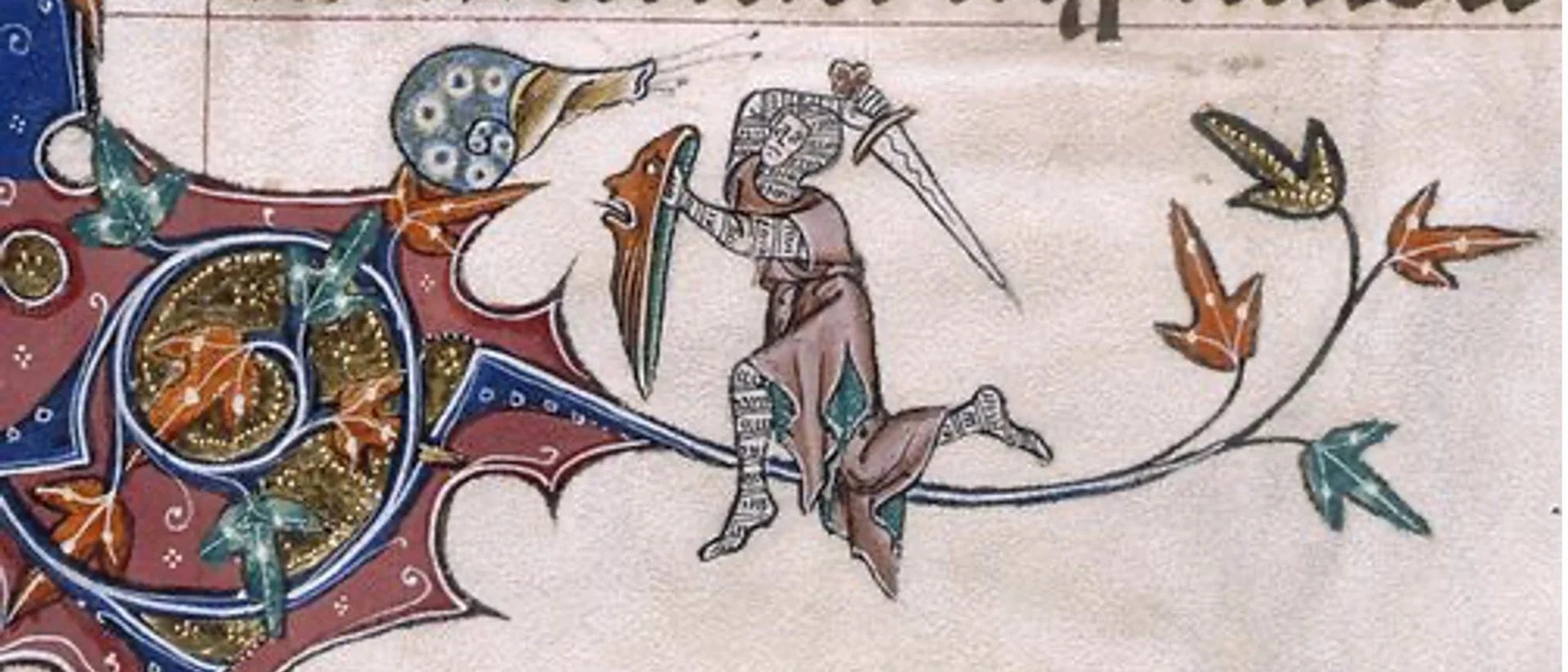
There are pictures of Knights fighting Snails in old Medieval manuscripts - and nobody knows why.
The Bizarre Medieval Mystery of Knights vs. Snails
Open a medieval illuminated manuscript, and you might expect to find intricate religious scenes, noble knights, and fantastical beasts. What you might not anticipate, however, are images of heavily armored knights engaging in combat with tiny, seemingly innocuous snails. These bizarre and often humorous depictions are a fascinating enigma that has puzzled historians and art enthusiasts for centuries.
Known as 'marginalia' or 'drolleries,' these illustrations frequently appear in the margins of texts, particularly from the late 13th century onwards. They were especially popular in Northern French, Flemish, and English manuscripts. While some marginalia depicted everyday life or religious allegories, the knight-and-snail motif stands out for its sheer absurdity and the enduring question it poses: why?
A Comic Interlude? The Humor Theory
One of the most widely accepted theories suggests that these scenes were simply a form of medieval humor. Much like modern internet memes, these absurd images might have offered comic relief to scribes and readers alike. The notion of a valiant knight, a paragon of chivalry, struggling against a slow-moving gastropod is inherently funny.
- Knights are often shown looking surprised, flustered, or even defeated by their shelled adversaries.
- This comedic element could have served as a lighthearted commentary or even a subtle satire on the ideals of knighthood.
- The unexpected nature of these battles surely provided a welcome break from the serious content of many religious or legal texts.
Symbolic Snails: More Than Meets the Eye
Beyond simple humor, many scholars believe the snail held deeper symbolic meaning in the medieval mind. Its ability to retreat into its shell made it a potent symbol for various concepts, not all of them flattering.
The Cowardice Conundrum
The snail's tendency to withdraw was sometimes associated with cowardice. A knight battling a snail could therefore represent a metaphorical struggle against this vice within himself. Alternatively, it might have been a satirical jab at knights who failed to live up to their chivalric ideals, portraying them as battling an enemy as 'insignificant' as their own fears.
The Lombard Connection: A Coded Message?
Art historian Lilian Randall proposed a compelling theory linking the snail to the Lombards, a group often disliked in medieval society. Lombards were frequently criticized for treason, usury (lending money with interest), and what was perceived as 'non-chivalrous comportment.' If this theory holds, the knight fighting the snail could be a coded visual insult aimed at these societal outcasts, perhaps implying their slow, insidious nature or their refusal to engage in honorable combat.
Themes of Life, Death, and Pests
Other interpretations delve into even more complex symbolism. The snail's cycle of appearing and disappearing from its shell, for instance, has been linked to themes of death and resurrection, a significant concept in the Christian worldview. Some early theories even connected snails found near images of the Raising of Lazarus to this idea.
Psalm 58, which describes the wicked melting away like a snail, also offers a biblical connection. In this context, a knight battling a snail might represent a righteous struggle against evil or corruption. On a more prosaic level, snails were also recognized in medieval times for their surprising strength in carrying their shells, suggesting the combat could be a test of mental fortitude.
A less dramatic, though perhaps equally plausible, theory is that the snails simply represented common garden pests. While this explanation might seem too mundane, medieval people were very much connected to their agricultural surroundings, and battling pests was a constant struggle. Perhaps it was a visual representation of everyday frustrations.
An Enduring Enigma
Ultimately, the exact meaning behind knights fighting snails remains elusive. It's highly probable that the significance of these images was not singular but multi-layered, evolving over time and varying across different regions and contexts. They could be humorous jests, pointed social commentary, deep religious allegories, or even a combination of all these elements.
What is certain is that these peculiar illustrations offer a fascinating glimpse into the medieval imagination. They remind us that the past, often viewed through a serious and solemn lens, also contained elements of humor, satire, and symbolic complexity that continue to captivate and confound us today. The mystery of the knight and the snail persists, a tiny, shelled warrior forever battling a grand, armored foe in the margins of history.
Frequently Asked Questions
Why are knights fighting snails in medieval art?
What are the main theories behind snail-knight depictions?
Are these images common in medieval manuscripts?
Did medieval people really fight snails?
What did snails symbolize in the Middle Ages?
Verified Fact
This fact has been reviewed and verified against original sources.
Show verification details
The presence of knights fighting snails in medieval manuscripts is well-documented. While many theories exist, there's no definitive, universally accepted reason for these depictions, making the 'nobody knows why' part accurate.