Americans filled a 700-boxcar train with food for war-torn France in 1947. It came entirely from ordinary citizens, not the government. France answered two years later with 49 boxcars of its own, one for every state. Six million French and Italian donors packed them with 52,000 gifts. Air Force jets and fireboats greeted it in New York Harbor. Most of those boxcars are still around today, kept in museums nationwide.
France Sent America a Thank-You Train With 52,000 Gifts
A freight dock in Weehawken, New Jersey, February 1949: Air Force jets roaring overhead, fireboats spraying water into the sky, and a crowd of more than 25,000 people waiting to see 49 old boxcars come off a French ship.
A Train Built From Kindness, Not Government Aid
Two years earlier, in November 1947, ordinary Americans had filled a train of their own.
Newspaper columnist Drew Pearson proposed the idea, and citizens across the country responded by donating food, clothing, and fuel.
What started as a plan for 80 boxcars grew into more than 700, worth an estimated $40 million.
It traveled from Los Angeles to New York over 11 days before shipping out to a starving, war-torn France and Italy.
No government money was behind it.
It was simply Americans giving what they had.
A Railroad Worker's Idea
In France, a railroad worker and World War II veteran named Andre Picard thought his country owed America more than a simple thank-you letter.
He proposed a gratitude train of its own, and through 1948, French and Italian communities spent months collecting gifts to fill it.
Forty-and-Eight Boxcars, Six Million Donors
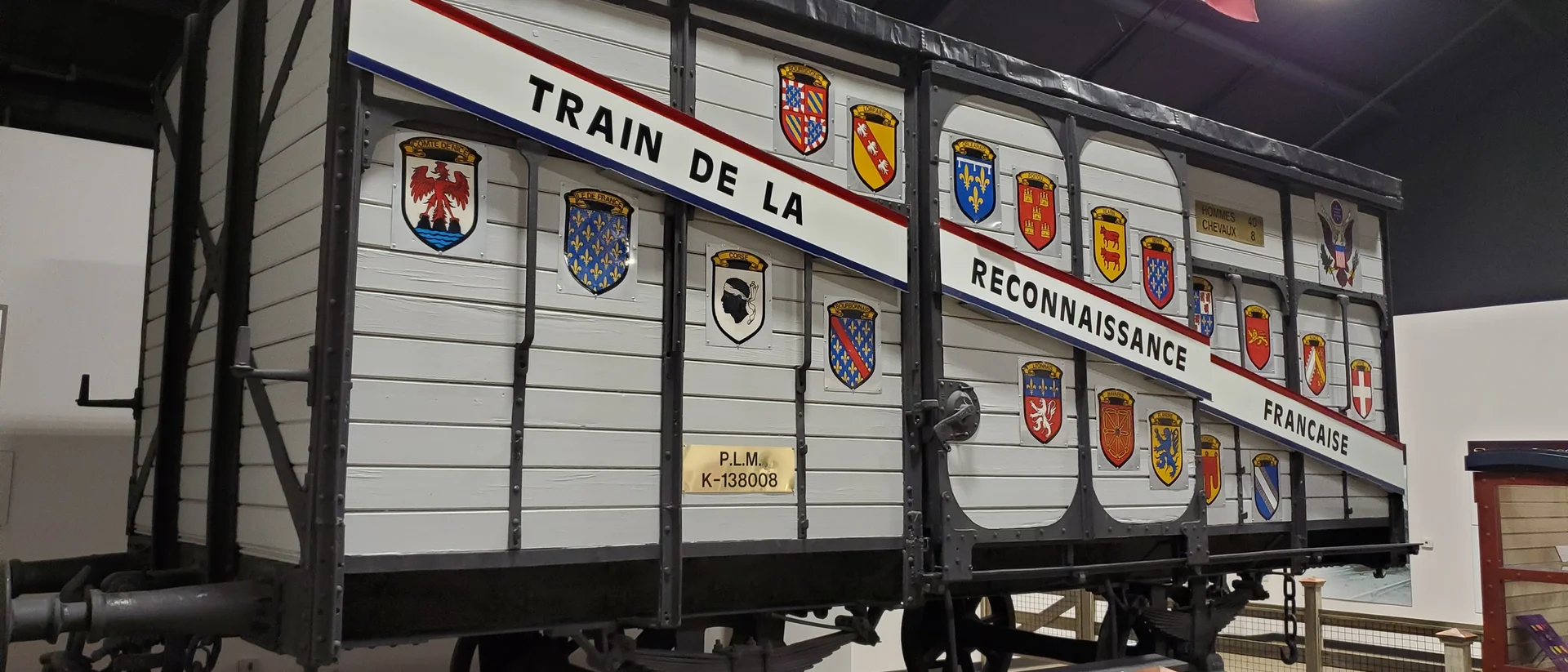
The result was 49 World War I era boxcars, nicknamed "forty-and-eights" because each one was built to hold 40 men or 8 horses.
Over six million French and Italian citizens contributed, and the cars arrived packed with more than 52,000 individual gifts: children's drawings, handmade dolls in regional dress, furniture, paintings, tablecloths, and trench art from the war.
One item stood out from the rest, a jeweled Legion of Honour medal said to have once belonged to Napoleon.
One Boxcar for Every State
The Merci Train crossed the Atlantic aboard the French ship Magellan.
As it neared New York, U.S. Air Force jets escorted it past the Statue of Liberty and up the Hudson River, while fireboats shot streams of water into the air in celebration.
It docked in Weehawken on February 2, 1949, in front of a crowd of over 25,000 people.
Each of the 48 states received its own boxcar, with the 49th shared between Washington, D.C. and the territory of Hawaii, which was not yet a state.
Most Are Still Around Today
Roughly 43 of the 49 boxcars have survived, now sitting in state museums, veterans' halls, and historical societies across the country.
A few were lost or scrapped over the decades, including New Jersey's own car, which vanished for years.
It turned up in a Tennessee field in 1993 and sat unidentified in a museum's storage for three decades before historians confirmed what it was in 2024.
It is now being restored, with plans to put it back on public display by 2027, still carrying the thanks of six million people who never forgot what America did for them.
Frequently Asked Questions
What was the Merci Train?
Why did France send the Merci Train?
Which states got a Merci Train boxcar?
What is a forty-and-eight boxcar?
Do any Merci Train boxcars still exist?
Verified Fact
Verified Jul 27, 2026 · 9 sources checked
Source: WikipediaShow verification details
Claims checked
- 1947 Friendship Train had 700 boxcars, citizen-funded
- 52,000 gifts from 6 million French and Italian donors
- 43 of 49 boxcars survive, kept in US museums
Sources: Wikipedia, Amusing Planet, Trains Magazine, Railfan Magazine, New York Almanack, URHS.org, Smithsonian Magazine, Kent State University Blog, Arizona Memory Project
Related Topics
More from History & Culture
View all History & Culture →