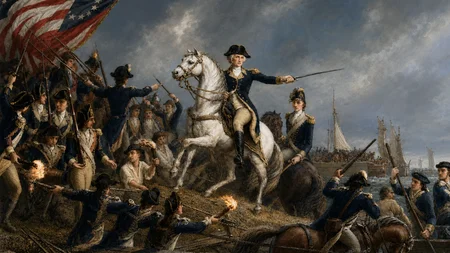
Only eight men were killed in the battle of lexington!
Eight Men Died in the Battle That Started a Revolution
When the sun rose over Lexington Green on April 19, 1775, nobody knew they were about to witness the birth of a nation. By the time the smoke cleared from that brief, chaotic skirmish, eight colonial militiamen lay dead or dying—and the American Revolution had begun.
The whole thing was over in minutes. About 700 British soldiers, marching to seize colonial weapons stored in Concord, encountered roughly 77 local militiamen gathered on Lexington's town common. Someone fired a shot—history still debates who—and the British troops unleashed a devastating volley. Eight Americans were killed, ten wounded, and one British soldier slightly injured. It wasn't much of a battle by any measure, more of a massacre really, but those eight deaths set off a chain reaction that would create the United States of America.
The Men Who Started It All
The eight who died weren't professional soldiers. They were ordinary guys—farmers, craftsmen, neighbors. Jonathan Harrington was shot in front of his own house and reportedly crawled to his doorstep, dying in his wife's arms. Robert Munroe was a tavern keeper. Isaac Muzzy, Caleb Harrington, Samuel Hadley, John Brown, Asahel Porter, and Jonas Parker rounded out the list. Parker, the oldest at 46, had reportedly declared that morning he would never run from British troops. He kept his word.
These men had gathered before dawn, alerted by riders like Paul Revere that British regulars were marching from Boston. Their captain, John Parker, had mustered them on the green, though historical accounts suggest he ordered them to disperse when they saw how badly outnumbered they were. That's when things went sideways.
A Small Battle, Massive Consequences
What happened at Lexington was just the opening act. The British continued to Concord, where they encountered stiffer resistance. By day's end, the running battles along the road back to Boston had killed 73 British soldiers and 49 Americans total. But it was those first eight deaths at Lexington that became the rallying cry.
News of the "Lexington Massacre" spread through the colonies like wildfire, often exaggerated in the telling. Colonial newspapers reported British atrocities (some real, some embellished), and suddenly militia companies from across New England were marching toward Boston. Within weeks, thousands of colonial fighters had the British army bottled up in the city.
The eight men killed at Lexington became instant martyrs. Their deaths proved what many colonists had feared: the British were willing to kill Americans to maintain control. There would be no peaceful resolution now. The "shot heard 'round the world"—as Ralph Waldo Emerson later called it—had been fired, and there was no taking it back.
Why So Few Casualties?
You might wonder how a battle could start a war with only eight deaths. The answer is that Lexington was never meant to be a battle at all. The colonists were vastly outnumbered and probably didn't intend to fight. The British, for their part, were on a mission to seize weapons, not slaughter civilians. But once that first shot rang out—whether from a British soldier, a colonist, or even an accidental discharge—the situation spiraled out of control in seconds.
The low casualty count actually made it worse in some ways. To the British, it was a minor skirmish barely worth reporting. To the colonists, it was proof that the redcoats would murder them in their own towns without provocation. The gap between those two interpretations was unbridgeable, and eight bodies on Lexington Green made that crystal clear.
Frequently Asked Questions
How many people died in the Battle of Lexington?
Who were the 8 men killed at Lexington?
What started the Battle of Lexington?
How long did the Battle of Lexington last?
Why is the Battle of Lexington important?
Verified Fact
This fact has been reviewed and verified against original sources.
Show verification details
Historical records confirm that eight colonial militiamen were killed during the Battle of Lexington on April 19, 1775. This was the opening engagement of the American Revolutionary War.
Related Topics
More from History & Culture
View all History & Culture →