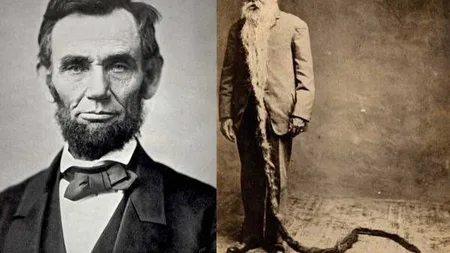
During the reign of Peter the Great, Russian men who wished to retain their traditional beards were required to pay a special tax, with the amount varying based on their social status.
Peter the Great's Peculiar Beard Tax
In the grand tapestry of history, some rulers stand out not just for their military conquests or political reforms, but for their truly bizarre decrees. Among them, Peter the Great of Russia holds a special place. As part of his ambitious plan to modernize and 'Westernize' his vast empire in the late 17th and early 18th centuries, he introduced a policy so peculiar it sounds like something from a satirical novel: a tax on beards.
Imagine a world where your facial hair isn't just a style choice, but a taxable asset. For many Russian men of the era, particularly the conservative boyars and devout Orthodox believers, a beard was more than just hair; it was a symbol of religious piety, tradition, and masculinity. Peter, fresh from his travels through Western Europe where clean-shaven faces were the norm, viewed these flowing beards as a glaring emblem of Russia's perceived backwardness.
Shave or Pay: The Imperial Edict
Peter's decree was unambiguous: beards were out. Initially, he even took to forcibly shaving his courtiers himself, often during elaborate feasts. This act was deeply humiliating for many, a direct assault on their identity and faith. However, for those staunchly unwilling to part with their beloved whiskers, an alternative was offered: pay up.
The tax was not a one-size-fits-all affair. It was, like many things in an absolutist state, stratified by social class. Nobles and wealthy merchants, those with the means, were expected to pay the highest annual sums. Their payments were a clear sign of their higher standing, even if it meant paying for a tradition Peter wished to eradicate.
- Nobles & Merchants: Paid significant annual sums.
- Townsmen: Paid smaller, but still noticeable, fees.
- Peasants: Often paid a minimal charge each time they entered a city, a reminder of the urban 'modernity' they were entering.
The Infamous Beard Token
Proof of payment was provided through a rather iconic piece of historical memorabilia: the beard token. These were small, often copper or brass, medallions issued to those who had paid their beard tax. Stamped with an image of a beard and the words 'Tax Paid' (and sometimes 'the beard is a superfluous burden'), these tokens were carried as a license to sport facial hair.
Without a token, a bearded man risked a public shaving at the hands of Peter's officials. This public humiliation served as a powerful incentive to either conform to the clean-shaven ideal or grudgingly pay the tax. The tokens themselves became symbols of resistance and adherence to old ways, even as they funded Peter's modernizing agenda.
Resistance and Legacy
Naturally, such a radical and culturally insensitive policy was met with widespread anger and resistance. The Russian Orthodox Church vehemently opposed the tax, considering clean-shaving a sacrilege and an adoption of 'heretical' Western customs. Many common folk viewed it as an attack on their very souls, believing that God created man in his image, and that image included a beard.
Despite the deep-seated opposition, Peter the Great enforced the tax with unwavering resolve. It was a testament to his authoritarian rule and his determination to drag Russia into the modern age, even if it meant alienating large segments of his population. The beard tax, though seemingly trivial, was a profound cultural battleground, showcasing the clash between ancient traditions and an emperor's vision for a new, Europeanized Russia.
The beard tax remained in effect, albeit with varying degrees of enforcement, for decades after Peter's death. It was finally and formally abolished by Catherine the Great in 1772. Today, it stands as one of history's most fascinating examples of a ruler using an unlikely tool—a razor and a tax ledger—to enforce sweeping social and cultural change.
Frequently Asked Questions
Why did Peter the Great introduce a beard tax?
How did the beard tax work?
What was the 'beard token'?
How did people react to the beard tax?
When was the beard tax abolished?
Verified Fact
This fact has been reviewed and verified against original sources.
Show verification details
The core claim is accurate; Peter the Great indeed implemented a beard tax as part of his Westernization efforts. The fact text has been slightly rephrased for added precision regarding tax variation by social status.
Related Topics
More from History & Culture
View all History & Culture →