
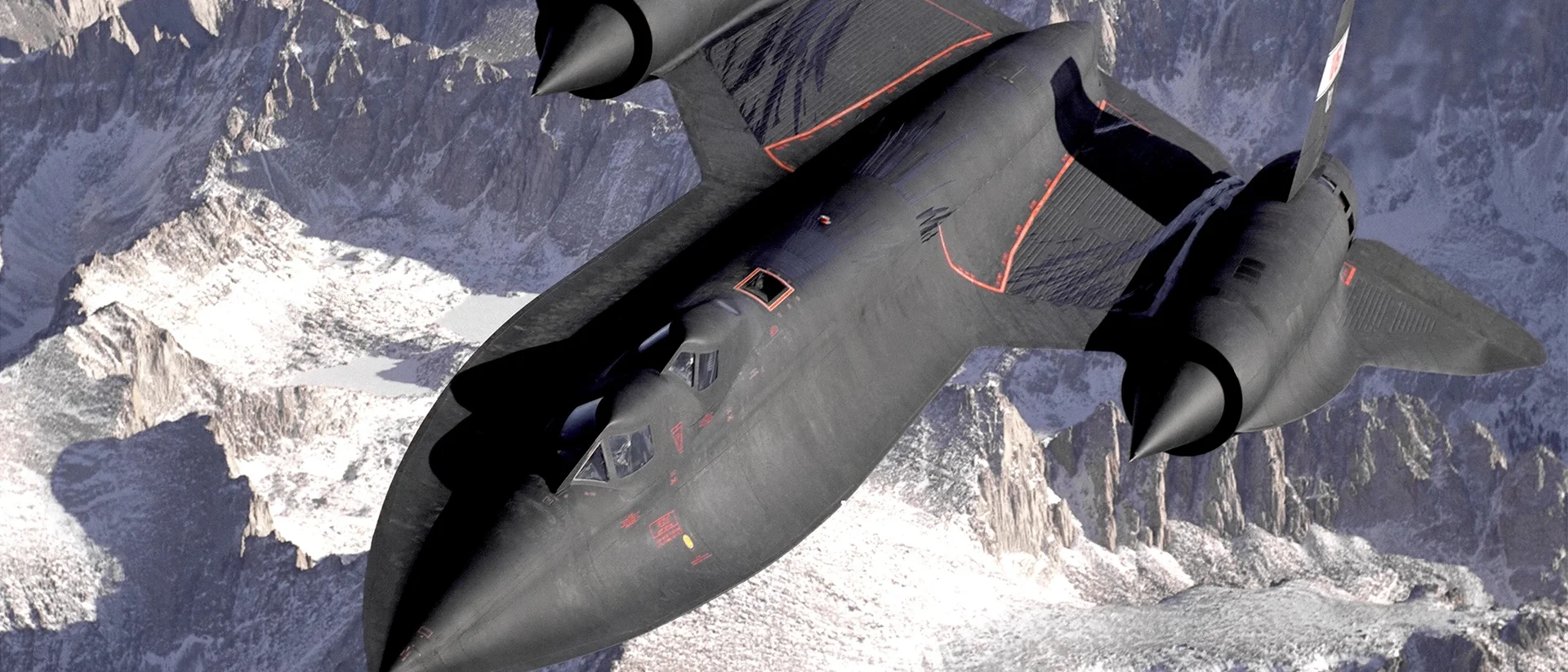
The SR-71 Blackbird was built from titanium the CIA secretly bought from the Soviet Union - the very nation it was made to spy on. The airframe was 92% titanium, and the vast majority came from Soviet ore. The panels were fitted loose on purpose: on the tarmac the plane dripped fuel, and only Mach-3 friction heat expanded them tight. JP-7 fuel also doubled as a coolant, absorbing heat from the skin.
The SR-71 Was Built From Its Enemy's Titanium
To build the world's fastest spy plane, the United States needed a material that could survive temperatures of hundreds of degrees Fahrenheit while streaking through the stratosphere at Mach 3. Only one material could do it. And the best source of that material was America's Cold War enemy.
The Titanium Problem
The SR-71 Blackbird required an airframe built from titanium - the only metal light and strong enough to handle sustained Mach-3 flight. At those speeds, aerodynamic friction heats the skin to over 300 degrees Celsius. Aluminum softens and fails. Steel is too heavy. Titanium holds.
The problem: the Soviet Union was the world's largest exporter of high-grade titanium. The United States could not simply place a bulk order. So the CIA did something audacious - it bought the titanium anyway, through a network of fake companies.
Shell Companies and Cover Stories
The agency established a string of dummy corporations operating in third-party countries. These shell companies placed orders under cover stories: textile machinery, industrial piping, chemical processing equipment. The titanium sometimes changed legal ownership four times while ships were still at sea. The Soviets sold it without suspicion. Nearly all of the SR-71's titanium - across all 32 aircraft eventually built - came from Soviet ore. The airframe itself was 92% titanium.
Designed to Leak
The Blackbird's titanium panels presented another engineering problem. No sealant in the 1960s could handle the constant expansion and contraction between cold ground temperatures and Mach-3 heat. Lockheed's solution was to fit the panels deliberately loose. On the ground, JP-7 fuel visibly dripped from the seams. Crews accepted it. Ground crews carried drip pans.
Once the aircraft accelerated past Mach 1, friction heat caused the titanium to expand and the panels pressed together, forming an airtight seal. By Mach 3, the gaps were gone. Freshly donated museum Blackbirds still seep JP-7 onto their pads - though older examples, having sat in collections for decades, eventually run dry.
The Fuel That Cooled the Plane
JP-7 was engineered specifically for the Blackbird. It had an extremely high flash point - a lit match dropped into a bucket would not ignite it - which made the tarmac leaks safe. During high-speed flight, the fuel was also circulated through hot areas of the aircraft as a heat sink, cooling hydraulic fluid, oil, avionics, and engine components before it was burned.
The plane set its official speed record of Mach 3.3 on July 28, 1976 - a record that still stands for any air-breathing manned aircraft. It was largely built from material the adversary sold without ever knowing why.
Frequently Asked Questions
Why did the SR-71 Blackbird leak fuel on the ground?
Why did the CIA buy titanium from the Soviet Union for the SR-71?
What fuel did the SR-71 Blackbird use?
What is the SR-71 Blackbird's speed record?
How much of the SR-71 was made from titanium?
Verified Fact
Verified Jun 20, 2026 · 5 sources checked
Source: The Aviation Geek ClubShow verification details
Claims checked
- Core claim (CIA bought Soviet titanium)
- Titanium percentage 93%
- 'Soviet titanium' conflation
- Panels fitted loose / fuel leak design
- JP-7 as coolant heat sink
- JP-7 lit match claim (engagement comment)
- Speed record Mach 3.3, July 28 1976
- 32 aircraft built
- 'Museum Blackbirds still drip today'