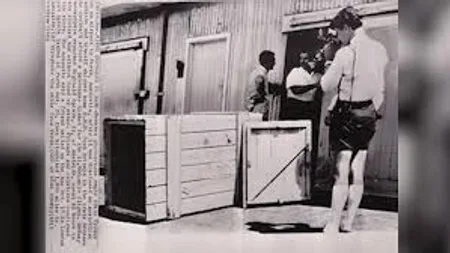
In 1959, the USPS attempted to deliver mail via cruise missile and successfully shipped 3,000 pieces of mail from Virginia to Florida in 22 minutes.
When the Post Office Delivered Mail by Cruise Missile
On June 8, 1959, the USS Barbero submarine surfaced off the Virginia coast and did something that has never been repeated: it fired a cruise missile stuffed with mail at Florida. This wasn't a military exercise gone wrong—it was an official United States Postal Service experiment, and Postmaster General Arthur Summerfield genuinely believed it was the future of mail delivery.
The missile in question was a Regulus I, a Cold War-era cruise missile designed to carry nuclear warheads. For this particular mission, engineers removed the warhead and installed two metal mail containers in its place, each packed with 1,500 commemorative postal covers. The missile screamed through the air at roughly 600 miles per hour, covering the 100-mile distance to Naval Station Mayport in just 22 minutes.
A Vision of Intercontinental Mail Missiles
When postal workers at Mayport opened the missile and retrieved the undamaged letters, Summerfield was ecstatic. He declared it "the first known official use of missiles by any Post Office Department of any nation" and made a bold prediction: "Before man reaches the moon, mail will be delivered within hours from New York to California, to England, to India, or to Australia by guided missiles."
The letters themselves were addressed to President Dwight Eisenhower, cabinet members, and the Postmasters General of every nation in the Universal Postal Union. Each envelope bore a special cachet commemorating this historic delivery method. The message was clear: America had mastered a revolutionary new postal technology.
Why It Never Happened Again
The experiment was a technical success—every piece of mail arrived intact and on time. So why didn't missile mail become the norm? Simple economics killed it.
- Cost per delivery: Launching a cruise missile costs exponentially more than loading mail onto an airplane
- Capacity limitations: The Regulus could carry just 3,000 letters, while planes could haul tons of mail
- Infrastructure requirements: You'd need missile launch facilities and recovery stations instead of airports
- Safety concerns: Missiles occasionally malfunction—not ideal when carrying birthday cards
Commercial aviation was already proving itself as a fast, reliable, and affordable way to move mail across continents. The U.S. had launched regular airmail service in 1918, and by 1959, transcontinental flights were routine. Missiles offered speed, but airplanes offered everything else that actually mattered.
Cold War Optimism Meets Reality
The missile mail experiment perfectly captures the technological optimism of the late 1950s. This was an era when Americans genuinely believed that atomic energy would make electricity "too cheap to meter" and that we'd all have personal jetpacks by 1980. If we could put a warhead on a missile, why not birthday wishes?
The Regulus missile itself became obsolete just a few years later when the Navy developed submarine-launched ballistic missiles like the Polaris. The USS Barbero, the sub that launched postal history's strangest delivery, was decommissioned in 1964.
Today, those 3,000 commemorative covers are prized collector's items. A single envelope from the missile mail delivery can sell for hundreds of dollars at auction—ironic, considering the whole point was to make mail delivery cheaper. June 8, 1959 marked both the first and last time the United States Postal Service delivered mail by cruise missile, a distinction that will almost certainly remain unique forever.
Frequently Asked Questions
Did the US Post Office really deliver mail by missile?
Why did the USPS stop using missiles to deliver mail?
What happened to the letters delivered by cruise missile?
How fast did the postal missile travel?
What kind of missile did the post office use?
Verified Fact
This fact has been reviewed and verified against original sources.
Show verification details
The event occurred on June 8, 1959. The USS Barbero submarine fired a Regulus I cruise missile from the Atlantic coast to Naval Station Mayport, Florida, traveling approximately 100 miles in 22 minutes at ~600 mph.
Related Topics
More from History & Culture
View all History & Culture →