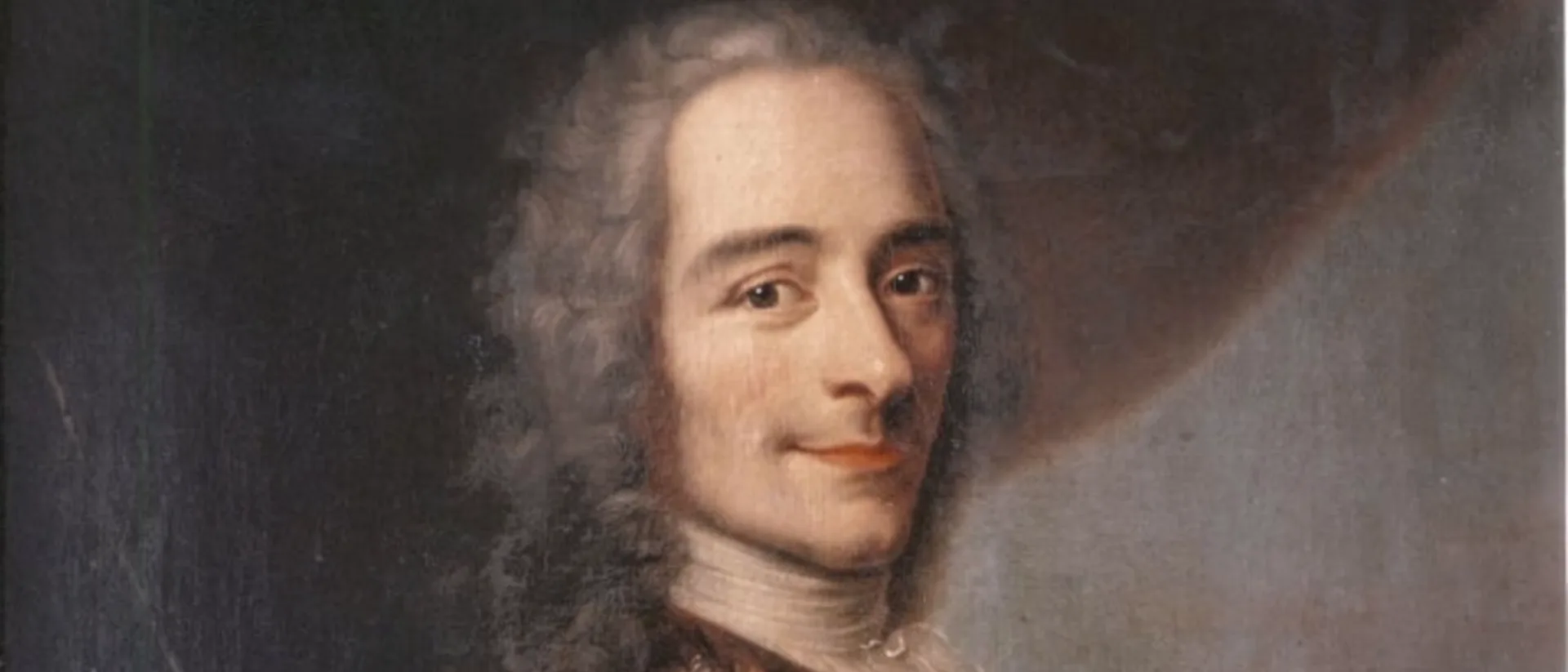
When Voltaire was on his deathbed and a priest urged him to renounce Satan, he allegedly replied: "This is no time for making new enemies."
Voltaire's Savage Final Quip to a Priest
François-Marie Arouet—better known as Voltaire—spent his entire life making enemies. He feuded with the Catholic Church, mocked aristocrats, got himself exiled multiple times, and spent eleven months in the Bastille. So it's fitting that even in death, the legendary philosopher supposedly couldn't resist one final jab.
The Deathbed Scene
In May 1778, the 83-year-old Voltaire lay dying in Paris. According to popular accounts, a priest came to his bedside urging him to renounce Satan and embrace God before it was too late.
Voltaire's alleged response? "This is no time for making new enemies."
Whether or not these were his actual final words, the quip is so perfectly Voltaire that it hardly matters. This was a man who had spent decades antagonizing powerful institutions with nothing but wit and a pen.
A Lifetime of Antagonizing the Powerful
Voltaire's relationship with organized religion was... complicated. He wasn't an atheist—he believed in a clockmaker God who set the universe in motion. But he despised religious institutions and the violence they inspired.
His famous war cry was "Écrasez l'infâme!"—"Crush the infamous thing!"—referring to religious superstition and intolerance. He spent years defending victims of religious persecution and used satire as his weapon of choice.
The Church, unsurprisingly, wasn't amused. His works were banned, burned, and condemned. Priests called him a servant of Satan. The feeling was mutual.
The Problem With Famous Last Words
Here's the thing about deathbed quotes: they're almost always embellished, misattributed, or entirely invented. People want their heroes to die with something memorable on their lips.
Other reported versions of Voltaire's death include:
- Him signing a confession of faith (which the Church claimed)
- Him crying out that he was abandoned by God and man
- Him simply slipping away peacefully
The "no time for making new enemies" line first appeared in print decades after his death, with no reliable eyewitness source. But it's survived for nearly 250 years because it captures something true about who Voltaire was.
Why This Story Endures
True or not, the quip works because it contains Voltaire's entire philosophy in one sentence. Here's a man who:
- Never stopped questioning authority
- Used humor as his primary weapon
- Remained defiant to the very end
- Refused to take even death too seriously
The line also carries a delicious ambiguity. Is he refusing to renounce Satan because he genuinely fears making an enemy of the devil? Or is he implying that Satan, like God, is just another fiction not worth his time? Classic Voltaire—even his jokes have layers.
Whether these were his actual last words or simply the last words he deserved, they've become inseparable from his legend. And honestly? He probably would have approved of the embellishment. The man understood the power of a good story.
Frequently Asked Questions
What were Voltaire's last words?
Did Voltaire really say 'no time for making new enemies'?
Was Voltaire an atheist?
When did Voltaire die?
Why did Voltaire hate the Catholic Church?
Verified Fact
This fact has been reviewed and verified against original sources.
Show verification details
The attribution is apocryphal but widely reported. Corrected fact_text to acknowledge this is attributed/possibly apocryphal rather than stating it as definite fact.
Related Topics
More from History & Culture
View all History & Culture →