
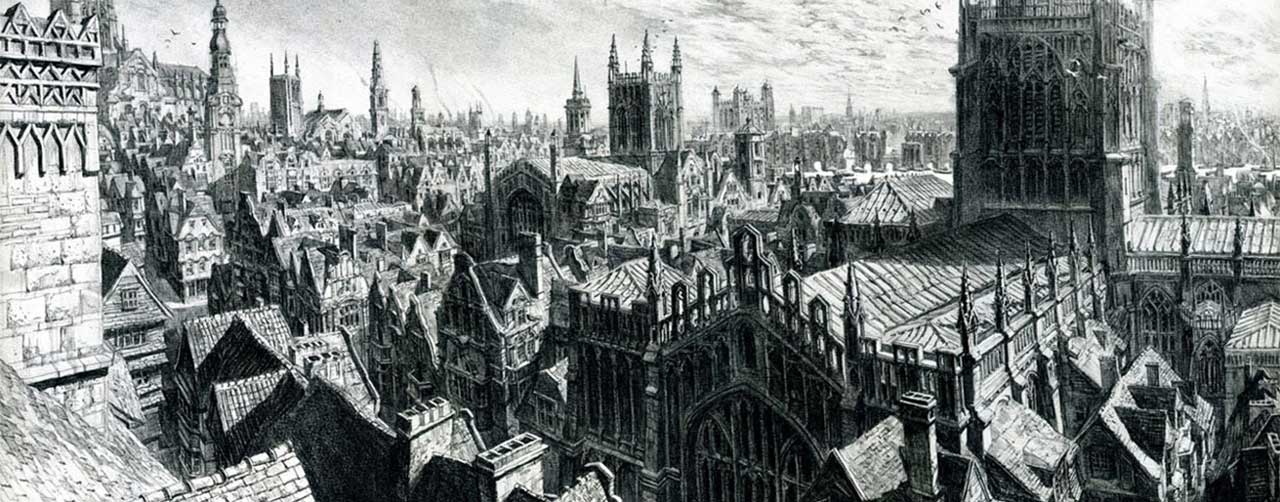
In the late 1600s, London was plagued by an attacker who would spank his victims with a rod and shout "Spanko!" before running away.
Whipping Tom: London's Bizarre "Spanko!" Attacker
Imagine walking alone through the dark alleys of 1681 London when suddenly a stranger leaps from the shadows, bends you over his knee, lifts your skirts, and spanks you violently with a rod—all while shouting "Spanko!" before disappearing into the night. This wasn't an isolated incident. It was the work of Whipping Tom, one of history's most bizarre serial attackers.
For months, London's Fleet Street, the Strand, and Holborn districts were gripped by fear as this mysterious figure terrorized women. He would lurk in narrow courtyards and alleyways after dark, always targeting lone women. The attacks were swift and brutal—victims reported being struck hard enough to leave serious injuries. One pregnant woman was so terrified during an attack that she miscarried and died a week later.
The City's Frantic Search
London authorities were baffled. Vigilante patrols combed the streets. Men dressed in women's clothing hoping to lure the attacker into a trap. Night watchmen doubled their efforts. None succeeded.
The speed of Whipping Tom's escapes was so uncanny that some Londoners began whispering that he might be supernatural—a ghost or demon with the ability to vanish into thin air. How else could someone assault a victim in a narrow alley and disappear before anyone could catch even a glimpse of his face?
Captured at Last
Eventually, authorities arrested two men for the crimes. Narcissus Luttrell, a historian and diarist of the period, recorded that one of the culprits was a haberdasher from Holborn. The attacks were so scandalous that in 1681, an anonymous writer published "Whipping Tom Brought to Light, and Exposed to View," a booklet documenting the crimes in detail. The pamphlet is still preserved in the British Library today.
But this wasn't the only Whipping Tom. Records suggest an earlier attacker operated around 1672, targeting "milk-wenches." Then in 1712, a third Whipping Tom emerged in Hackney, a village outside London, carrying out approximately 70 attacks with a birch rod violent enough to draw blood. This time the perpetrator was identified: Thomas Wallis, a local man who confessed to the crimes.
A Dark Pattern
What makes the Whipping Tom cases particularly disturbing is how they were often treated by contemporary society. While the attacks were sexual assaults that caused real harm—physical injuries, psychological trauma, and in one case death—they were sometimes trivialized or even turned into entertainment through satirical pamphlets and poems.
The crimes reveal an unsettling truth about historical attitudes toward violence against women. These weren't harmless pranks by eccentric characters. They were sustained campaigns of sexual violence that left lasting scars on entire communities. The fact that the name "Whipping Tom" was applied to multiple attackers across four decades suggests the first case may have even inspired copycat crimes.
Today, the "Spanko!" shout and the bizarre nature of the attacks might seem almost comical from a distance of over 300 years. But for the women of 17th and 18th century London, Whipping Tom represented a very real nightmare—proof that danger could strike from the shadows at any moment, even in the heart of one of the world's greatest cities.
Frequently Asked Questions
Who was Whipping Tom?
Was Whipping Tom ever caught?
Why did Whipping Tom shout Spanko?
How many Whipping Toms were there?
Did anyone die from Whipping Tom attacks?
Verified Fact
This fact has been reviewed and verified against original sources.
Show verification details
The fact is historically accurate. 'Whipping Tom' was active in London in 1681, attacking women by spanking them with a rod while shouting 'Spanko!' before fleeing.