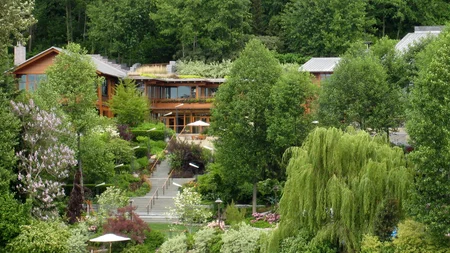
The widow of Winchester rifle heir William Wirt Winchester built a sprawling mansion with mazes, doors to nowhere, and staircases leading into ceilings—allegedly to confuse the ghosts of those killed by Winchester rifles.
The Haunted Mansion Built to Confuse Ghosts
In San Jose, California, there stands a sprawling Victorian mansion so bizarre that visitors still get lost in its labyrinthine corridors. The Winchester Mystery House features staircases that climb straight into ceilings, doors that open onto brick walls, and windows built into floors. It's architectural madness frozen in time—and according to legend, it was all designed to confuse the dead.
A Fortune Built on Firepower
Sarah Winchester married into one of America's wealthiest families. Her husband, William Wirt Winchester, was heir to the Winchester Repeating Arms Company, manufacturer of "The Gun That Won the West." When William died of tuberculosis in 1881, Sarah inherited roughly $20 million—about $500 million today—plus nearly 50% of the company's stock.
But wealth couldn't protect her from tragedy. Her only child had died in infancy. Now widowed and grieving, Sarah reportedly consulted a medium in Boston who delivered a chilling message: the Winchester family was cursed by the spirits of everyone killed by their rifles.
Building Without End
The medium's alleged solution was peculiar: Sarah must move west and build a house. She must never stop building, or the spirits would claim her life.
Whether Sarah truly believed this or simply found solace in endless construction, she bought an unfinished farmhouse in San Jose in 1884 and began one of history's strangest building projects. For the next 38 years, construction continued 24 hours a day, 7 days a week.
The result defies logic:
- Doors opening to sheer drops outside
- Staircases with steps only two inches high
- A window built into the floor
- Skylights in floors beneath other rooms
- Chimneys that stop short of the ceiling
- 160 rooms sprawling without any master plan
Method or Madness?
Historians today question whether Sarah actually believed in ghosts. Some suggest she simply loved architecture and had unlimited funds to experiment. Others point to her severe arthritis—those tiny stairs may have been easier for her to climb.
The "ghost confusion" narrative might have been invented by later owners to attract tourists. Sarah never gave interviews or explained her choices.
The Legend Lives On
What's undeniable is the house itself. After Sarah died in 1922, workers found rooms still under construction, nails half-hammered. The mansion had grown to roughly 24,000 square feet with an estimated 10,000 windows and 2,000 doors.
Today, the Winchester Mystery House operates as a museum and supposedly haunted attraction. Visitors report cold spots, mysterious footsteps, and doors that slam on their own. Whether these are genuine hauntings or just the settling of a house built by whim and fortune, the mystery endures.
Sarah Winchester may have been running from ghosts, expressing grief through architecture, or simply indulging in the ultimate home improvement project. The truth died with her—leaving behind only a magnificent, baffling monument to either guilt, creativity, or something stranger still.
Frequently Asked Questions
Why did Sarah Winchester build the Mystery House?
How long did Sarah Winchester build her house?
How many rooms are in the Winchester Mystery House?
Is the Winchester Mystery House really haunted?
Where is the Winchester Mystery House located?
Verified Fact
This fact has been reviewed and verified against original sources.
Show verification details
Clarified that William Wirt Winchester invented the repeating rifle mechanism (not the original Winchester rifle) and that Sarah built the house to appease spirits according to legend, though historians debate her actual motivations.