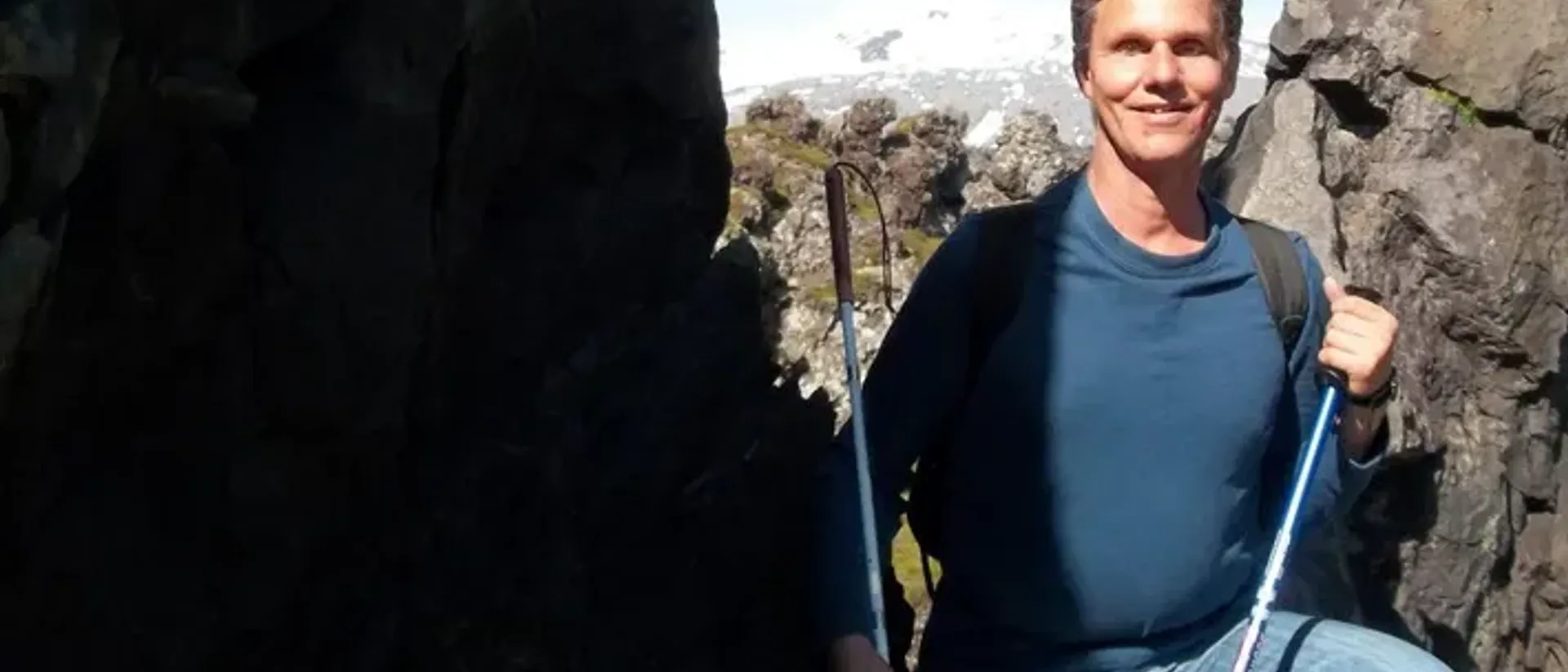
A blind American man taught himself to navigate using echolocation. His hobbies include hiking and mountain-biking, and he has now trained over 500 students in his ‘tongue-click’ technique.
The Blind Man Who Mountain Bikes Using Echolocation
Daniel Kish was 13 months old when retinoblastoma—an aggressive eye cancer—took his sight. But losing his vision didn't stop him from developing one of the most remarkable navigation skills on the planet.
He taught himself to echolocate.
By making sharp clicking sounds with his tongue and listening to how those sounds bounce back, Daniel built a mental map of his surroundings. Not just well enough to walk around his house, but well enough to mountain bike down treacherous trails and navigate busy city streets heavy with traffic.
How FlashSonar Actually Works
Daniel calls his technique FlashSonar. He produces rapid-fire tongue clicks—sharp, loud pops that echo off nearby objects. His brain interprets these returning sound waves the same way a bat or dolphin processes echolocation.
Parked cars, trash cans, trees, curbs, even changes in terrain texture—all of it creates a distinct acoustic signature. With practice, Daniel learned to distinguish between a wooden fence and a chain-link one, detect overhanging branches, and sense when a trail drops off sharply.
The result? He doesn't just avoid obstacles. He actively explores the world.
Mountain Biking While Blind
For over 15 years, Daniel has led Team Bat—a group of blind mountain bikers and hikers who use echolocation to tackle trails most sighted people would find intimidating.
Picture this: A completely blind person pedaling a mountain bike down a dirt trail, navigating switchbacks, roots, and rocks by sound alone. It sounds impossible. Daniel does it regularly.
He's also been known to pop wheelies, skateboard, and ski—all without vision, all using FlashSonar.
Training Thousands to 'See' With Sound
Daniel didn't keep this skill to himself. He founded World Access for the Blind, an organization dedicated to teaching echolocation to others.
The numbers are staggering: World Access for the Blind has worked with over 7,000 students across more than 40 countries. Some estimates put the total number of people who've benefited from the training—including students, families, and support networks—at over 15,000.
The mission isn't just about teaching a cool trick. It's about fundamentally changing how blind people navigate independence. Daniel believes blind individuals shouldn't be limited by society's low expectations. FlashSonar gives them the tools to hike, bike, explore, and live without constant assistance.
His work has sparked research into human echolocation, inspired documentaries, and challenged assumptions about what's possible without sight. Brain imaging studies have shown that blind echolocators process sound in their visual cortex—essentially seeing with their ears.
The real-life Batman doesn't need a cape. Just a tongue click and the courage to ride into the unknown.
Frequently Asked Questions
How does echolocation work for blind people?
Who is Daniel Kish and what did he accomplish?
Can blind people really mountain bike?
What is FlashSonar?
How many people has Daniel Kish taught echolocation?
Verified Fact
This fact has been reviewed and verified against original sources.
Show verification details
Fact is accurate. Daniel Kish is a blind American who uses echolocation (tongue-clicking technique called 'FlashSonar') to navigate. He does mountain bike and hike.