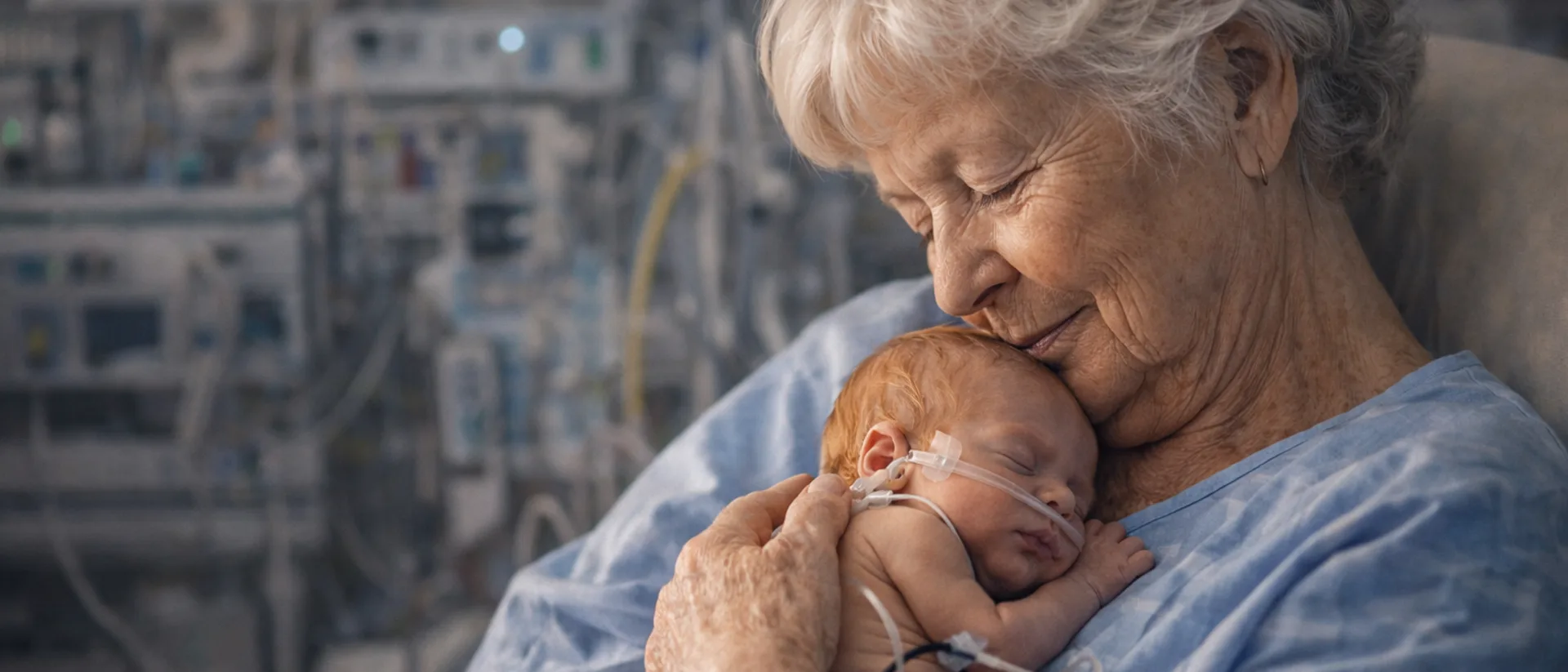
Hospitals across the US have volunteer "baby cuddler" programs where grandparents come in to hold and cuddle premature babies in the NICU when parents can't be there. Skin-to-skin contact helps the babies gain weight faster, sleep better, and leave the hospital sooner. Some hospitals have waitlists of over 500 people wanting to volunteer.
The Grandmas Hired to Cuddle Babies
In neonatal intensive care units across the country, premature babies face a critical challenge beyond their medical conditions: they need human touch. Studies have consistently shown that skin-to-skin contact — known in medical literature as "kangaroo care" — helps premature infants regulate their heart rate, gain weight, and develop stronger immune systems.
But parents of NICU babies often can't be there around the clock. Many have other children, jobs they can't leave, or live hours from the hospital. That's where the cuddler volunteers come in.
Hospitals including Children's Healthcare of Atlanta, Brigham and Women's Hospital in Boston, and dozens more have established formal volunteer programs that recruit and train grandparent-age volunteers to do one simple thing: hold babies.
The volunteers go through background checks, health screenings, and training on how to handle fragile newborns. Then they show up — sometimes at 3 AM — and sit in a rocking chair with a tiny baby against their chest. No phones. No conversation. Just warmth and a heartbeat.
The results are measurable. NICU babies who receive regular cuddling gain weight faster, have more stable vital signs, cry less, and are discharged sooner than babies who don't receive the same level of human contact. For hospitals, shorter NICU stays also mean lower costs — but that's not why anyone signs up.
The demand to volunteer is extraordinary. Some hospitals report waitlists of more than 500 people. Many of the volunteers are retired grandparents whose own grandchildren live far away. For them, the program fills a need on both sides of the rocking chair.
"I get more out of it than they do," is the line volunteers repeat most often. The babies, gaining an ounce at a time, might disagree.
Enjoyed this? Get a new fact every morning.
A fascinating fact in your inbox every morning. Free. Unsubscribe anytime.
Frequently Asked Questions
What is a NICU baby cuddler volunteer?
Does cuddling premature babies actually help?
How do you become a NICU cuddler volunteer?
Verified Fact
This fact has been reviewed and verified against original sources.
Source: View sourceShow verification details
Well-documented programs at Children's Healthcare of Atlanta, Brigham and Women's Hospital, and dozens of other US hospitals. Research on kangaroo care / skin-to-skin contact is extensive in pediatric literature.