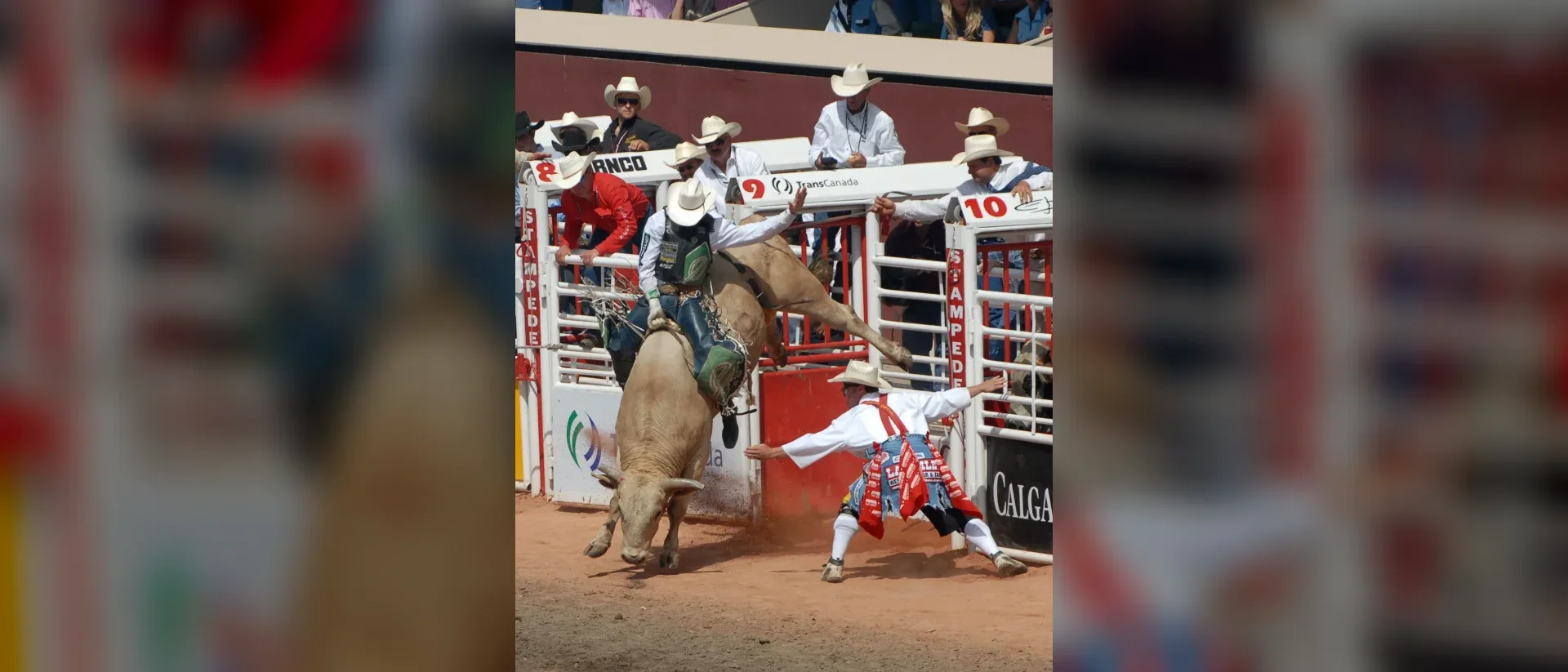
The rodeo clown - baggy pants, greasepaint, the guy everyone laughs at - has one real job. When a bull throws its rider, he charges the bull and draws it off the cowboy on the ground. Rodeo has run this way since the 1920s. The PRCA does not even call them clowns anymore. They are bullfighters, and every year the pros vote one Bullfighter of the Year. The cowboy gets to walk away.
The Rodeo Clown Was Never the Joke
The rodeo clown is not there to make you laugh. Under the baggy pants, the face paint and the barrel is a job with one purpose: get between a bucking bull and the cowboy who just hit the dirt, and keep the bull's attention until the rider is out.
Why the Job Exists at All
Brahma bulls entered rodeo bull riding in the 1920s. They were bigger, faster and more aggressive than the stock riders had faced before, and a thrown cowboy on the ground next to one was in real danger.
The clown role grew out of that gap. He entertained the crowd between rides, then turned serious the moment a rider hit the ground, sprinting in to pull the bull's focus away.
The Barrel That Started It
In the 1930s, a performer named Jasbo Fulkerson began working with a wooden barrel that had a solid bottom. A cowboy could dive inside it when a bull charged, and the bull would hit wood instead of a person.
The barrel became standard rodeo equipment. It is still rolled into arenas today, decades after Fulkerson first used one.
"The Greatest Rodeo Bullfighter of All"
Wick Peth worked bulls for decades, and by 1978 he had been elected bullfighter for the National Finals Rodeo seven times. His costume was plain and functional, not clownish, and his peers called him the greatest rodeo bullfighter of all.
At 48, he told a writer he was a better athlete than he had been ten years earlier. He was inducted into the ProRodeo Hall of Fame in 1979.
Three Broken Necks
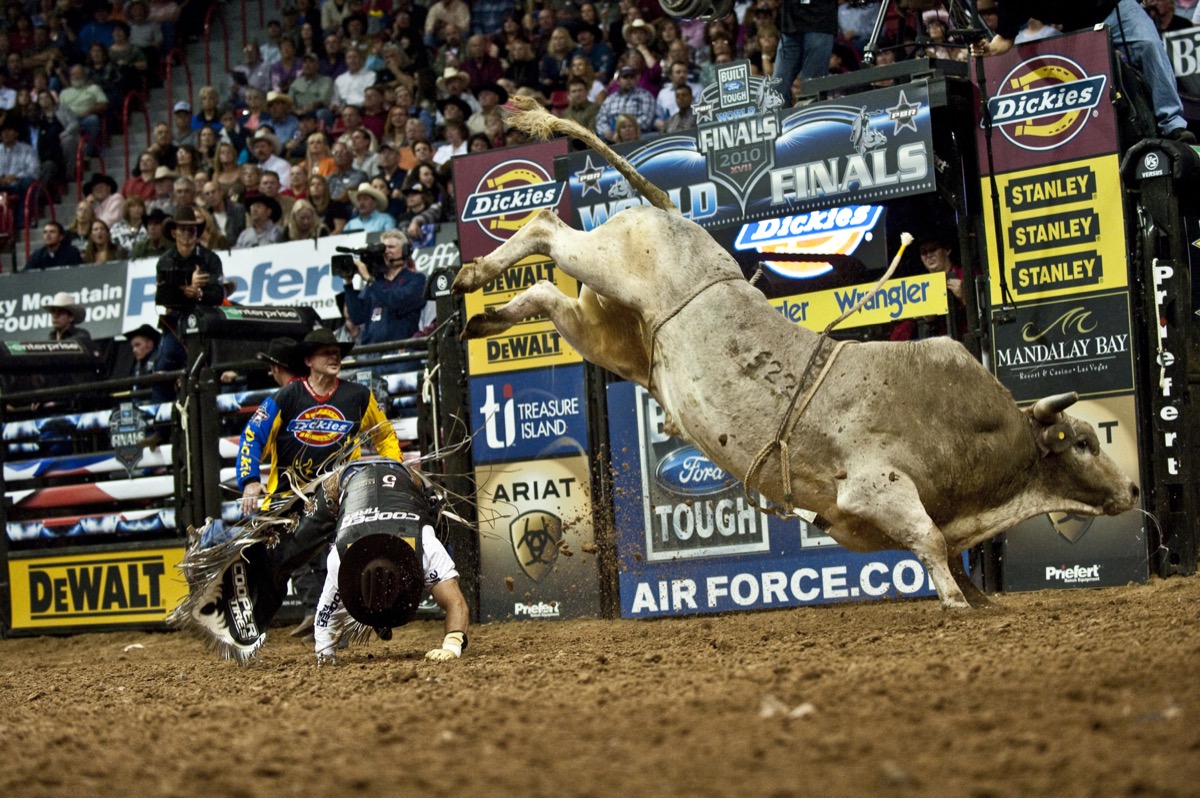
Rob Smets, nicknamed the Kamikaze Kid, spent about 25 years working bulls at the highest level of the sport. He won the Wrangler Bullfighting Tour championship five times, a record, and worked the National Finals Rodeo six times.
He broke his neck three times, in 1992, 1996 and 2006. Each time, he came back.
At the 2001 PBR World Finals, Smets dropped the baggy clown costume and makeup and stepped into the arena in a plain sport jersey and shorts carrying his sponsors' logos. Other bullfighters followed, and by 2003 the clown look was gone from the tour.
A New Name for the Job
The comedy work that used to come with the role split off in the late 1970s, handled now by separate entertainers called barrelmen. The protection work stayed, and it got a new name.
Since 2004, the PRCA has run its own vote among rodeo insiders for a Bullfighter of the Year, honoring the athlete judged best at keeping riders alive. The organization now describes the job as a protection athlete's, not a clown's.
The cowboy who got thrown does not remember the joke. He remembers who ran at the bull.
Frequently Asked Questions
What does a rodeo clown actually do?
Why did rodeo clowns start protecting riders?
Who invented the rodeo clown barrel?
Why did rodeo bullfighters stop wearing clown costumes?
What is the PRCA Bullfighter of the Year award?
Verified Fact
Verified Aug 17, 2026 · 3 sources checked
Source: WikipediaShow verification details
Claims checked
- Brahma bulls entered rodeo bull riding in the 1920s
- Jasbo Fulkerson used a wooden barrel in the 1930s
- Clown role split into comedy and protection in the late 1970s
- Wick Peth, Hall of Fame bullfighter, called greatest by peers
- Rob Smets switched from clown outfit to jersey in 2001
Sources: Wikipedia, ProRodeo Hall of Fame
Related Topics
More from People & Mind
View all People & Mind →