
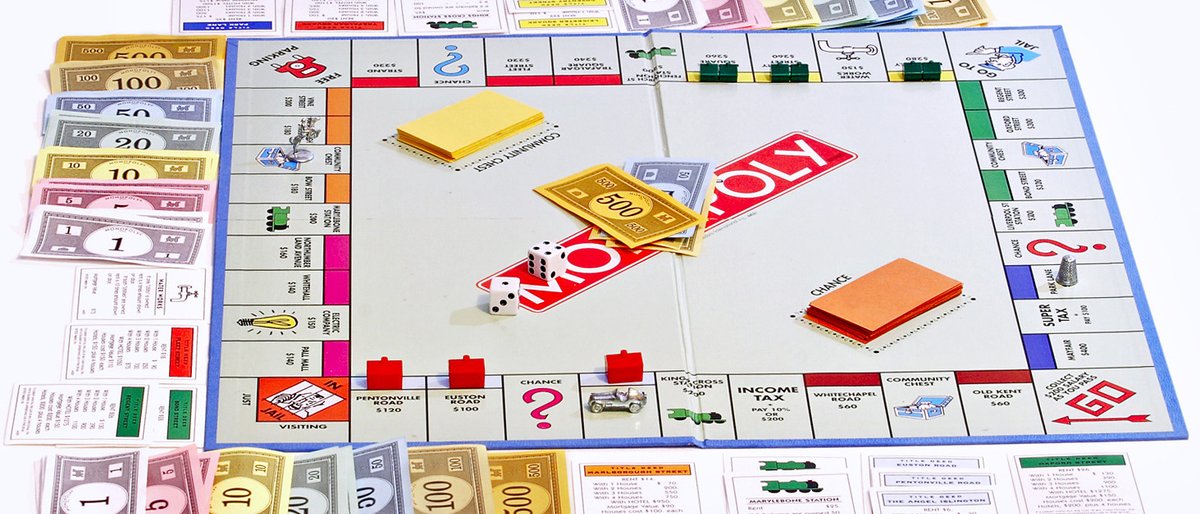
More Monopoly money is printed each year than real US dollars. Parker Brothers (now Hasbro) prints about $30 billion in Monopoly money annually, while the US Bureau of Engraving and Printing produces around $500 million to $1 billion in new currency.
Monopoly Prints More Money Than the US Treasury
Here's a fun bit of financial absurdity: the company behind Monopoly prints more fake money each year than the United States prints real money. We're talking about a board game out-producing the world's most powerful economy in raw paper currency.
The Numbers Are Ridiculous
Hasbro (which acquired Parker Brothers) churns out approximately $30 billion in Monopoly money every single year. Meanwhile, the US Bureau of Engraving and Printing—the folks responsible for actual dollars—produces somewhere between $500 million and $1 billion in new bills annually.
That's not a typo. A board game manufacturer prints roughly 30 to 60 times more currency than the US Treasury.
Wait, Why So Little Real Money?
The comparison feels impossible until you understand how modern money works. Most "real" money doesn't exist as physical bills—it's digital. When you get paid, buy groceries, or pay rent, numbers move between computers. No paper changes hands.
The Bureau of Engraving and Printing mainly produces bills to:
- Replace worn-out currency pulled from circulation
- Meet demand for cash transactions (which keep declining)
- Maintain reserves at Federal Reserve banks
Physical cash is becoming a backup system, not the main event.
Monopoly's Paper Empire
Monopoly, on the other hand, has been printing play money since 1935. Every new game needs a full set of bills. Every replacement set. Every special edition. Every Monopoly-themed product worldwide.
The game sells over 275 million copies to date, with millions more added yearly. Each box contains over $20,000 in play money across various denominations. The math adds up fast.
Charles Darrow, who popularized the game during the Great Depression, probably never imagined his pastel-colored bills would one day dwarf actual Treasury output. The irony is delicious—a game about ruthless capitalism produces more paper wealth than the capitalist system it parodies.
The Ultimate Fake Flex
There's something beautifully absurd about this fact. The most powerful nation on Earth, with its elaborate security features, anti-counterfeiting measures, and complex monetary policy, gets out-printed by a company making game pieces.
Of course, there's a crucial difference: Monopoly money is worthless outside your living room. Try paying your mortgage with those pastel $500 bills and see how far you get. (Actually, don't.)
But in terms of pure printing volume? The little board game wins. Somewhere, a Bureau of Engraving employee is feeling very called out right now.
Frequently Asked Questions
How much Monopoly money is printed each year?
How much real US money is printed each year?
Why does the US print so little physical money?
How much money comes in a Monopoly game?
Is Monopoly money worth anything?
Verified Fact
This fact has been reviewed and verified against original sources.
Show verification details
Corrected the exaggerated claim. The original implies more Monopoly money is printed than ALL world currency combined, which is false. The accurate comparison is specifically to US dollars.