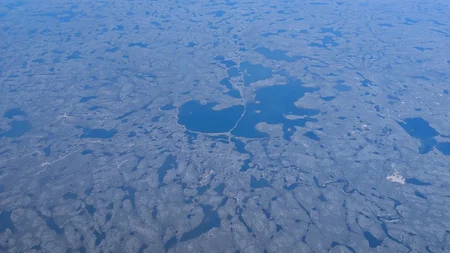
The water between India and Sri Lanka is only 3-30 feet deep and was purportedly passable on foot until 1480 AD when a cyclone moved some sand around.
The Ancient Land Bridge Between India and Sri Lanka
Stretching 30 miles across the turquoise waters between India and Sri Lanka lies one of nature's most fascinating geographical anomalies: a chain of limestone shoals so shallow that for millennia, people could walk from one country to another. Known as Adam's Bridge (or Ram Setu in Hindu tradition), this natural formation sits in water that rarely exceeds 3-30 feet deep, with some sections remaining completely dry even today.
But here's where it gets really interesting: until 1480 AD, you could actually walk the entire distance. Temple records at Rameshwaram document that a massive cyclone hit that year, breaking apart the continuous land bridge and creating the partially submerged chain of shoals we see today. Before that storm, the bridge was completely above sea level—a 30-mile highway of sand and limestone connecting two lands.
A Bridge Frozen Between Two Worlds
The Palk Strait, where Adam's Bridge sits, is almost comically shallow. We're talking about an area where most of the seafloor sits just 3-10 feet below the surface. In many spots, the water depth barely reaches 3 feet—you could wade through it without getting your shoulders wet. Approximately 99.98% of Adam's Bridge is submerged, but in such shallow water that boats struggle to pass over it.
This wasn't always the case. During the last Ice Age, when sea levels dropped by nearly 400 feet, the entire Palk Strait was dry land. The strait only became submerged about 7,000 years ago as glaciers melted and ocean levels rose. Even then, Adam's Bridge remained partially above water for thousands more years.
The Cyclone That Broke a Continent
The year 1480 marks a pivotal moment in geological history. According to records maintained at the ancient Rameshwaram Temple, a devastating cyclone struck the region, breaching the land bridge and ending its days as a walkable path. Violent storms pushed massive amounts of sand and sediment around, permanently altering the landscape.
Today, the bridge exists in a perpetual state of flux. Monsoon winds and ocean currents constantly shift the sand banks, causing them to appear, disappear, and move periodically. The same forces that maintain its shallow depth also prevent it from ever fully emerging or completely disappearing.
Why It Matters Today
The extreme shallowness of Adam's Bridge has major implications for modern shipping. Ships cannot pass directly between India and Sri Lanka through the Palk Strait—they must navigate around the entire island nation. Proposals to dredge a shipping channel through the bridge have sparked intense debate, pitting economic interests against environmental, cultural, and religious concerns.
Meanwhile, the bridge continues to fascinate geologists, archaeologists, and historians. Its limestone composition, formed from coral reefs and sediment deposits, tells a story millions of years in the making. The fact that it remained walkable into the medieval period makes it one of the most recent natural land bridges to separate two landmasses.
So next time you look at a map showing India and Sri Lanka separated by water, remember: just 545 years ago, you could have walked between them without getting your feet wet. All it took was one powerful storm to turn a land bridge into legend.
Frequently Asked Questions
Can you still walk from India to Sri Lanka?
How deep is the water between India and Sri Lanka?
What is Adam's Bridge made of?
When did the land bridge between India and Sri Lanka break?
Why can't ships pass between India and Sri Lanka?
Verified Fact
This fact has been reviewed and verified against original sources.
Show verification details
The fact is accurate. Adam's Bridge (Ram Setu) between India and Sri Lanka has water depths of 3-10 feet (1-3 meters) in most areas, with some sections remaining dry.