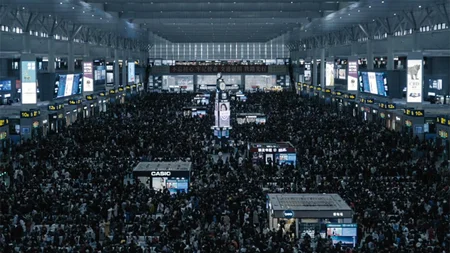
The world's longest traffic jam took place in Beijing, China. It was over 60 miles long and lasted 11 days.
The 11-Day Beijing Traffic Jam: A World Record Snarl
Imagine being stuck in traffic, not for an hour, or even a day, but for nearly two weeks. Sounds like a dystopian nightmare, right? Yet, this surreal scenario became a startling reality in China in August 2010, cementing its place in history as arguably the world's most mind-boggling traffic jam.
The Gridlock of the Century
The infamous event unfolded on the Beijing-Tibet Expressway and China National Highway 110, stretching for an unbelievable 60 to 62 miles (around 100 kilometers). For eleven to twelve agonizing days, vehicles were trapped in a seemingly endless metallic serpent, inching forward at a snail's pace—sometimes less than a kilometer per day.
Drivers were forced to adapt to a new, temporary existence on the highway. What started as a frustration quickly devolved into a test of endurance and ingenuity. Many were caught entirely unprepared for such an extended standstill.
What Caused Such a Catastrophe?
This unprecedented snarl wasn't the result of a single accident or a sudden surge in holiday travelers. Instead, it was a perfect storm of several factors converging on a critical transportation artery.
- Booming Economy: China's rapid economic growth meant an exponential increase in goods transportation. The highway was a major conduit for heavy trucks carrying coal and other vital resources into Beijing.
- Inadequate Infrastructure: The sheer volume of traffic simply overwhelmed the road's capacity, which wasn't designed for such an intense and continuous flow of vehicles, especially large trucks.
- Ongoing Road Maintenance: Ironically, sections of the very highway struggling to cope were under construction to alleviate future congestion. These necessary repairs further reduced lanes and choked the already strained flow of traffic, exacerbating the problem significantly.
The combination of these elements created a bottleneck of epic proportions, trapping thousands of travelers in a static metal river. It was a stark illustration of the pressures placed on infrastructure by unprecedented economic expansion.
Life in the Slow Lane (or No Lane at All)
For those trapped, daily life became an immediate challenge. Food and water supplies dwindled rapidly. Local villagers, ever resourceful, saw an opportunity. They set up makeshift stalls along the roadside, selling instant noodles, bottled water, and cigarettes to desperate drivers at massively inflated prices. What normally cost a few yuan could suddenly fetch ten times that amount.
Some drivers were stuck for as long as five days without moving. Others resorted to playing cards, sleeping in their vehicles, or simply wandering the highway, creating an eerie, temporary community amidst the automotive chaos.
The traffic jam became a global spectacle, highlighting not just a transportation nightmare but also the human capacity for resilience, exploitation, and adaptation under extreme circumstances.
A Warning Signal for the Future
While the Beijing traffic jam of 2010 is an extreme example, it served as a potent symbol of the infrastructure challenges faced by rapidly developing nations. It underscored the need for sustainable urban planning, diversified transportation networks, and robust road maintenance strategies.
This monumental traffic jam was more than just an inconvenience; it was a bizarre, almost unbelievable moment in modern history. A true testament to the mind-boggling scale that human endeavors, and their unexpected consequences, can achieve.
Frequently Asked Questions
How long did the world's longest traffic jam in China last?
What caused the massive traffic jam in Beijing in 2010?
How long was the traffic jam in China in 2010?
What impact did the 2010 China traffic jam have on drivers?
Verified Fact
This fact has been reviewed and verified against original sources.
Show verification details
The world's longest traffic jam occurred in August 2010 on China National Highway 110 and the Beijing-Tibet Expressway, stretching approximately 60-62 miles (100 km).