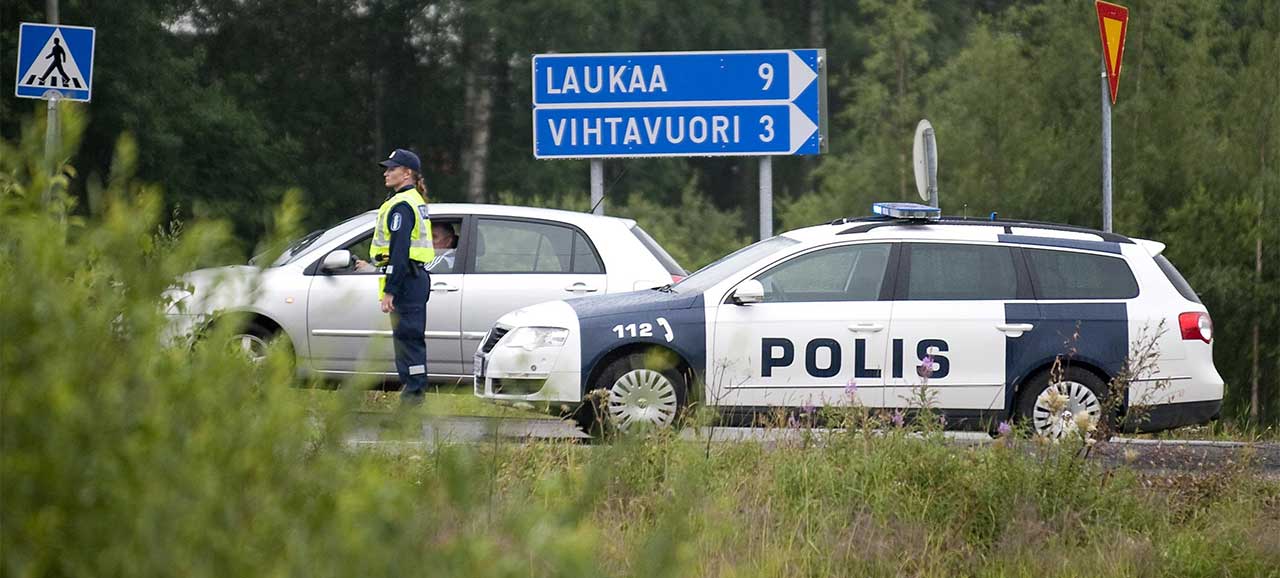
In Finland, fines are income-based. In 2002, a Nokia executive received a US$103,000 speeding ticket.
Finland's $103,000 Speeding Ticket: When Fines Match Income
Picture this: you're cruising down a Finnish road, going 15 mph over the speed limit, and suddenly you're hit with a speeding ticket worth more than most people's annual salary. For Anssi Vanjoki, a senior Nokia executive, this wasn't a nightmare—it was reality in 2002.
The ticket? A staggering $103,600.
Welcome to Finland's day-fine system, where your bank account determines your punishment just as much as your crime does.
The Day-Fine System: Equal Pain, Not Equal Payment
Finland operates under what's called a progressive punishment system, specifically designed so that fines hurt everyone equally—whether you're a student or a CEO. The concept is brilliantly simple: why should a millionaire shrug off a $200 speeding ticket that would devastate someone working minimum wage?
Here's how it works. Finnish courts calculate fines using two factors:
- Severity of the offense determines the number of day-fines (typically 1-120)
- Daily disposable income determines the value of each day-fine (roughly half your daily salary)
- The court multiplies these together for your total fine
For minor speeding violations like Vanjoki's—caught doing 75 km/h in a 50 km/h zone on his motorcycle—the offense itself wasn't extraordinary. His income was.
The Nokia Executive's Six-Figure Ticket
In 2002, Vanjoki was earning around $5.2 million annually as a top executive at Nokia, then the world's largest cell phone manufacturer. When authorities calculated his day-fine based on his 1999 income, the numbers skyrocketed to 116,000 euros, or roughly $103,600.
The case made international headlines and sparked fierce debate in Finland. Was this fair punishment or excessive penalty?
Vanjoki fought back. His lawyers argued the fine should be based on his 2000 income rather than his higher 1999 earnings. They won. A court later slashed the fine to approximately $5,245—still substantial, but 95% less than the original amount.
Finland Isn't Alone
While Finland's system generates the most headlines, several countries employ income-based fines:
- Switzerland uses a similar day-fine system and once issued a €290,000 speeding ticket
- Germany, Austria, and Denmark have comparable progressive fine structures
- Sweden applies income-based calculations for certain offenses
The United States, by contrast, uses fixed-fine systems where everyone pays the same amount regardless of income—a $150 speeding ticket is $150 whether you earn $25,000 or $25 million annually.
The Philosophy Behind Progressive Punishment
Finland's approach reflects Nordic egalitarian values. The principle is straightforward: punishment should have equal deterrent effect. A $200 fine might force a low-wage worker to skip meals or fall behind on rent, while a billionaire wouldn't even notice it missing from their account.
By scaling fines to income, Finland ensures that breaking the law carries real consequences for everyone. The system applies beyond traffic violations too—shoplifting, minor assaults, and securities law violations all use day-fines.
Critics argue the system is unfair to high earners who pay more for identical offenses. Supporters counter that fairness isn't about equal payment, but equal impact. Whether you agree or not, one thing is certain: in Finland, speeding tickets definitely aren't one-size-fits-all.
Frequently Asked Questions
How does Finland's day-fine system work?
Who was the Nokia executive who got a $103,000 speeding ticket?
What countries use income-based fines?
What was the highest speeding ticket ever given in Finland?
Are income-based fines fair?
Verified Fact
This fact has been reviewed and verified against original sources.
Show verification details
This fact is accurate. In 2002, Anssi Vanjoki, a Nokia executive, was initially fined 116,000 euros (approximately $103,000) for speeding 75 km/h in a 50 km/h zone. The fine was later reduced to about $5,245 after he successfully argued it should be based on his 2000 income rather than his higher 1999 income of $5.2 million. Finland's day-fine system remains in effect today.