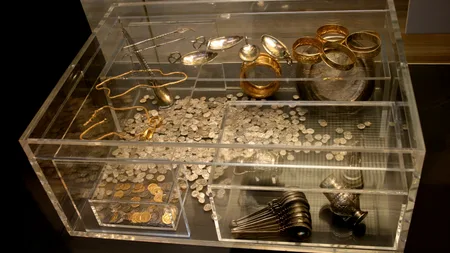
In 2012, a British man named Wesley Carrington used a metal detector for the first time and found £100,000 worth of Roman gold within 20 minutes.
Beginner's Luck: £100K Roman Gold in 20 Minutes
Imagine buying your first metal detector, heading to a random field, and within 20 minutes discovering one of Britain's largest Roman gold hoards. That's exactly what happened to Wesley Carrington, a 34-year-old car salesman from St Albans, in September 2012.
Carrington hadn't even splurged on fancy equipment. He bought the Garrett Ace 150—a basic beginner's detector—and decided to try it out in a field near his home. Fifteen minutes in, his detector beeped. Seven inches down, he unearthed a gleaming Roman solidus, a gold coin that had been buried for over 1,600 years.
Most people would've celebrated and called it a day. Carrington kept digging.
The Hoard Keeps Growing
By the time darkness forced him to stop that first night, he'd found 55 gold coins. When he returned days later with museum staff and archaeologists, they uncovered 104 more. The final tally: 159 Roman gold coins spanning the reigns of emperors from Gratian to Honorius, minted across different parts of the collapsing Roman Empire between 350-450 AD.
The collection became known as the St Albans Hoard, one of the largest finds of Roman gold ever discovered in England. Experts valued it at approximately £100,000 (about $156,000).
Why Were They There?
The coins were likely buried by someone fleeing Roman Britain as the empire crumbled in the 5th century. St Albans—Roman Verulamium—was a major city, and wealthy Romans often buried their valuables during times of crisis, planning to return later. This person never did.
The hoard sat undisturbed for 1,600 years, waiting for someone with a £150 metal detector to stumble upon it on their first try.
The Legal Aftermath
Under UK law, such finds must be reported and can be declared official treasure. A coroner's inquest in 2013 confirmed the hoard's status, and in 2015, St Albans District Council purchased the collection for £98,500. Carrington split the proceeds with the landowner.
The coins now reside at the Verulamium Museum in St Albans, where visitors can see the exact hoard that proved sometimes the best treasures are found by complete beginners. Carrington's story remains the ultimate "beginner's luck" tale in the metal detecting community—a reminder that you don't need years of experience, just the courage to start digging.
Frequently Asked Questions
Who was Wesley Carrington and what did he find?
What is the St Albans Hoard?
What metal detector did Wesley Carrington use?
What happened to the Roman gold coins Wesley Carrington found?
Why were Roman gold coins buried in St Albans?
Verified Fact
This fact has been reviewed and verified against original sources.
Show verification details
Confirmed through multiple sources including Wikipedia, The History Blog, and museum records. The St Albans Hoard discovery occurred on September 23, 2012.
Related Topics
More from Places & Culture
View all Places & Culture →