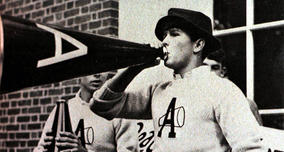
George W. Bush was also the head of the cheerleading team in his high school.
George W. Bush Was Head Cheerleader in High School
Long before George W. Bush commanded troops as the 43rd President of the United States, he commanded something quite different: cheerleading squads. At Phillips Academy Andover, one of America's most prestigious prep schools, Bush rose to become head cheerleader during his senior year in the 1960s.
Bush's path to the megaphone wasn't exactly planned. After warming the bench on the basketball, baseball, and football teams, he needed to fulfill Andover's mandatory athletic participation requirement. Rather than ride the pine indefinitely, he pivoted to cheerleading—a decision that would become one of the more colorful footnotes in presidential history.
From Sidelines to Spotlight
As head cheerleader, Bush discovered a role that suited his energetic personality. The position allowed him to "ham it up" in front of crowds, channeling his competitive spirit into rallying spectators rather than scoring points himself. It was leadership experience of a different sort—learning to energize and unite people toward a common goal, skills that would prove useful decades later on the campaign trail.
But Bush didn't hang up his pom-poms after high school. When he arrived at Yale University in 1964, he continued cheerleading for all four years of his undergraduate education. While he may have been a C student academically (graduating with a 2.35 GPA), he showed consistent commitment to his role on the sidelines of Yale football games.
When Men Led the Cheers
Today, cheerleading is predominantly female, but in Bush's era, male cheerleaders were common and even prestigious. The role carried social status at elite institutions, and many notable figures got their start leading cheers:
- Dwight D. Eisenhower cheered at West Point
- Franklin D. Roosevelt was a cheerleader at Harvard
- Ronald Reagan led cheers at Eureka College
- Future Supreme Court Justice Samuel Alito cheered at Princeton
The gender dynamics of cheerleading shifted dramatically in the latter half of the 20th century. What was once seen as a male-dominated activity requiring athleticism and leadership became increasingly feminized, particularly as women gained more access to sports participation through Title IX.
The Presidential Cheerleader Club
Bush wasn't alone among presidents who wielded megaphones before gavels. In fact, he's one of at least four U.S. presidents who were cheerleaders, though he stands out as the only one to serve as head cheerleader. This quirky commonality among American leaders suggests that the skills developed in cheerleading—public speaking, crowd engagement, team spirit, and performative confidence—may transfer surprisingly well to political leadership.
The irony wasn't lost on critics and comedians during Bush's presidency. The image of a cheerleader-turned-commander-in-chief provided endless material, particularly when his administration adopted aggressive military policies. Yet supporters argued his cheerleading background demonstrated exactly the kind of team-building and morale-boosting abilities needed in the Oval Office.
So next time you think of presidential qualifications, remember: sometimes the path to the White House runs straight through the cheerleading squad.
Frequently Asked Questions
Was George W. Bush really a cheerleader?
Which U.S. presidents were cheerleaders?
Why were cheerleaders mostly male in the 1960s?
What school did George W. Bush attend as head cheerleader?
Did George W. Bush play any sports in high school?
Verified Fact
This fact has been reviewed and verified against original sources.
Show verification details
Confirmed through multiple sources. Bush was head cheerleader at Phillips Academy Andover during his senior year in the 1960s and continued cheerleading at Yale University.
Related Topics
More from Places & Culture
View all Places & Culture →