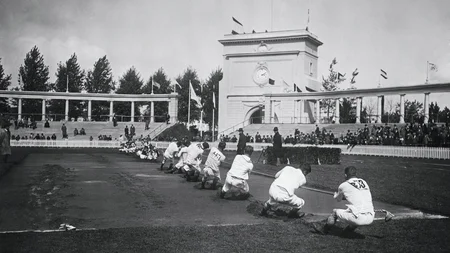
The Indianapolis Motor Speedway is nicknamed the Brickyard for a real reason. In 1909, workers paved the whole 2.5-mile track with 3.2 million bricks. Asphalt slowly buried nearly all of them, until only a 36-inch strip survived at the finish line. Drivers still kiss that strip after every win. In 2025, a repave dug into a turn and found the original bricks still down there.
Under the Asphalt, the Indy 500 Track Is Still Brick
Every year, the winner of the Indianapolis 500 climbs out of the car, walks to the start-finish line, kneels down, and kisses a strip of red brick. Most fans assume it is the last scrap of brick left on an otherwise modern racetrack. It is not. Underneath the asphalt, most of the original 1909 track is still there, buried but intact.
A Track Paved With 3.2 Million Bricks
The Indianapolis Motor Speedway opened in 1909 with a surface of crushed stone and tar. It did not hold up to racing speeds.
That same year, crews imported 3.2 million paving bricks by rail and laid them across the entire 2.5-mile oval, setting each one in a bed of sand and mortar. The track was dedicated in December 1909 by Indiana's governor, Thomas Marshall.
The nickname stuck immediately: the Brickyard.
Buried, Not Replaced
Over the next five decades, the Speedway slowly covered its own brick surface. Asphalt went over the corners in the 1930s, then the back straight in 1939.
In 1961, after A.J. Foyt's win that year, crews paved the front straight too. By then almost the entire original brick track was sealed under layers of blacktop.
Every repave since, in 1976, 1988, 1995 and 2004, simply added another layer on top. Nobody dug the bricks back out.
One Yard That Was Never Covered
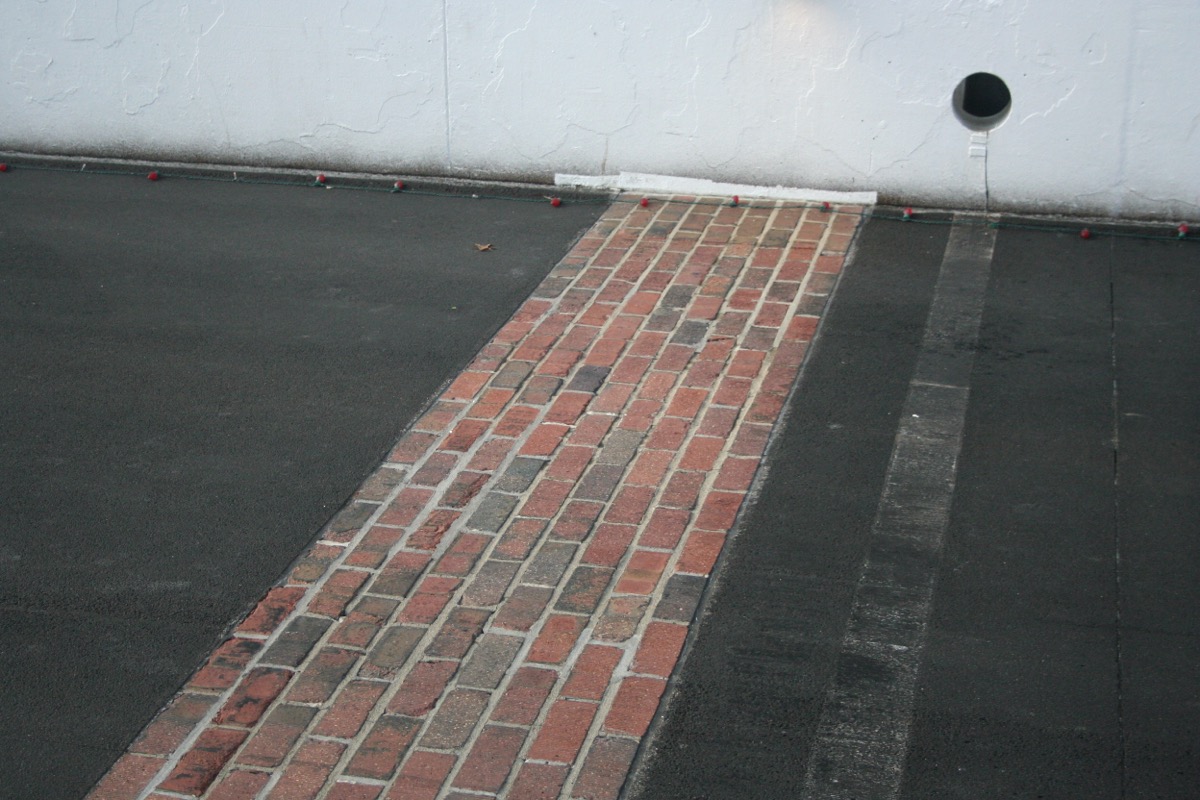
Track workers left a single 36-inch strip of the original bricks exposed at the start-finish line. It became known as the Yard of Bricks.
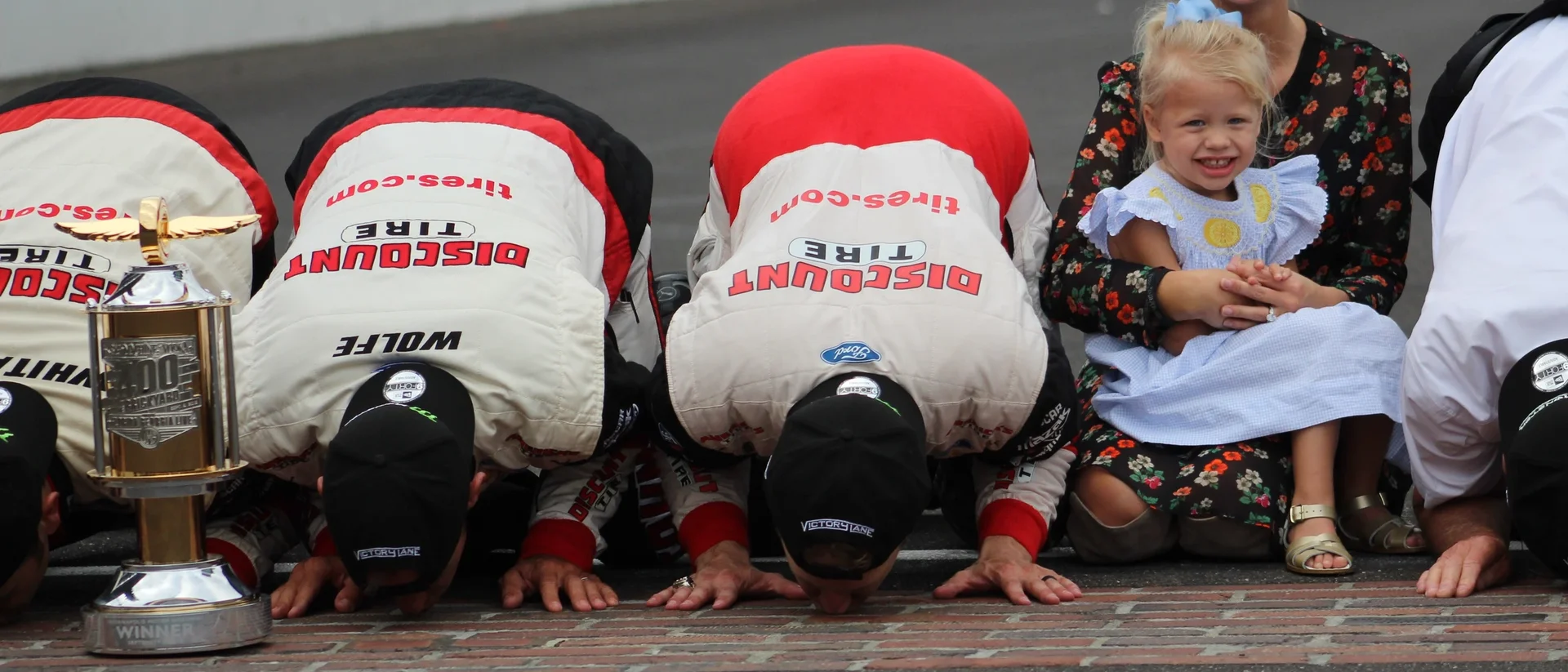
The tradition of kissing it started almost by accident. After winning the 1996 Brickyard 400, driver Dale Jarrett and his crew chief, Todd Parrott, knelt down and kissed the bricks, following through on a joke they had made in practice.
Other drivers copied it. Within a few years it was standard practice for winners of both the Brickyard 400 and the Indianapolis 500.
The Repave That Proved It
Decades of freeze and thaw let the buried bricks shift slightly, pushing up bumps in the asphalt at Turn 2. To fix it for good, IMS milled down through the surface in 2025, the first full repave of that section since 2004.
What came up was the original 1909 surface, brick and all, still sitting exactly where it had been laid more than a century earlier.
"Most of the bricks are still under there," IMS President Doug Boles has said.
IMS kept the excavated bricks and put a section of the original crushed-stone-and-tar surface on display at the Speedway museum. In December 2025, the track released "Behind the Bricks," a miniseries documenting the whole project.
The strip that drivers kiss was never a relic on its own. It is a window down to a track that never actually went anywhere.
Enjoyed this? Get a new fact every morning.
A fascinating fact in your inbox every morning. Free. Unsubscribe anytime.
Frequently Asked Questions
Why is the Indianapolis Motor Speedway called the Brickyard?
Are there still bricks under the Indianapolis 500 track?
What is the Yard of Bricks?
Why do Indy 500 and NASCAR winners kiss the bricks?
When was the Indianapolis Motor Speedway track last fully repaved?
Verified Fact
Verified Aug 6, 2026 · 8 sources checked
Source: AOL.comShow verification details
Claims checked
- 3.2 million bricks laid in 1909, asphalt later covered all but a 36-inch strip
- Original 1909 bricks found during winter 2025-26 Turn 2 repave
- Full-track repave was 2004; 2025-26 work was a targeted Turn 2 fix (earlier FAQ overclaimed)
- Drivers kiss the bricks after wins, origin at 1996 Brickyard 400
Sources: AOL.com, Autoweek, IndyCar.com, Indianapolis Motor Speedway, WISHTV, Performance Racing, NASCAR, Wikipedia