
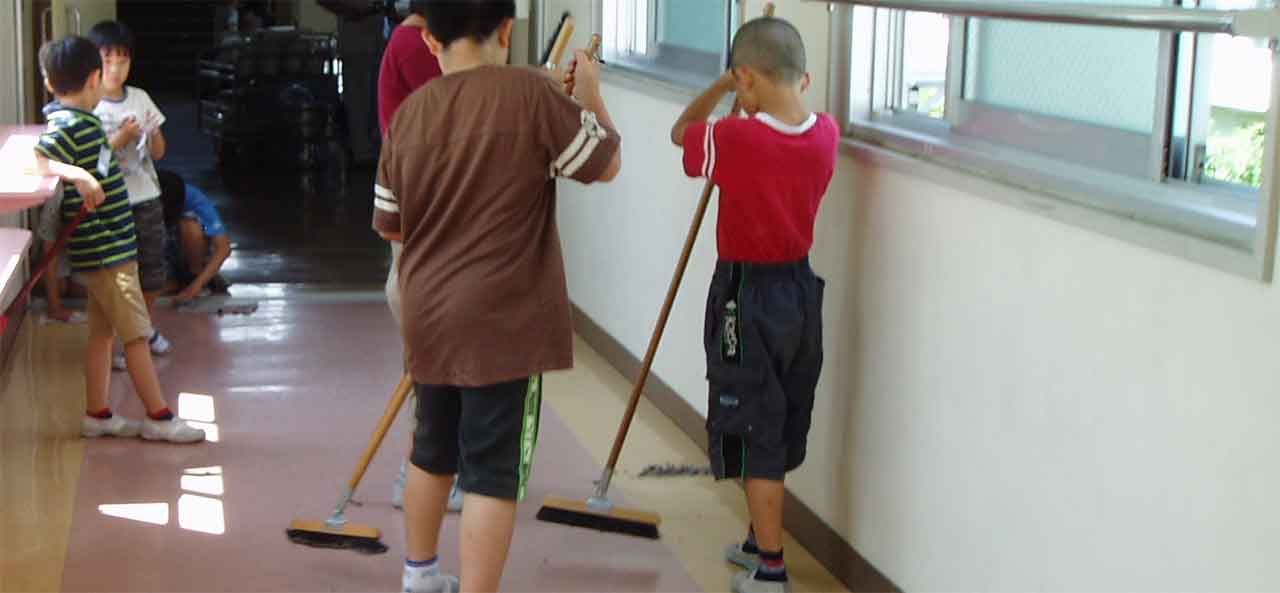
Most Japanese schools don't have dedicated janitors. Instead, children do the daily cleaning, which originated from the Buddhist traditions that associate cleaning with morality.
Why Japanese Students Clean Their Own Schools Daily
Walk into most Japanese schools around lunchtime, and you'll witness something remarkable: students in small groups, armed with brooms, mops, and rags, methodically cleaning their classrooms, hallways, and even toilets. This isn't a punishment or detention—it's o-soji, the daily cleaning ritual that's been a cornerstone of Japanese education for over a century.
While many schools worldwide employ full-time janitorial staff, Japanese schools take a radically different approach. Students themselves are responsible for maintaining their learning environment every single day.
The Buddhist Roots of Cleaning
This practice traces back to Buddhist philosophy, which views cleaning as far more than just removing dirt. In Zen Buddhism particularly, physical cleansing is deeply connected to spiritual purification. Monks have long incorporated cleaning as part of their daily practice—sweeping temple grounds, polishing floors, washing dishes—treating each task as a form of moving meditation.
The principle is simple but profound: taking care of your environment cultivates character. By scrubbing floors and organizing spaces, students learn humility, responsibility, and respect for shared spaces. It's moral education disguised as housekeeping.
What Students Actually Clean
The daily cleaning rotation, called toban, assigns every student specific duties that change regularly:
- Sweeping and mopping classrooms and corridors
- Wiping down desks, windows, and blackboards
- Cleaning bathrooms and restroom facilities
- Tidying up shoe lockers and entranceways
- Raking leaves and maintaining outdoor areas
These sessions typically last 15-20 minutes and happen after lunch or at the end of the school day. Even kindergarteners participate at their skill level.
Not Completely Janitor-Free
Here's the nuance: Japanese schools do employ yōmuin (maintenance staff), but their role differs dramatically from Western janitors. These workers handle specialized tasks like repairing equipment, deep-cleaning during school breaks, maintaining heating and cooling systems, and managing heavy-duty maintenance that students can't safely perform.
The daily upkeep, however? That's entirely on the students. This division of labor saves schools considerable money while teaching invaluable life skills.
Why This System Works
Beyond the Buddhist philosophical underpinnings, the practice creates tangible benefits. Students develop a sense of ownership over their school—you're less likely to trash a bathroom you'll be cleaning tomorrow. The shared responsibility builds community and breaks down social hierarchies, as everyone from the star athlete to the top student scrubs toilets on their assigned day.
It also instills practical skills many young people lack elsewhere: how to properly clean a floor, organize a space efficiently, work collaboratively on mundane tasks. These aren't glamorous lessons, but they're remarkably useful for independent living.
Perhaps most importantly, o-soji reinforces the idea that no task is beneath anyone. In a society that deeply values harmony and collective responsibility, having future doctors, engineers, and leaders learn to clean toilets alongside their peers sends a powerful message about equality and service.
The next time someone complains about their messy classroom or workplace, they might want to consider the Japanese approach: the people who use a space should be the ones who care for it. Cleaning isn't someone else's job—it's everyone's practice in mindfulness, responsibility, and respect.
Frequently Asked Questions
Do Japanese schools have janitors?
Why do Japanese students clean their schools?
What do Japanese students clean at school?
Is cleaning part of Japanese school culture?
How long have Japanese schools practiced student cleaning?
Verified Fact
This fact has been reviewed and verified against original sources.
Show verification details
Minor clarification: Japanese schools do employ some maintenance staff (yōmuin) for deep cleaning and repairs, but students handle all daily routine cleaning. The Buddhist connection to morality and character development is well-documented.