
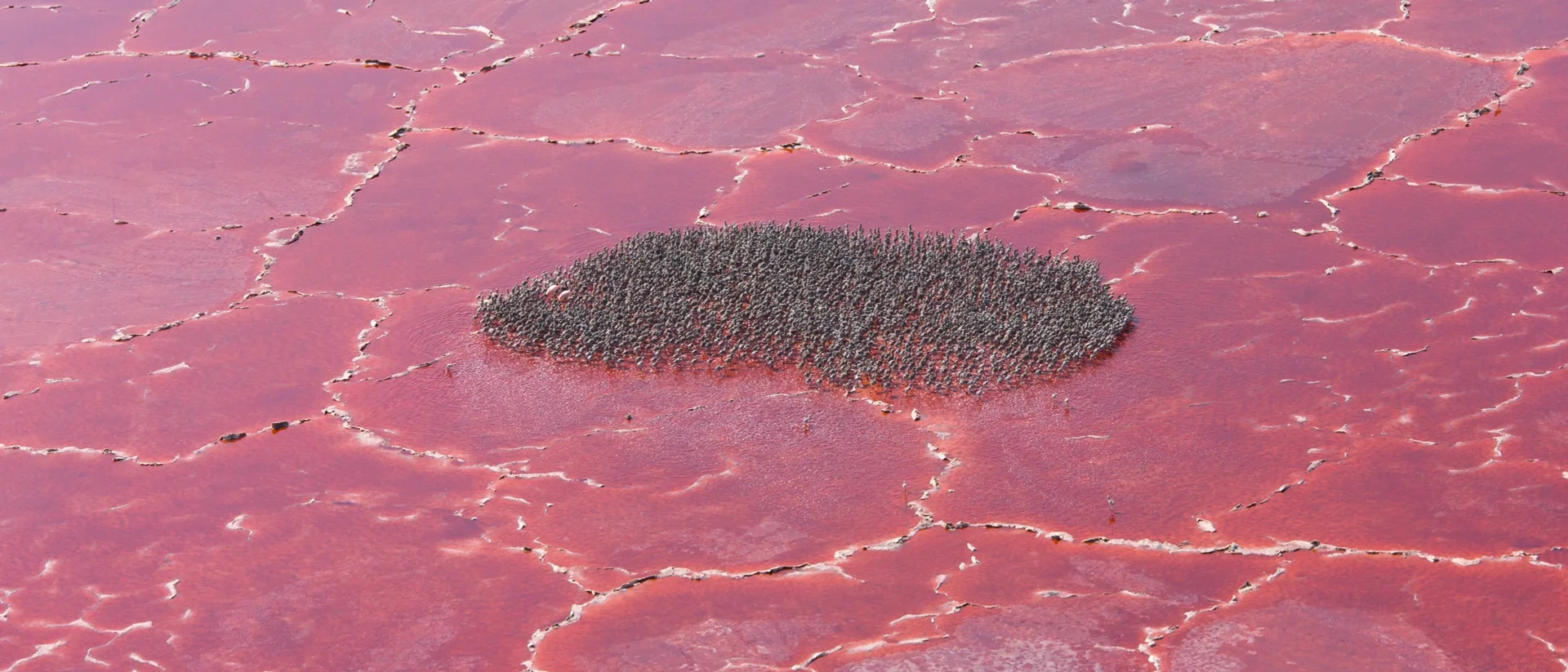
Lake Natron in Tanzania is so alkaline (pH up to 10.5) and hot (up to 60°C / 140°F) that animals that die in it get preserved and coated in mineral salts - their calcified carcasses inspired Nick Brandt’s famous posed-statue photos. The twist: this same caustic lake is where 75% of the world’s lesser flamingos are born. The soda flats and toxic water keep predators out, making it the safest nursery on Earth.
The Death Lake That Is Also a Flamingo Nursery
It looks like something from another planet - a blood-red lake shimmering in the heat of northern Tanzania, its shores scattered with pale, stiffened forms of birds and bats. But Lake Natron is real, and far stranger than it appears.
What Makes It So Extreme
Lake Natron sits in the East African Rift Valley near the Kenyan border, fed by hot springs rich in volcanic minerals. The water reaches a pH of up to 10.5 - almost as caustic as ammonia - and surface temperatures can hit 60°C (140°F) in the shallows. The lake is saturated with natron (sodium carbonate) and other mineral salts from volcanic ash. Animals that die in its water do not decompose in the usual way. Instead, their carcasses are slowly coated and preserved by those minerals, hardening into pale, stone-like forms on the shore.
The Photographs That Fooled the Internet
In 2013, photographer Nick Brandt published images from his project Across the Ravaged Land. He had found calcified carcasses of birds and bats washed up on Lake Natron’s shore - perfectly preserved by the minerals - and posed them upright, as though still alive. The images spread widely online, with many viewers believing the lake turns living animals to stone on contact. That is not what happens. The calcification is a slow process that occurs after death, as mineral-rich water evaporates around the body - not an instant chemical attack.
The Twist Nobody Expects
Despite everything, Lake Natron is not silent or lifeless. Its vivid red and orange tones come from salt-loving cyanobacteria that bloom as the water evaporates and salinity rises. And every few years - when water levels align just right - up to 2.5 million lesser flamingos descend on the lake to breed, representing roughly 75% of the world’s entire lesser flamingo population. They build mud-mound nests on low soda-flat islands, and the caustic water around them acts as a natural moat. Almost no land predator can cross it to reach the chicks.
The Safest Nursery in Africa
Flamingos have evolved tough, leathery skin on their legs that lets them wade in conditions that would burn most other animals. Their chicks hatch in the middle of a lake so hostile that arriving at the right time - and leaving before water levels drop too far - is the difference between survival and death. When the lake dries too much, newly hatched chicks must walk miles across baking soda flats to reach open water. The International Union for Conservation of Nature classifies the lesser flamingo as Near Threatened, in part because the entire species depends so heavily on this single breeding site. If Lake Natron changes significantly, three quarters of the world’s lesser flamingos could lose their only safe home.
Frequently Asked Questions
Why does Lake Natron calcify animals?
Why do flamingos breed in Lake Natron if it is so dangerous?
How many flamingos breed at Lake Natron?
Who took the famous Lake Natron calcified animal photos?
Why is Lake Natron red?
Verified Fact
Verified Jun 14, 2026 · 6 sources checked
Source: Smithsonian MagazineShow verification details
Claims checked
- Lake Natron has a pH up to 10.5
- Lake Natron can reach 60°C, with 41°C typical at the surface
- Dead animals are calcified and preserved; Brandt posed them for photos
- Brandt shot the series 2010-2012, book published 2013
- About 75% of world lesser flamingos (up to 2.5 million) breed there
Sources: Smithsonian Magazine, National Geographic, Live Science, Colossal, NickBrandt.com