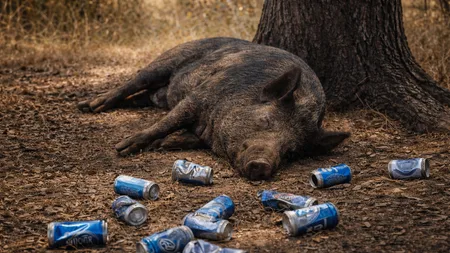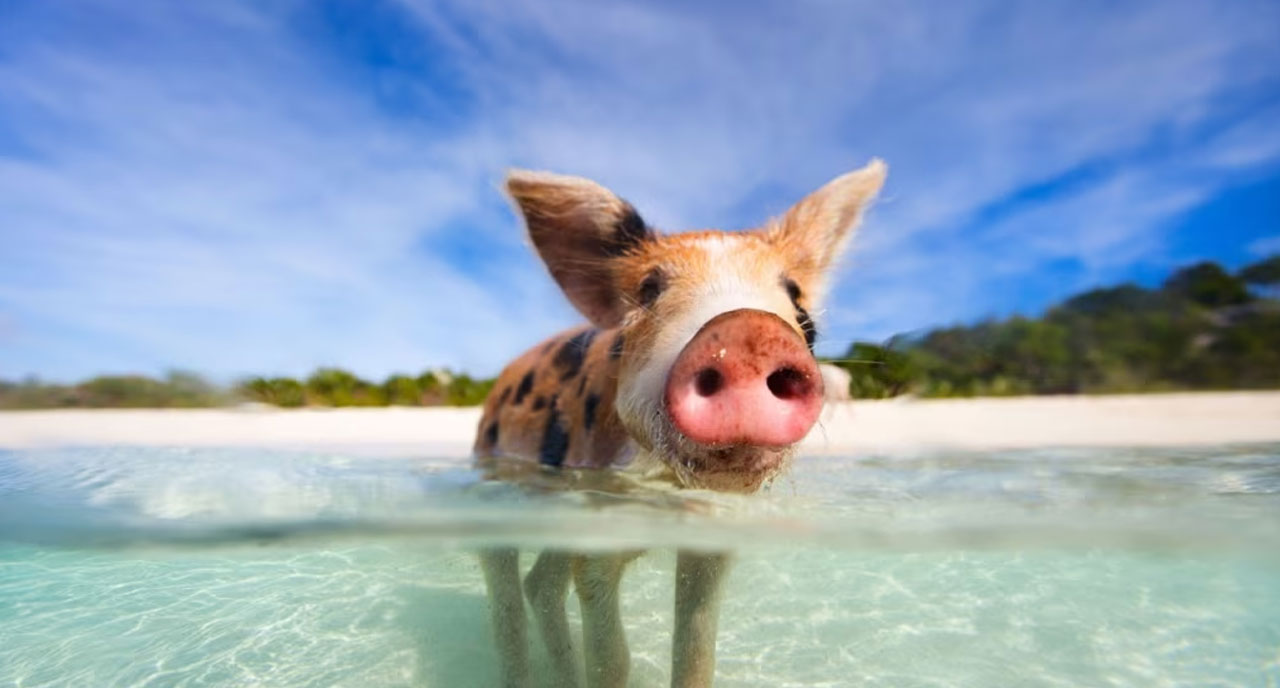
There's an island in the Bahamas called Big Major Cay (or Pig Beach), which is only inhabited by swimming pigs.
Swimming Pigs Rule an Island in the Bahamas
Picture this: you're sailing through the Bahamas, expecting the usual postcard scene of white sand and turquoise water. Then you spot them - a dozen wild pigs splashing through the ocean, swimming toward your boat like they own the place. Because on this island, they kind of do.
Welcome to Big Major Cay, better known as Pig Beach, where feral swine have become the Caribbean's most unlikely beach bums.
How Pigs Became Island Castaways
Nobody knows for sure how the pigs got there, but the theories range from practical to ridiculous:
- Sailors dropped them off centuries ago as a future food source (then forgot about them)
- They survived a shipwreck and swam to shore
- They escaped from a nearby island and made the swim themselves
- They were part of a business scheme to attract tourists (this one's probably closest to the truth)
Whatever the origin story, these pigs figured out something crucial: tourists equal food. When boats pull up, the pigs don't run - they dive right in and paddle out for handouts.
The Swimming Isn't the Weird Part
Pigs are actually natural swimmers. Their bodies are buoyant, and they use a doggy-paddle motion that works surprisingly well. What makes Pig Beach bizarre isn't that pigs can swim - it's that they've learned to seek out boats like aquatic panhandlers.
Some of these pigs will swim out 30-40 feet from shore, grunting and snorting at approaching vessels. They've become marine hustlers, trading their novelty for scraps of fruit, vegetables, and whatever else tourists toss overboard.
Paradise... With Problems
The Bahamas' swimming pigs became Instagram famous around 2015, and that's when things got complicated. Tour operators started bringing hundreds of visitors daily. The pigs got fat on junk food. Some got aggressive. In 2017, seven pigs died after ingesting large amounts of sand while foraging the beach for tourist handouts, made worse by a drought that had dried up their natural water source.
The Bahamian government now regulates feeding. Tour guides know which foods are safe (carrots and lettuce, yes; rum cake and Cheetos, no). There are rules about not touching piglets, not chasing the animals, and keeping a respectful distance.
But here's the thing - these aren't domesticated pets. They're feral animals who happen to tolerate humans because we bring snacks. They bite. They can get territorial. They're still wild, just with better PR than most wild boars.
The Reality Check
Big Major Cay is uninhabited by humans, but it's not some pristine wilderness. The pigs live there because people keep them fed. Without tourist boats, they'd probably struggle - the island doesn't have enough natural food sources for a colony this size.
So yes, swimming pigs are real. They're weird, they're memorable, and they're absolutely milking their fame for all it's worth. Just remember: they're not doing it for your Instagram story. They're doing it for the carrots.
Frequently Asked Questions
Where is Pig Beach in the Bahamas?
Why are there swimming pigs on Big Major Cay?
Can you swim with the pigs at Pig Beach?
How many pigs live on Big Major Cay?
Is Pig Beach safe to visit?
Verified Fact
Verified Sep 11, 2026 · 4 sources checked
Source: View sourceShow verification details
Claims checked
- Big Major Cay in the Exuma Cays, Bahamas, is uninhabited by humans and home to a colony of feral swimming pigs
- The pigs origins are unknown, with several competing theories (sailors, shipwreck, tourism venture)
- The pigs became internet-famous around 2015 and are now a major tourist draw
- Several pigs died in 2017 after ingesting sand while begging for food during a drought, corrected in the article (was described as spoiled leftovers)
Sources: National Geographic, Smithsonian Magazine, Wikipedia, Bahamas.com (official tourism site)