
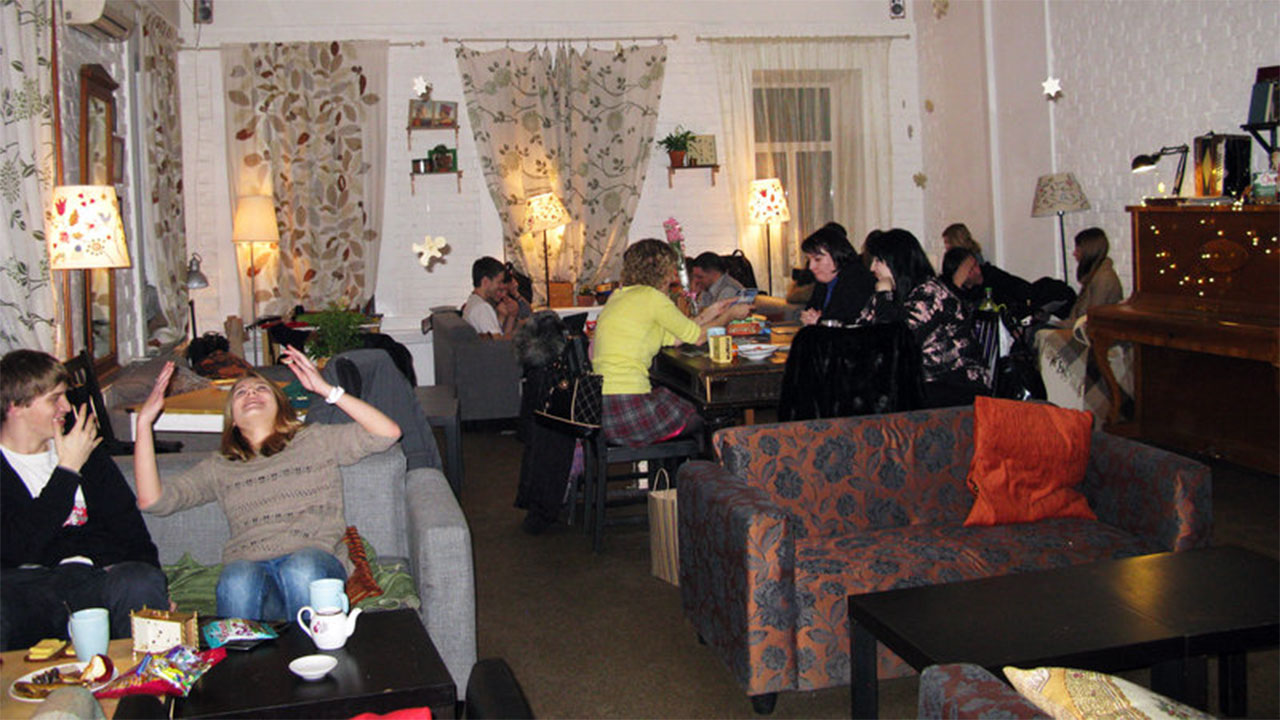
There are coffee houses in Russia where food and drink are free, but you pay for time.
Russia's Time Cafés: Pay by the Minute, Eat for Free
Imagine walking into a café where the croissants are free, the coffee costs nothing, and the Wi-Fi never asks for a password. The only thing on your bill? The time you spent there.
Welcome to the anti-café, a revolutionary concept that flipped the hospitality industry on its head when it emerged in Moscow around 2011. These aren't your typical coffee shops—they're time clubs, where customers pay by the minute while everything else is complimentary.
Pay for Time, Not Coffee
The concept is brilliantly simple. Walk in, start a timer, and help yourself to whatever you want—coffee, tea, snacks, sometimes even full meals. Work on your laptop, read a book, chat with friends, or join a board game tournament. When you're ready to leave, you pay based on how long you stayed, typically 2-5 rubles per minute (roughly $0.03-$0.08 USD).
The first anti-café, called Ziferblat (Russian for "clock face"), opened in Moscow in 2011. Founder Ivan Mitin wanted to create a space that felt like visiting a friend's living room rather than a commercial establishment. The model caught fire across Russia and soon spread internationally.
More Than Just Free Snacks
Anti-cafés attract a specific crowd: freelancers escaping lonely apartments, students needing quiet study spaces, and creative types seeking community. The time-based pricing naturally filters for people who want to linger and connect rather than grab-and-go customers.
Many locations have evolved beyond simple refreshments:
- Musical instruments available for impromptu jam sessions
- Board game libraries with hundreds of titles
- Workshop spaces for art projects and crafts
- Event programming like language exchanges and poetry readings
- Coworking amenities including printers and meeting rooms
The Psychology of Paying for Time
The model works because it completely reframes value. Traditional cafés profit from pushing volume—get customers in, serve them quickly, turn the table. Anti-cafés profit from creating an environment so comfortable that people want to stay.
Customers report feeling less pressured and more relaxed. There's no guilt about nursing a single coffee for three hours or bringing outside food. You're literally paying for the right to exist in the space however you choose.
Going Global
The concept jumped from Russia to London, Paris, Ljubljana, and beyond. The UK's Ziferblat locations became particularly popular, though the chain has faced challenges in some markets where the model felt too unfamiliar.
Some international adaptations tweaked the formula—capping maximum charges, requiring minimum stays, or offering hybrid pricing models. But the core philosophy remained: time is the product, everything else is just the amenity.
The COVID-19 pandemic hit anti-cafés particularly hard since their entire business model depends on people gathering indoors for extended periods. Many locations closed permanently, though some adapted with outdoor spaces or shifted to coworking-focused models.
Today, anti-cafés remain most popular in Russia and Eastern Europe, existing as third spaces for communities that crave connection without commercial pressure. They prove that sometimes the most valuable thing a business can sell isn't a product at all—it's simply time and space to be human.
Frequently Asked Questions
What are time-based coffee houses in Russia?
How much does it cost to sit in a Russian time-based cafe?
Why do Russian cafes charge by time instead of food and drinks?
Are free food and drink coffee houses actually in Russia?
What's the difference between a time-based cafe and a regular coffee shop?
Verified Fact
This fact has been reviewed and verified against original sources.
Show verification details
Anti-cafés (also called time clubs or ziferblat) are real establishments that originated in Russia and have spread to other countries. Customers pay for time spent (typically per minute or hour) while food and drinks are complimentary.