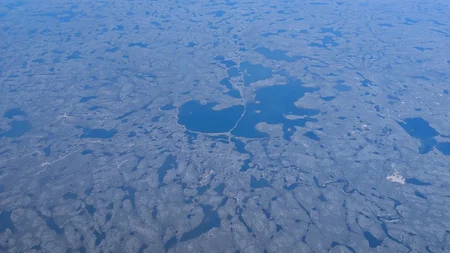
The Caspian Sea is also classed as the world's largest lake.
The Caspian Sea: Earth's Largest Lake, or Is It?
When you hear the word 'sea,' vast, open oceans often come to mind. But nestled between Europe and Asia lies a colossal body of water that defies simple categorization: the Caspian Sea. Far from being a typical sea, it proudly holds the title of the world's largest lake. Its immense size and unique characteristics have captivated geographers and scientists for centuries.
This inland giant covers an astonishing surface area of approximately 371,000 square kilometers (143,200 square miles). To put that into perspective, it's roughly the size of Germany, or slightly larger than Japan. Its sheer scale led ancient civilizations, like the Greeks and Persians, to refer to it as an ocean, showcasing its impressive reach even in antiquity.
Defining a Lake vs. a Sea
So, what makes the Caspian Sea a lake rather than a true sea? The distinction primarily hinges on its connectivity to the global ocean system. A lake is defined as a large body of water entirely surrounded by land, with no natural outflow to an ocean. The Caspian Sea fits this description perfectly; it is an enclosed basin.
Despite its 'sea' moniker, the Caspian's waters are landlocked, meaning they do not directly connect to any of the world's oceans. This geological isolation is a key factor in its classification. This characteristic sets it apart from true seas, which are typically part of or connected to an ocean.
A Salty Giant
While many large lakes, such as North America's Great Lakes, are freshwater bodies, the Caspian Sea is notably a saltwater lake. Its salinity, however, is not uniform throughout. It varies significantly across different regions, influenced by factors such as freshwater inflow and evaporation rates.
The northern parts, which receive considerable freshwater input from rivers like the mighty Volga, tend to be less saline. As you move southward, the salinity generally increases. This gradient in salt content creates diverse aquatic environments within the lake, supporting a range of unique ecosystems.
Geography and Unique Ecosystems
The Caspian Sea borders five different countries: Russia to the north, Kazakhstan and Turkmenistan to the east, Iran to the south, and Azerbaijan to the west. This shared boundary has historically made the Caspian a region of significant geopolitical importance, influencing trade, culture, and environmental policies.
Its unique environment fosters a diverse array of flora and fauna, some found nowhere else on Earth. Perhaps its most famous resident is the Caspian seal, the only marine mammal found in the lake. The Caspian is also renowned for its sturgeon population, which is the primary source of the world's black caviar. These ancient fish have adapted to the lake's specific conditions, making them a vital part of its ecological balance.
Economic Significance and Environmental Challenges
Beyond its natural wonders, the Caspian Sea holds immense economic value. It is rich in natural resources, particularly vast oil and natural gas reserves beneath its bed. The extraction and transportation of these resources are major industries for the bordering nations, driving significant economic activity.
However, this economic boon comes with environmental responsibilities. The Caspian faces a range of ecological challenges, including pollution from industrial activities, overfishing of species like the sturgeon, and the impacts of climate change on its water levels. Conservation efforts are crucial to protect this extraordinary natural wonder and its delicate ecosystems for future generations.
A Lake Like No Other
The Caspian Sea truly stands as a testament to the Earth's geological diversity. It challenges our conventional definitions and offers a rich tapestry of ecological, historical, and economic significance. Its classification as the world's largest lake, despite its oceanic characteristics and saline waters, underscores its unique and unparalleled position on our planet.
Frequently Asked Questions
Why is the Caspian Sea called a 'sea' if it's a lake?
Is the Caspian Sea freshwater or saltwater?
How large is the Caspian Sea?
Which countries border the Caspian Sea?
What unique wildlife lives in the Caspian Sea?
Verified Fact
This fact has been reviewed and verified against original sources.