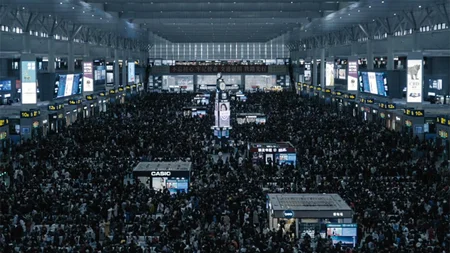
The population of the Earth has more than doubled since 1950.
Earth's Population Has More Than Tripled Since 1950
In 1950, about 2.5 billion people called Earth home. Today? That number stands at 8.2 billion. We didn't just double—we more than tripled the human population in less than a single lifetime.
To put this in perspective: if you were born in 1950, you've watched humanity add 5.7 billion people during your life. That's like adding the equivalent of everyone alive in 1950 twice over, plus another billion for good measure.
The Fastest Growth in Human History
This population explosion represents the most dramatic demographic shift our species has ever experienced. Between 1950 and 1987, we added the first billion. Then it took only 12 years to add the next billion. By 1999, we'd hit 6 billion—achieving a true doubling in just 40 years.
The eight billionth person was born in 2022, marking another milestone in our relentless expansion.
What Changed?
Three major factors drove this unprecedented growth:
- Medical advances drastically reduced infant mortality and increased life expectancy
- Agricultural improvements allowed us to feed billions more people than ever before
- Sanitation and clean water access prevented countless deaths from disease
The global death rate plummeted while birth rates remained high, creating the perfect conditions for explosive growth.
The Slowdown Is Real
Here's the twist: while we've added billions of people, our growth rate has been steadily declining. In 1950, the population grew at 1.74% annually. Today, it's down to 0.86%—roughly half the rate.
We're still growing, but the exponential curve is beginning to flatten. Demographers predict we'll peak somewhere between 9 and 10 billion people later this century before potentially declining.
A Planet Transformed
Tripling the human population in 74 years means tripling our demand for food, water, housing, and energy. We've cleared forests, built megacities, and fundamentally reshaped the planet's ecosystems to accommodate this growth.
Every major environmental challenge we face today—from climate change to biodiversity loss—is amplified by having 5.7 billion more people than we did in 1950. Yet somehow, we've managed to not just survive this growth, but dramatically improve quality of life for billions along the way.
The next time someone talks about how different the world is from their grandparents' time, remember: their grandparents lived on a planet with less than a third of today's population. That's not just demographic change—it's a complete transformation of human civilization.
Frequently Asked Questions
What was the world population in 1950?
When did the world population double from 1950 levels?
Is the world population still growing?
Why did the population grow so fast after 1950?
How many people have been added to Earth since 1950?
Verified Fact
This fact has been reviewed and verified against original sources.
Show verification details
Actually understated - world population increased from approximately 2.5 billion in 1950 to 8.2 billion in 2024, more than tripling (227% increase). The population definitely more than doubled.