📅This fact may be outdated
The information in this fact was accurate when published but may have changed since then.
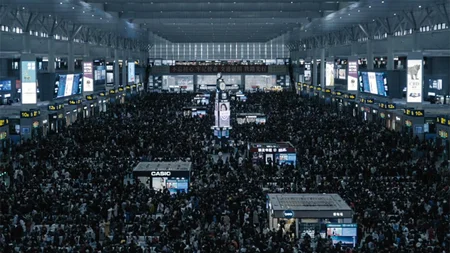
Every person in the world can fit in Texas and be given over 1000 sq ft in which to live.
Could the World's Population Really Fit in Texas?
You've probably heard this mind-bending claim before: every single person on Earth could fit inside Texas, each with over 1,000 square feet of personal space. It sounds absurd—how could nearly every human alive squeeze into one U.S. state? But here's the twist: it was actually true, at least for a while.
The math is surprisingly simple. Texas sprawls across 268,597 square miles, which translates to about 7.49 trillion square feet. Back in 2011, when the world's population hit 7 billion, dividing that space among everyone gave each person roughly 1,070 square feet. That's more room than many studio apartments.
When Reality Caught Up
Fast forward to 2025, and we've added another 1.2 billion people to the planet. The current world population stands at approximately 8.2 billion people. Run the same calculation now, and each person gets about 914 square feet in Texas—still a decent amount of space, but no longer crossing that 1,000-square-foot threshold the claim promises.
This is a perfect example of how population growth can quietly invalidate facts that once seemed permanent. When this claim first went viral in the early 2010s, it was mathematically sound. Today, it's a relic of a less crowded world.
What 914 Square Feet Actually Looks Like
To put this in perspective, 914 square feet is roughly the size of:
- A large one-bedroom apartment
- A modest two-bedroom condo
- About 85 square meters for those using the metric system
- Slightly smaller than a tennis court (which is 2,808 square feet for doubles)
So while we can't quite hit that 1,000-square-foot mark anymore, everyone on Earth could still theoretically stand in Texas with elbow room to spare. You wouldn't want to live there permanently in this scenario—imagine the traffic and bathroom situation—but it's still a striking illustration of just how much open space exists relative to human bodies.
Why This Fact Matters
Beyond being a fun party factoid, this calculation highlights something important: the Earth isn't running out of physical space. Overpopulation concerns are less about literal room to stand and more about resource distribution, infrastructure, sustainability, and quality of life.
It also demonstrates how our mental models of population can be wildly off. Eight billion sounds astronomical—and it is a massive number—but when you do the math, humanity's physical footprint is smaller than most people intuitively grasp. The challenge isn't fitting everyone somewhere; it's building societies that work for everyone already here.
The fact that this claim almost still works in 2025, despite adding over a billion people since 2011, shows just how vast Texas really is. And if you're wondering, Alaska is more than twice the size of Texas, so that calculation would give everyone about 2,100 square feet. Plenty of room for a backyard.
Frequently Asked Questions
Can the entire world population fit in Texas?
How big is Texas in square feet?
When was the entire world population able to fit in Texas with 1,000 square feet each?
What is the current world population in 2025?
Does overpopulation mean we're running out of space on Earth?
Related Topics
More from Places & Culture
View all Places & Culture →