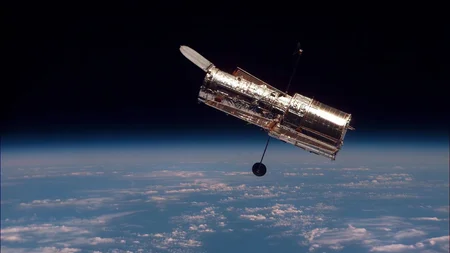
If you were to cry in space, the tears would form a bubble in your eye until it's so big it moves to another spot on your face.
Crying in Space Creates Floating Tears on Your Face
Imagine crying and your tears just... staying there. Not rolling down your cheeks, not dripping off your chin, but clinging to your eyeball like a blob of water that refuses to let go. Welcome to crying in space.
Astronaut Chris Hadfield famously demonstrated this bizarre phenomenon from the International Space Station. He squeezed drinking water into his eye to show what happens when tears form in microgravity. The result? A wobbly, growing bubble of liquid perched on his eyeball.
Why Tears Refuse to Fall
On Earth, gravity is the invisible hand that pulls tears down your face. In space, that hand doesn't exist. Without gravity's downward tug, tears have nowhere to go—so they don't go anywhere.
Instead, surface tension takes over. This is the same force that makes water droplets spherical and allows insects to walk on pond surfaces. In microgravity, surface tension causes tears to cling to your eye and gradually accumulate into larger and larger bubbles.
The Bubble Migration
Here's where it gets weirder. As you continue crying, the tear bubble doesn't just sit there politely. It grows. And grows. Eventually, it becomes so large that it breaks free from your eye and slides across your face—often traveling across the bridge of your nose to your other eye.
Astronauts describe the sensation as uncomfortable and vision-blurring. The water ball can obscure your sight until you physically wipe it away with a tissue or towel. There's no dramatic tear-streaked face in space—just a wobbly water blob that you need to manually remove.
The Science of Space Sadness
This phenomenon reveals something fundamental about how we take gravity for granted. On Earth, fluids behave predictably: they flow downward, they drip, they drain. In space, every liquid becomes clingy and unpredictable.
For astronauts, this means crying isn't just emotionally draining—it's practically inconvenient. You can't just let tears flow; you have to actively manage them. It's one of countless small adaptations required for life in microgravity, from eating to exercising to experiencing basic human emotions.
So yes, you can cry in space. Your body still produces tears when you're sad, frustrated, or homesick hundreds of miles above Earth. But those tears will form a bubble, stick to your face, and refuse to fall—a literal manifestation of emotions that won't let go.
Frequently Asked Questions
Can astronauts cry in space?
What happens to tears in zero gravity?
Who demonstrated crying in space?
Why don't tears fall in space?
How do astronauts get rid of tears in space?
Verified Fact
This fact has been reviewed and verified against original sources.
Show verification details
Confirmed by astronaut Chris Hadfield's demonstration on the ISS. Tears do form bubbles in microgravity due to surface tension, and can migrate across the face.
Related Topics
More from Science & Space
View all Science & Space →