
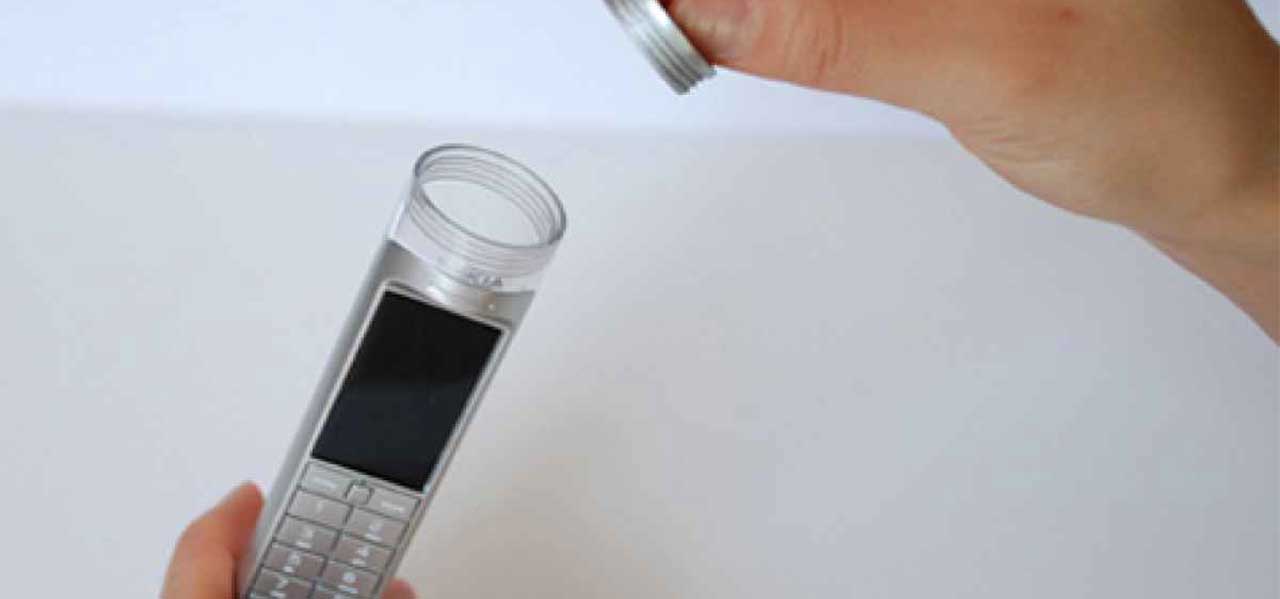
Daizi Zheng, a Chinese designer based in London, created a concept phone for Nokia that would run on Coca-Cola. Her design used a bio-battery with enzymes to generate electricity from the sugar in the drink.
The Phone Concept Designed to Run on Coca-Cola
What if you could power your phone with a can of Coke? In 2010, Chinese designer Daizi Zheng turned that seemingly absurd idea into a working concept that got Nokia's attention—and made headlines worldwide.
Sugar as Fuel
Zheng's design replaced the conventional lithium-ion battery with a bio-battery—essentially a miniature fuel cell. Pour in some Coca-Cola (or any sugary drink), and enzymes inside the battery would break down the carbohydrates, releasing electrons to generate electricity.
The byproducts? Just water and carbon dioxide. When the battery runs dry, dump out the waste and pour in more soda. No charging cable required.
Better Than Lithium?
The concept wasn't just a gimmick. Zheng claimed her sugar-powered phone could run three to four times longer than conventional phones on a single "charge." And unlike lithium batteries—which are expensive to produce, difficult to recycle, and notoriously finicky—a bio-battery could be fully biodegradable.
Her pitch was compelling: lithium is a limited resource that requires intensive mining. Sugar? It's everywhere.
The Science Is Real
Zheng didn't invent bio-batteries—she applied existing science to consumer electronics. Sony had demonstrated a working sugar-powered battery back in 2007, producing enough electricity to run a Walkman. The technology uses the same basic principle as how living organisms extract energy from food:
- Enzymes break down glucose at the anode
- This releases electrons (electricity!) and hydrogen ions
- The ions migrate through a separator to combine with oxygen
- Water is produced as the only significant byproduct
Researchers at Virginia Tech later created sugar batteries with energy densities ten times higher than lithium-ion batteries. MIT has developed glucose fuel cells thin enough to power medical implants using the body's own blood sugar.
So Why Aren't We Chugging Coke Into Our iPhones?
The concept never went into production. Bio-batteries produce much lower voltage than lithium alternatives—about 0.5V compared to 3.6V—meaning they charge devices more slowly. The enzymes also degrade over time, limiting the battery's lifespan.
For Zheng's design specifically, there were practical hurdles too. Imagine airport security's reaction to a phone filled with mysterious brown liquid. Or what happens when your pocket gets sticky because your phone leaked.
Still, the concept highlighted something important: the batteries in our devices are an environmental problem waiting for creative solutions.
Where Bio-Batteries Are Headed
The technology has found more promising applications in medicine. Implantable devices that run on the body's own glucose could eliminate the need for surgical battery replacements. In 2022, MIT unveiled glucose fuel cells just 400 nanometers thin—small enough to wrap around a pacemaker.
Zheng's Coca-Cola phone may never hit store shelves, but it proved that sometimes the wildest ideas are just ahead of their time. Somewhere in a lab right now, researchers are still working to perfect the sugar-powered future she envisioned.
Frequently Asked Questions
Can you really power a phone with Coca-Cola?
How do sugar-powered batteries work?
Are bio-batteries better than lithium batteries?
Who invented the sugar-powered phone?
Why didn't Nokia make the Coke-powered phone?
Verified Fact
This fact has been reviewed and verified against original sources.
Show verification details
Clarified this was a concept design for Nokia, not an actual manufactured product. The underlying technology (enzyme-based bio batteries) is real and has been demonstrated by Sony and others.