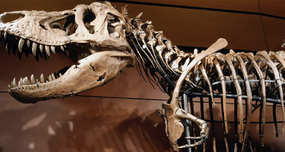
Scientists can determine the color of some feathered dinosaurs by analyzing fossilized melanosomes—microscopic pigment structures preserved in ancient feathers.
How Scientists Discovered Dinosaur Colors
For over a century, paleontologists could only guess at what colors dinosaurs were. Museum displays showed them in drab greys and greens, but these were pure speculation. Then in 2010, everything changed.
Researchers discovered they could analyze melanosomes—microscopic organelles that produce pigment in feathers—preserved in fossils. These tiny structures maintain their shape for millions of years, and different shapes produce different colors in modern birds. By comparing fossil melanosomes to those in living birds, scientists could finally see dinosaurs in their true colors.
The First Colorful Dinosaur
Anchiornis, a small feathered dinosaur from China, became the first species to get a complete color makeover. Scientists found it had a grey body with black and white wing feathers and a striking rufous crest on its head—like a Mesozoic punk rocker.
Other discoveries followed rapidly. Microraptor turned out to have glossy, iridescent black feathers like a modern crow. Sinosauropteryx sported a ginger-and-white striped tail. These weren't the muddy browns we'd imagined—dinosaurs were flamboyant.
What About Scaly Dinosaurs?
Melanosomes work best with feathered dinosaurs, but recent breakthroughs are revealing colors in scales too. In 2025, researchers found two types of melanosomes in Diplodocus skin fossils, suggesting this giant sauropod may have had speckled brown patterning—possibly for camouflage.
The technique has limitations. Melanosomes only reveal melanin-based colors (blacks, browns, reds, greys). They can't detect:
- Carotenoid pigments (yellows, oranges, pinks)
- Structural colors beyond iridescence
- Pigments that don't preserve in fossils
So while we can now see many dinosaurs in vivid detail, the full rainbow of prehistoric life remains partially hidden. But compared to the grey guesswork of the past, seeing even some dinosaurs in their true colors is nothing short of revolutionary.
Frequently Asked Questions
Can scientists tell what color dinosaurs were?
What was the first dinosaur to have its color discovered?
How do melanosomes show dinosaur colors?
Were all dinosaurs colorful?
Can scientists see all dinosaur colors?
Verified Fact
This fact has been reviewed and verified against original sources.
Show verification details
Original fact is outdated. Scientists can now determine colors of many feathered dinosaurs through melanosome analysis. Rewrote to focus on the fascinating breakthrough of how we discovered dinosaur colors.
Related Topics
More from Science & Space
View all Science & Space →