📝Updated for accuracy
Some details in this fact have been corrected based on our review of primary sources.
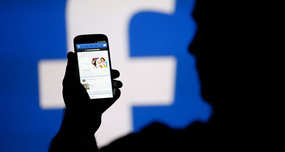
Facebook is blue because Mark Zuckerberg is red-green color blind. Blue is the color that comes through clearest for him. "Blue is the richest color for me - I can see all of blue," he told The New Yorker in 2010. One man's biology shaped the look of a platform used by about 3 billion people.
Why Facebook Is Blue: Zuckerberg's Color Vision
Facebook's signature blue has nothing to do with focus groups, brand consultants, or aesthetic trends. It comes down to how Mark Zuckerberg's eyes perceive color.
Zuckerberg has red-green color blindness, a condition affecting roughly 8% of men. For him, the world doesn't look quite the same as it does for most people. Reds appear muddy, greens look confusing, but blue comes through crystal clear.
A Design Born from Biology
In a 2010 interview with *The New Yorker*, Zuckerberg confirmed it: "Blue is the richest color for me - I can see all of blue." That single quote turned into one of the most repeated explanations for one of the world's most recognized brand colors. It wasn't about market research or psychological manipulation - it was about a color he could actually see clearly.
Think about the implications for a moment. Facebook now reaches roughly 3 billion people worldwide. It's been seen trillions of times. All of it traces back to a color one person happened to see best.
How Color Blindness Actually Works
Red-green color blindness occurs when photoreceptors in the eye don't function normally. The condition has several variations:
- Deuteranomaly (most common): Green appears more red
- Protanomaly: Red appears more green and dimmer
- Deuteranopia/Protanopia: Complete inability to distinguish red and green
Blue wavelengths, however, are processed by entirely different cone cells in the eye, ones that typically work normally even in people with red-green color blindness. This is why blue remained a safe, legible choice.
An Accidental Branding Win
Whatever the exact sequence of events, blue conveys trust and stability, qualities useful for a platform asking people to share personal information. It's also one of the most universally liked colors across cultures, and unlike aggressive reds or energetic oranges, it doesn't fatigue the eye during long browsing sessions.
Other tech giants lean on their own signature colors, Google's rainbow, Twitter's light blue, Instagram's gradient, but Facebook's deep, consistent blue became synonymous with social networking itself. For years, "Facebook blue" was as recognizable as Coca-Cola red or Tiffany's robin's egg blue.
A Personal Touch in a Tech Empire
Today, Meta (Facebook's parent company) has evolved beyond a single blue interface. But that original color reminds us that even the biggest platforms carry small human fingerprints. Every time you scroll past that blue notification icon, you're seeing the world through the lens of one person's eyes.